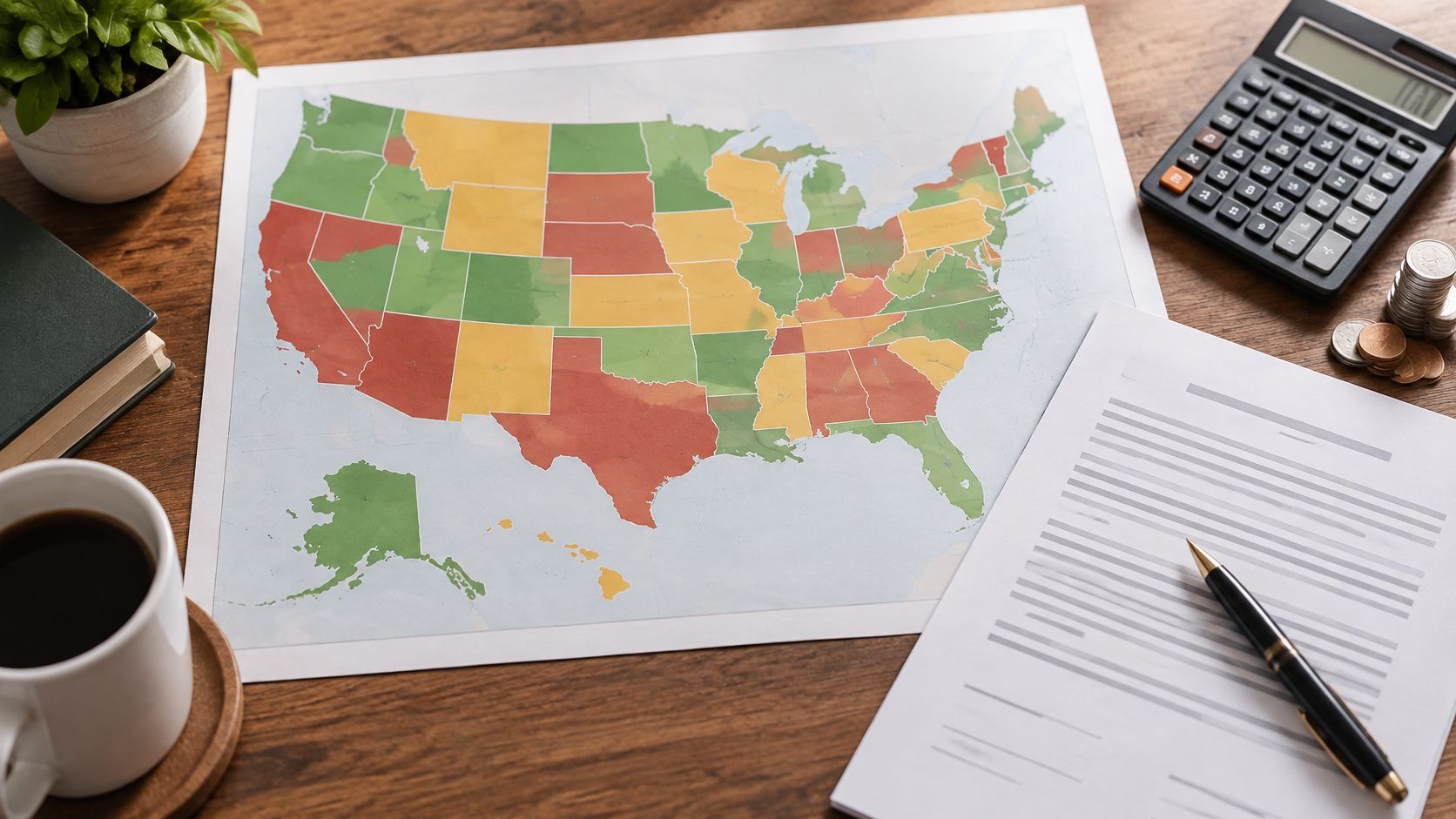
There's no nationwide yes, because about 26 states permit payday loans under defined limits while other states and the District of Columbia prohibit them or cap rates so low the product is effectively unavailable, and your state of residence decides. That's the first correction to the popular advice to just check if a lender will fund you. A funded loan doesn't prove the product was permitted where you live, the lender was licensed, or the fee and debit authorization followed the law.
A payday loan is a short loan usually due in one payment on your next payday. People often ask, are payday loans legal, as if there's one switch for the whole country. There isn't. Run three separate tests instead. First, is this product permitted in your state? Second, is this lender licensed to offer it to you? Third, do this specific fee, due date, rollover term, and collection method comply? A loan can pass one test and fail the other two.
A website that takes your application is evidence of marketing, not evidence of legality.
Table of Contents
- Where Payday Loans Are Legal Restricted or Banned
- Why State Law Not a National Rule Decides
- Loan Amount Fee Term and Rollover Limits
- What a Legal Payday Loan Can Still Cost
- Lower-Cost Options When Payday Lending Is a Bad Fit
- Verify an Online Offer and Your State Before You Borrow
Where Payday Loans Are Legal Restricted or Banned
Sort the map before you sort the offer. The Consumer Financial Protection Bureau market snapshot on extended payment plans reports that approximately 26 states permit payday lending under defined conditions, while other states and the District of Columbia prohibit it or make it unavailable through low annual percentage rate caps. The label matters less than the mechanism: a state can remove payday loans by refusing to authorize them, by pricing them out, or by forcing them into a different repayment shape.
Payday loan legal status by category
| Status | What the law does | Typical pricing effect | How to confirm |
|---|---|---|---|
| Outright prohibition | No lawful storefront payday product | No authorized payday fee schedule | State statute and regulator license database show no payday authority |
| Effective prohibition | Small loans may exist but a low APR cap makes payday pricing nonviable | Cap level is set low enough to block the single-payment model; exact limit is in the state statute | Compare the offered APR with the current state cap |
| Permitted with limits | Licensed lenders may offer single-payment payday loans | Limits on amount, fee, term, and rollovers; the cost can still be very high | Verify permission, lender license, and the contract's amount, fee, term, and renewal rules |
| Reformed installment model | Balloon payday loans replaced by longer repayment | Payments spread over months and total finance charge varies by state | Confirm installment schedule, total finance charge, and any required payment plan |
Outright and Effective Prohibitions
An outright prohibition is the clearest case. The state doesn't authorize a storefront payday product, so there's no state fee schedule a lender can point to and say the charge is approved. If you're still seeing ads, you're likely seeing national marketing, an online offer aimed across state lines, or a different loan type using payday language. None of that creates authority in your state.
An effective prohibition confuses more readers because small-dollar lending itself may still exist. The state caps pricing low enough that the classic payday model, a high fee for money due in full on the next payday, can't operate at that price. The product disappears even without a law that uses the word ban. That's why two state lists can disagree: one may count whether a statute mentions small loans, while the other asks whether a payday-priced loan can be sold.
Permitted With Limits and Reformed Models
In a permitted with limits state, legal doesn't mean open-ended. Statutes commonly control the maximum amount, the finance charge, the term, the number of rollovers, and your right to an extended payment plan. A licensed lender still has to fit your contract inside every one of those limits. Permission for the product never licenses every clause, so a lawful loan amount can sit next to an unlawful rollover fee or an improper debit authorization.
A reformed installment model changes the shape of the debt, not just its price tag. Instead of one balloon payment, you repay over months in scheduled installments. That structure lowers the chance that repayment depends on finding another lump sum or taking another loan, but it does not make the loan cheap by itself. Compare the payment schedule and total finance charge, because spreading repayment out can reduce the payment shock while still leaving a large total cost.
Don't use the lender's address to place yourself. State restrictions can reach an online lender that targets residents of a regulated state, and an electronic signature doesn't move you to the lender's state. A federal rule can be live while a particular fee, renewal, or collection attempt still breaks state limits, and uneven enforcement never turns a bad contract into a permitted one. Match your residence to a row first, then check permission, licensing, and the exact contract terms against the rules for where you live.
Why State Law Not a National Rule Decides
Legality works like a local lock rather than a national light switch. Your state decides whether the lock exists, who holds a key through licensing, and how much a lender may charge for turning it. Federal law can add a guardrail, but it does not hand every lender a master key for all 50 states.
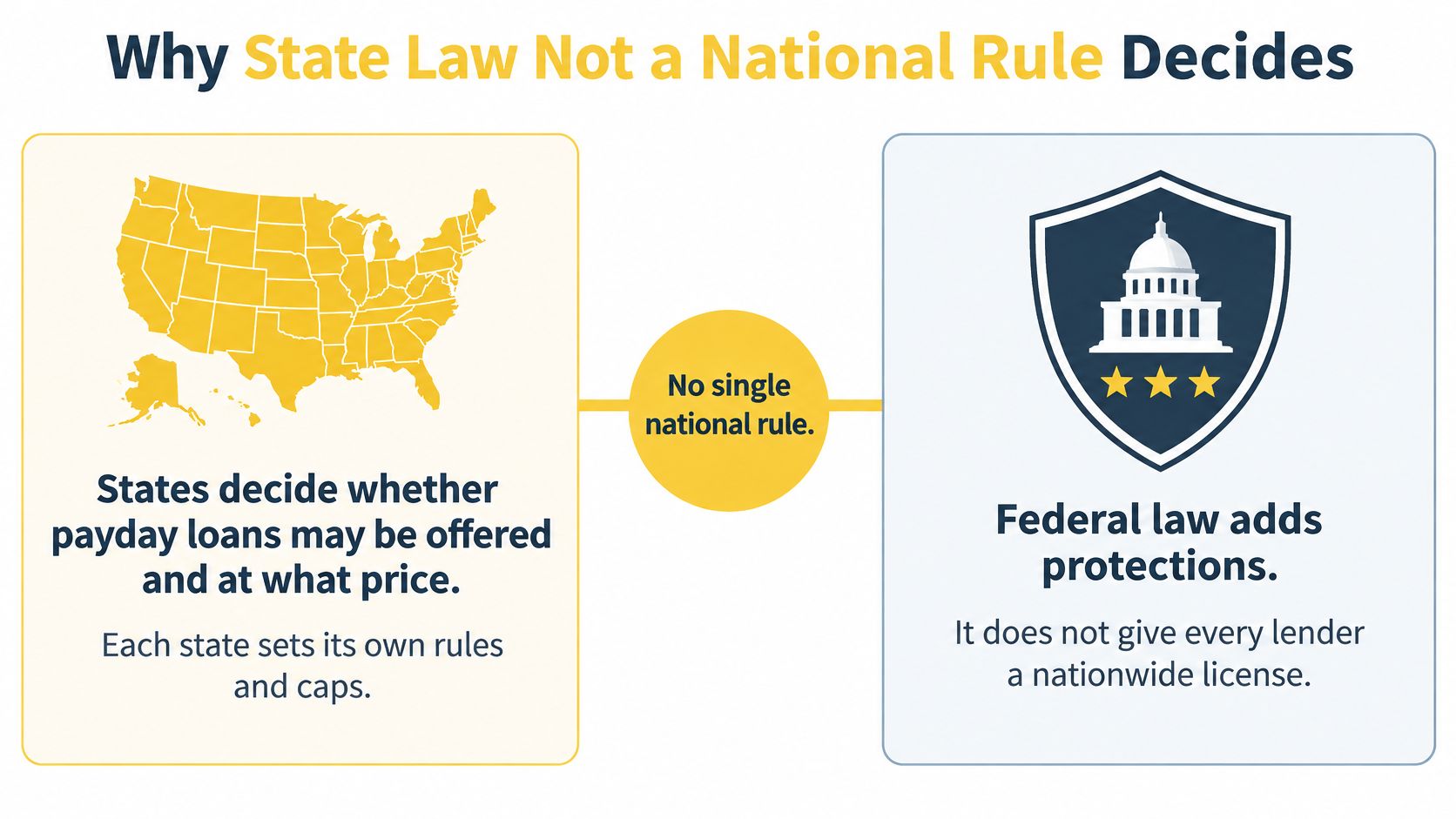
That split explains why national counts shift over time. A Federal Trade Commission guide to payday and car title loans reflects the state-centered framework, and the count changes whenever a legislature lowers a cap, adds an installment requirement, or lets a small-loan statute expire. A map from a few years ago is not a substitute for the current statute.
Three Checks Before You Call It Legal
Run three separate checks before you treat an offer as available. First, is the product permitted where you live? Second, is this lender licensed or otherwise authorized there? Third, do this fee, due date, renewal term, and collection method fit the rules for that loan? A loan can pass the first check and fail the second or third.
This is why “legal” is not one label. Permission says the product can exist. Licensing says this company may sell it. Compliance says the exact contract stays inside the limits on price, term, renewal, and collection. A lender can clear one gate and still fail the next.
What States Control
States can prohibit payday lending outright or allow it under limits. They can set ceilings on loan amounts, terms, interest, and fees, require a license, restrict renewals, and give a regulator authority to examine lenders and act on complaints. That is the permission layer. Without it, a lender's national website, call center, or storefront in a neighboring state does not make the same offer lawful for you.
Licensing is the separate question people skip. In a permitting state, the product may be lawful while one lender is not authorized to make it. Price and collection sit on top of both: the amount may be allowed, the lender may be licensed, and the fee or repossession tactic can still break the rule that governs that transaction.
What Federal Law Adds
The clearest federal price rule covers a specific group of borrowers. The federal Military Lending Act limits the Military Annual Percentage Rate on many forms of credit, including payday loans, to 36% for covered servicemembers and dependents. Say a state allows a civilian contract at a triple-digit APR. That same price can be unlawful for a covered servicemember in the same town because the federal cap looks at who the borrower is.
A live federal rule is a separate test, not proof that every violation is being enforced. Before anyone calls a product available, verify the current statute, regulator guidance, licensing requirements, maximum charges, renewal rules, collection limits, and who enforces them. Then ask whether a federal protection changes the answer for you personally. Permission is not a price break, and the lender's marketing page cannot waive a cap that applies to you.
Loan Amount Fee Term and Rollover Limits
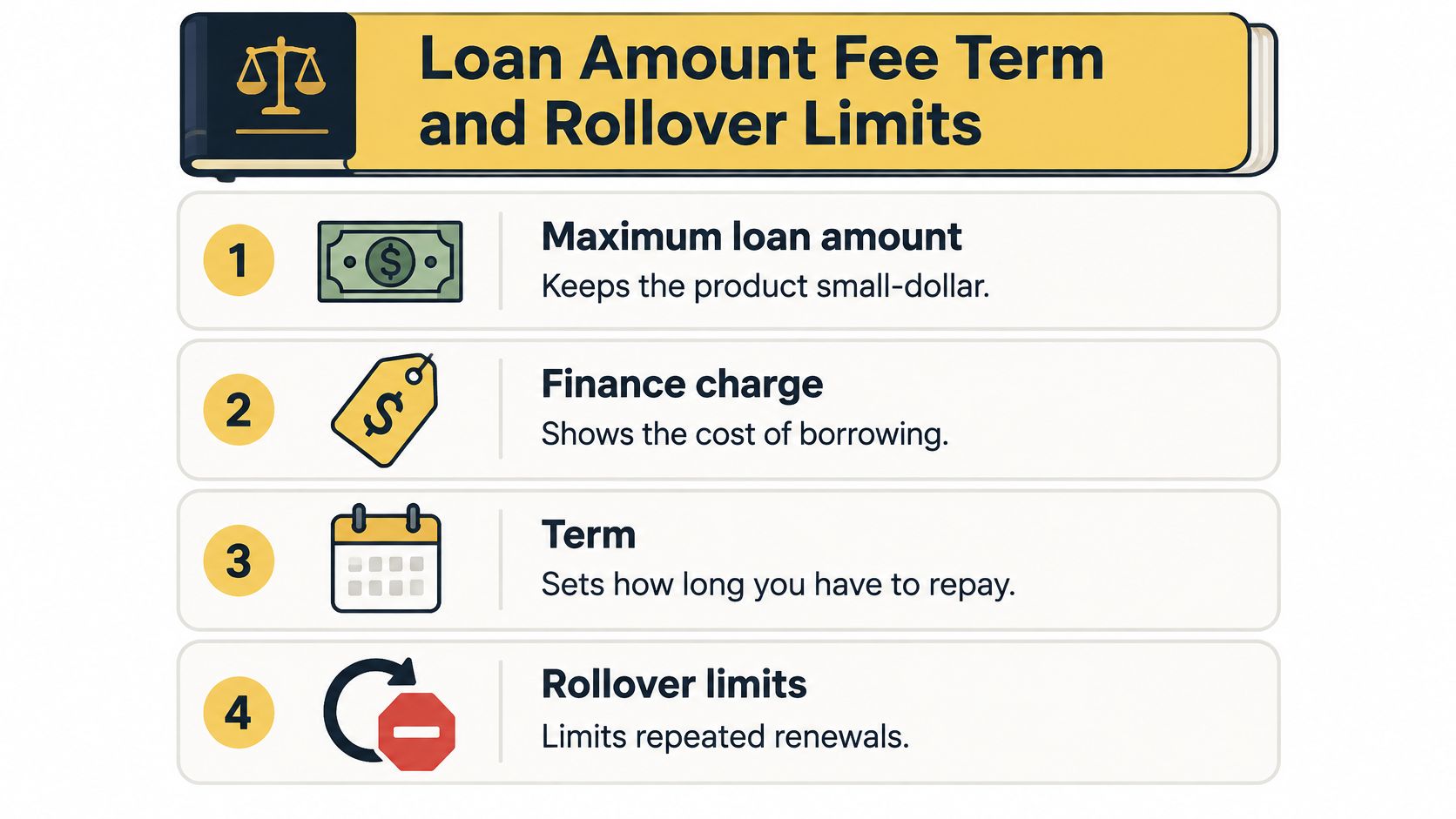
In a state that permits payday lending, treat the statute as a rulebook for your contract, not as a blank check for the lender. Read the agreement in the same order the law usually controls it, amount first, then price, then due date, then what happens if you can't pay in full.
Limits that decide if a payday loan stays legal
| Limit | What it usually controls | How it changes the loan | Check on the contract |
|---|---|---|---|
| Maximum amount | Dollars that may be advanced | Keeps the loan in the small-dollar statute | Principal does not exceed the state cap |
| Finance charge | Fee charged for the advance, often stated per amount borrowed | A lawful fee can still mean a triple-digit APR | Dollar fee and APR both appear and match the cap |
| Term | Days until payment is due | A two-week balloon makes a modest fee very expensive | Due date and whether one payment is required |
| Rollovers or renewals | How often the same debt may be extended | Extra fees can trap the borrower in a cycle | Renewal count and whether a new fee is charged |
| Extended payment plan | Right to repay over more time | Replaces a single balloon with scheduled payments | How and when the borrower must request the plan |
| Bank-account withdrawals | Repeat debit attempts after failures | Federal floor after two consecutive failed attempts | New authorization exists before another withdrawal |
Amount Fee and Term Work Together
The maximum amount keeps the product inside the small-dollar law that authorizes it. Don't check it in isolation. A principal amount under the cap can still produce an unaffordable payment once the finance charge is added and the whole balance comes due at once.
The finance charge is often framed as a fee per $100 borrowed, which can sound modest. Annualize that fee over a term of about two weeks and the APR can reach triple digits even when the dollar fee is legal. That's the math readers miss. The fee tells you what leaves your next paycheck, the APR lets you compare this loan with credit that lasts months, and you need both numbers before you sign.
The term decides whether you're repaying gradually or facing a balloon. A single payment on your next payday means rent, food, utilities, and this loan all compete for the same check. If that check can't cover all of them, the legal question quickly becomes a rollover question. Comparing that structure with installment loans versus payday loans shows why spreading payments over months changes the risk even when the amount borrowed is similar.
Rollovers Extended Plans and Debit Attempts
A rollover extends the same debt, commonly for a new fee. One renewal can look like relief because the balloon moves. Repeated renewals keep the principal alive while fees stack up, which is how a short bridge becomes a cycle. Check how many extensions your state allows, whether a cooling-off period applies, and whether part of the principal must be paid down.
An extended payment plan, where your state requires one, gives you a right to spread repayment instead of rolling the loan again. Rights often have deadlines and eligibility triggers, such as requesting the plan before the due date or after a set number of loans. Circle that language in the contract before you need it. A right you learn about after a failed debit may already be hard to use.
Federal payment rules sit underneath those state price rules. The CFPB executive summary of its Payday, Vehicle Title, and Certain High-Cost Installment Loans rule states the rule was issued October 5, 2017 and effective January 16, 2018, and it limited new withdrawal attempts after two consecutive failed payment attempts unless the consumer gave new authorization. The mandatory underwriting provisions were later revoked. A lender can honor that debit rule and still violate your state's license, fee, term, or rollover law. Line your contract up against every row, not just the row the lender highlights.
What a Legal Payday Loan Can Still Cost
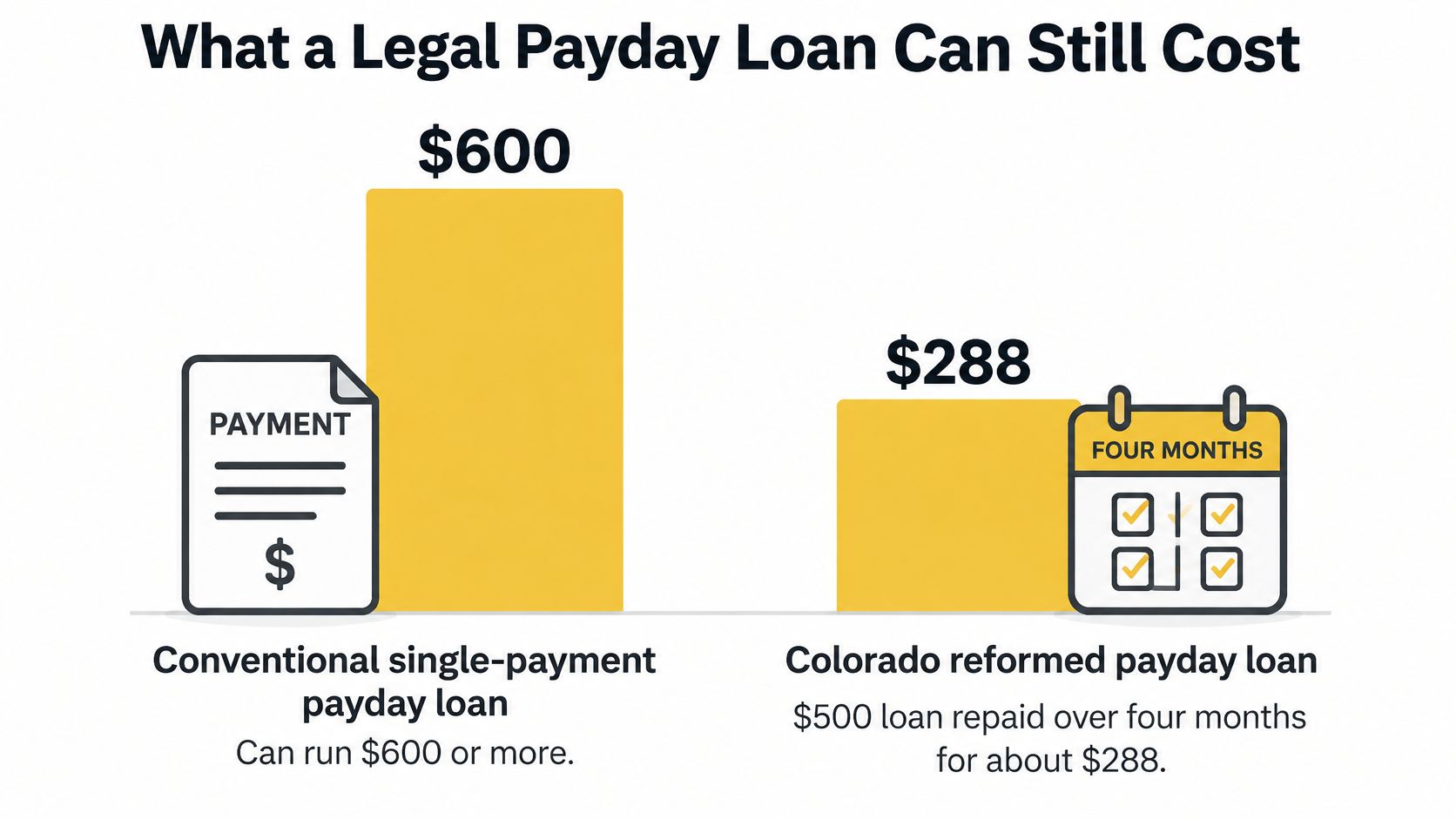
A few hundred dollars for a car repair can follow two very different legal paths. Under Colorado's reformed installment structure, that loan gets repaid in scheduled pieces over months. Under a conventional single-payment payday pattern, the full balance lands on one payday, and the fees can pile up until the total cost dwarfs what the installment version charged. Both stories involve small-dollar credit shaped by law. Only one gives the debt a clear finish line.
California shows what a licensed market looks like. The state's own annual reporting on payday lending describes a supervised market where average loans run a few hundred dollars at triple-digit APRs. Read that carefully. Legal, licensed, supervised lending can still carry prices that would be extreme for almost any other consumer loan.
Lawful Is Not the Same as Affordable
A license tells you the lender has permission to operate under supervision. It says nothing about whether the payment fits your budget. With a balloon loan, affordability is brutally specific. Can your next paycheck cover the full principal, the fee, and your normal bills without another loan, an overdraft, or skipped rent? If the answer is no, you're looking at renewal fees, failed debits, and collection pressure. It helps to understand what happens if you default on a payday loan before the first due date arrives.
Borrower status can also change the lawful price. A covered servicemember or dependent gets a federal Military Annual Percentage Rate cap, so a price a state might allow for a civilian can be unlawful for that borrower. A special federal protection is part of the legality question itself, not paperwork to brush past.
A Rule in Effect Is Not a Guarantee of Enforcement
Federal protection has a second gap readers rarely hear about. The CFPB's payday lending rule resource page tracks a rule that became operative March 30, 2025, including payment withdrawal and disclosure requirements, while the Bureau announced it would not prioritize enforcement or supervision of certain penalty and fine related provisions and might narrow the framework. A live federal rule does not mean every violation gets stopped promptly. You may still need your contract, your state law, your state attorney general, your banking regulator, and a formal complaint to get relief.
Three tests, every time: Is the product permitted where you live? Is this lender licensed? Do this fee, payment authorization, collection method, and disclosure comply?
If you can't repay the balloon from the next paycheck in full, a legal payday loan is still the wrong tool. Legality answers whether the lender may offer it. Whether you can afford to take it is a separate question entirely.
Lower-Cost Options When Payday Lending Is a Bad Fit
If you live in a ban or effective ban state and can't find a licensed payday product, that's the law working, not a broken website. On BadCreditMD, if a loan type isn't allowed in your state, the state guide says so and there's no request form for that loan type. Use that pause to match the bill to a cheaper tool instead of hunting for a lender willing to ignore your state's cap.
The closest direct substitute is a payday alternative loan from a federal credit union. These are small credit union loans with an APR capped at 28% under NCUA rules. You typically need to be a member, and the credit union sets its own eligibility and amount rules within that framework, so it may not be instant if you're not already a member. If you can qualify, our guide to payday alternative loans from credit unions explains how they differ from a storefront balloon loan.
Borrowed Money With a Longer Runway
An installment personal loan gives you a lump sum repaid in fixed monthly payments over months, not one payday. That doesn't make it cheap by definition. Lenders set their own rates based on your credit, income, state of residence, and their own criteria, and payday, title, and some online installment loans can carry very high fees or APRs. Compare the APR, total finance charge, monthly payment, and any origination or late fees. A longer term lowers each payment but can raise total interest, so check both numbers.
Don't treat a car title loan as the safe fallback when payday lending is banned. It's secured by your car title, so the vehicle you may need for work is at risk if you can't repay. You're trading an unsecured cashflow problem for a possible transportation problem, often at a very high price. That's a worse downside, not a loophole.
Credit-builder loans and secured credit cards belong in a different conversation. They can help you build a payment history over time, but they aren't same-day cash for tonight's shutoff notice. Putting them in an emergency plan today confuses credit building with liquidity.
Options That Do Not Create a New Loan
- Payment plan with the creditor: Ask the utility, medical provider, landlord, or card issuer for a due date change, hardship plan, or split payments before you borrow.
- Nonprofit credit counseling: A counselor can review your bills, contact creditors, and tell you whether a debt management plan fits.
- 211 and benefits help: Dialing 211 connects you to local assistance, and public benefits portals can point you to food, utility, or emergency help.
Match the tool to the pattern. A one-time urgent expense may fit a capped credit union loan or a negotiated payment plan. A shortfall that repeats every payday won't be fixed by borrowing against the next one. Short-term loans are costly and aren't a long-term financial solution, so borrow only what you can repay on time.
Verify an Online Offer and Your State Before You Borrow
The offer you're most likely to see doesn't look like a storefront contract. It's a website claiming that tribal law or sovereignty allows a rate above your state's cap, sometimes in a state with no payday shops at all. Treat that claim as a hypothesis to test. A loaded application is not proof that the price or the lender is lawful where you live.
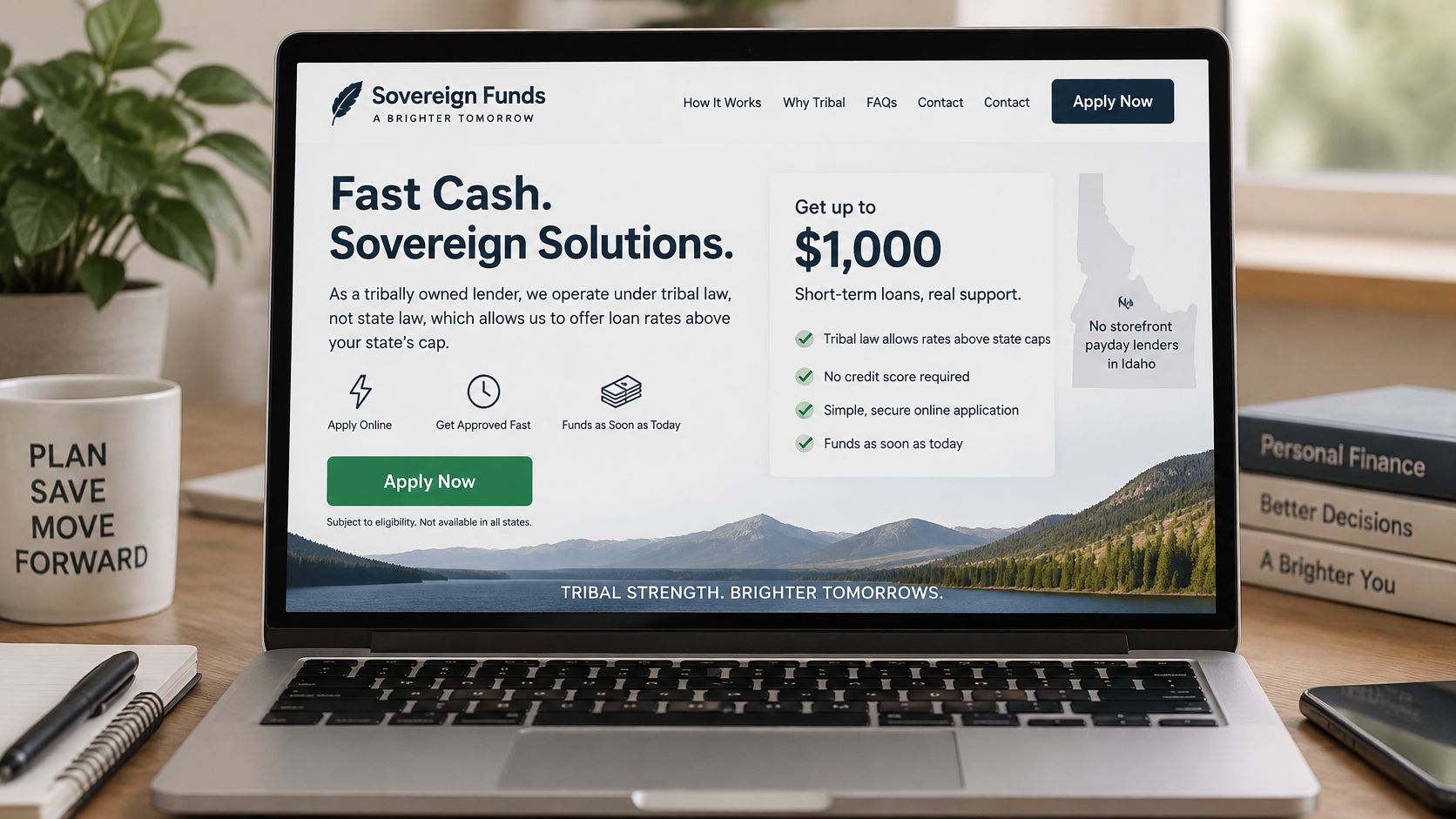
Oregon's regulator gives the practical warning. The Oregon Division of Financial Regulation page on tribal lenders explains that tribal-affiliated lenders may claim sovereignty while charging rates above state limits, and it advises consumers to verify a state license before agreeing to a loan. State law can still apply to a tribal-affiliated online loan, so an ownership label on a homepage does not by itself settle which rules govern your contract.
Separate Funding From Lawful Collection
A slick site blurs two different questions. Will money be sent to your account? And may this lender lawfully charge the advertised rate or collect the debt from a resident of your state? The first answer can be yes while the second is no. An online loan may be offered to you even where storefront payday lending is prohibited, yet the offer itself doesn't establish that the price or collection method is enforceable.
That's why the lender's chosen governing law clause, a sovereignty statement in the footer, or a customer service script carries less weight than four facts: your residence, the lender's license status, the contract terms, and your complaint options. If you need cash urgently, run the license check before you share bank credentials, even while you review how to get $500 fast with bad credit for lower risk ways to raise the money.
Run the Five-Step Check in Order
- Save the loan agreement: Download or screenshot the full contract, fee schedule, APR, due dates, rollover terms, and debit authorization before you sign.
- Name the actual lender and servicer: Write down the legal lender name, any company that will service or collect the loan, addresses, phone numbers, and website.
- Search your state regulator's license database: Confirm that exact legal name is licensed for this loan type for borrowers in your state.
- Compare price with your residence statute: Check the rate, fees, amount, term, and renewal terms against the law where you live rather than where the lender is located.
- Escalate conflicts promptly: If the contract conflicts with state protections, contact your state regulator or submit a complaint to the CFPB at consumerfinance.gov/complaint, keeping copies of everything.
A rule on the books is not the same as every violation being caught. The check above is yours to run before you sign.
Each BadCreditMD state guide covers which loan types state law allows, the limits lenders must follow, a worked cost example, and who to call if something goes wrong, drawn from statutes, state regulators and, where noted, secondary legal sources. Laws change, so check the guide's last reviewed date and confirm anything close to the line with the regulator itself. This is general information about loans and state rules, not legal or financial advice for your specific contract.
If the product is banned, the lender is unlicensed, or the fee or debit authorization breaks the rules, don't sign and hope a regulator will sort it out later.
Apply the three tests one last time before any signature: permitted product, licensed lender, compliant terms. If all three pass but your next paycheck can't cover the balloon payment and your regular bills, choose a lower cost option or call 211, legal aid, or a nonprofit credit counselor about the underlying bill. Look up your state, confirm the license, and borrow only an amount you can repay on time.
Visit BadCreditMD to open your state guide, see which loan types your law allows, review a worked cost example, and find your regulator and local help options before you apply anywhere. If payday lending isn't allowed where you live, use the same guide to compare credit union, installment, payment plan, and assistance alternatives instead of chasing an online offer that ignores your state's rules.