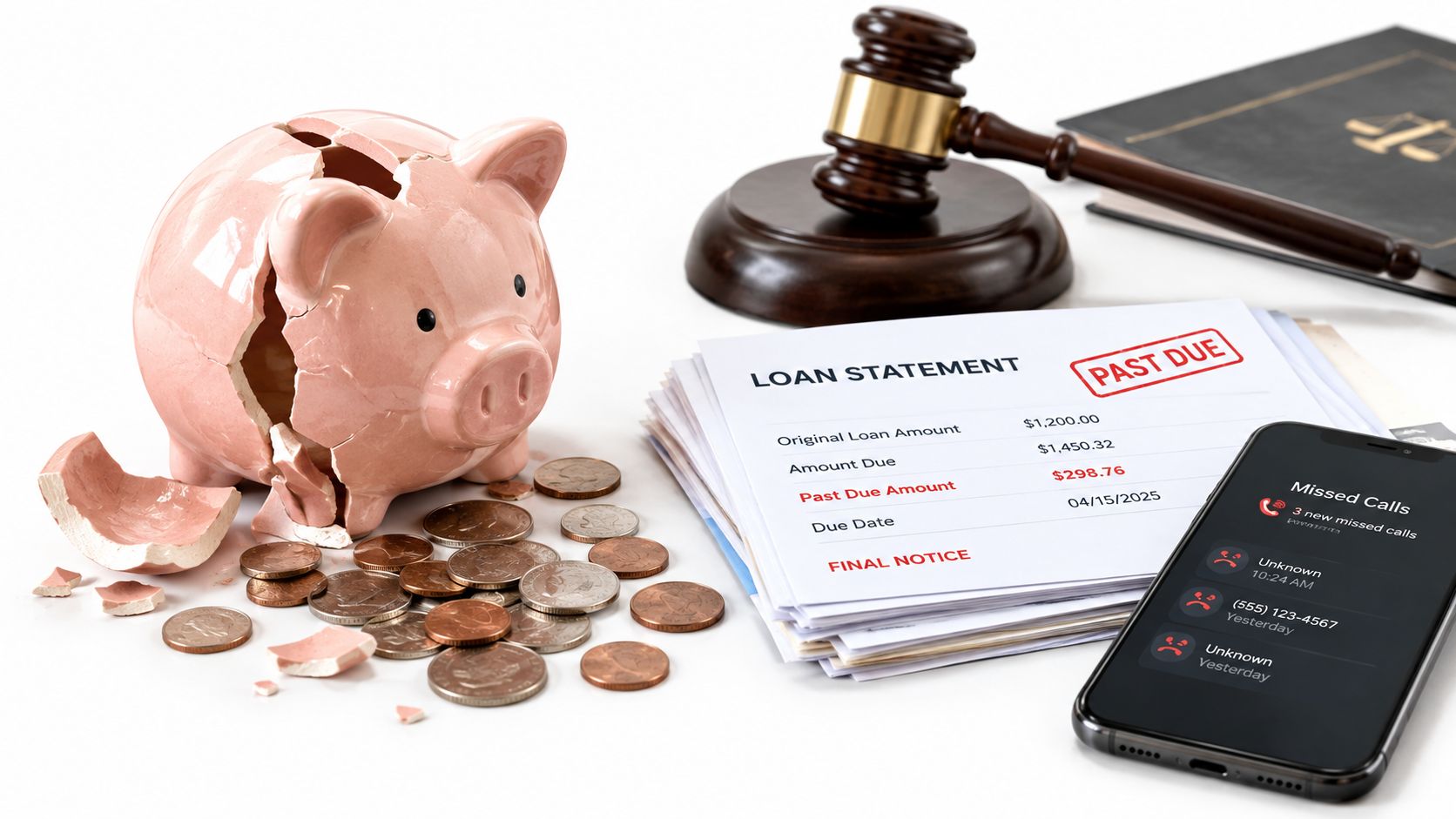
You checked your account before payday, but an unexpected car repair, medical bill, or utility payment used the money you planned to send to the lender. On the due date, the electronic withdrawal fails. Then another attempt appears, your bank balance drops below zero, and messages from the lender start arriving. You may be wondering what happens if you default on payday loan debt and whether the missed payment ends the matter or starts something more serious.
A default usually doesn't cancel the balance. It can set off a chain involving failed withdrawals, bank fees, collection activity, credit damage, a charge-off, or a lawsuit. The exact outcome depends on your contract, your state's rules, the lender's practices, and whether you respond quickly. The steps below explain how that chain can develop and what you can do at each stage.
Table of Contents
- When a Payday Loan Goes Wrong
- How Often Default Turns Into Repeated Borrowing
- Bank Fees, Failed Withdrawals, and Account Risk
- From Collection Calls to Court Judgments
- Comparing Your Options After Default
- Steps to Respond and Protect Your Rights
- Does Paying Off Default Actually Fix Credit?
- Key Takeaways and Next Steps for Borrowers
When a Payday Loan Goes Wrong
Maya borrowed a short-term payday loan to cover an urgent expense. She expected her next paycheck to cover the balance and fee, but her work hours were cut. When the due date arrived, the lender tried to debit her checking account. The account didn't have enough money, so the payment failed.
That first failure created several separate problems. Her bank could charge an overdraft or nonsufficient-funds fee. The lender or payment processor could try the electronic withdrawal again. If another bill went through before Maya could protect the account, that transaction could fail too. She still owed the original payday-loan balance, and the failed payment created a new banking problem.
The central rule: A missed payday-loan payment is usually the beginning of a resolution process, not the end of the debt.
Maya might receive calls, emails, or letters from the lender. She might also be offered a renewal or another short-term loan. Borrowing again can appear to solve the immediate due-date problem, but it leaves the underlying cash shortage in place. A new loan can also make it harder to pay rent, utilities, food costs, or other debts.
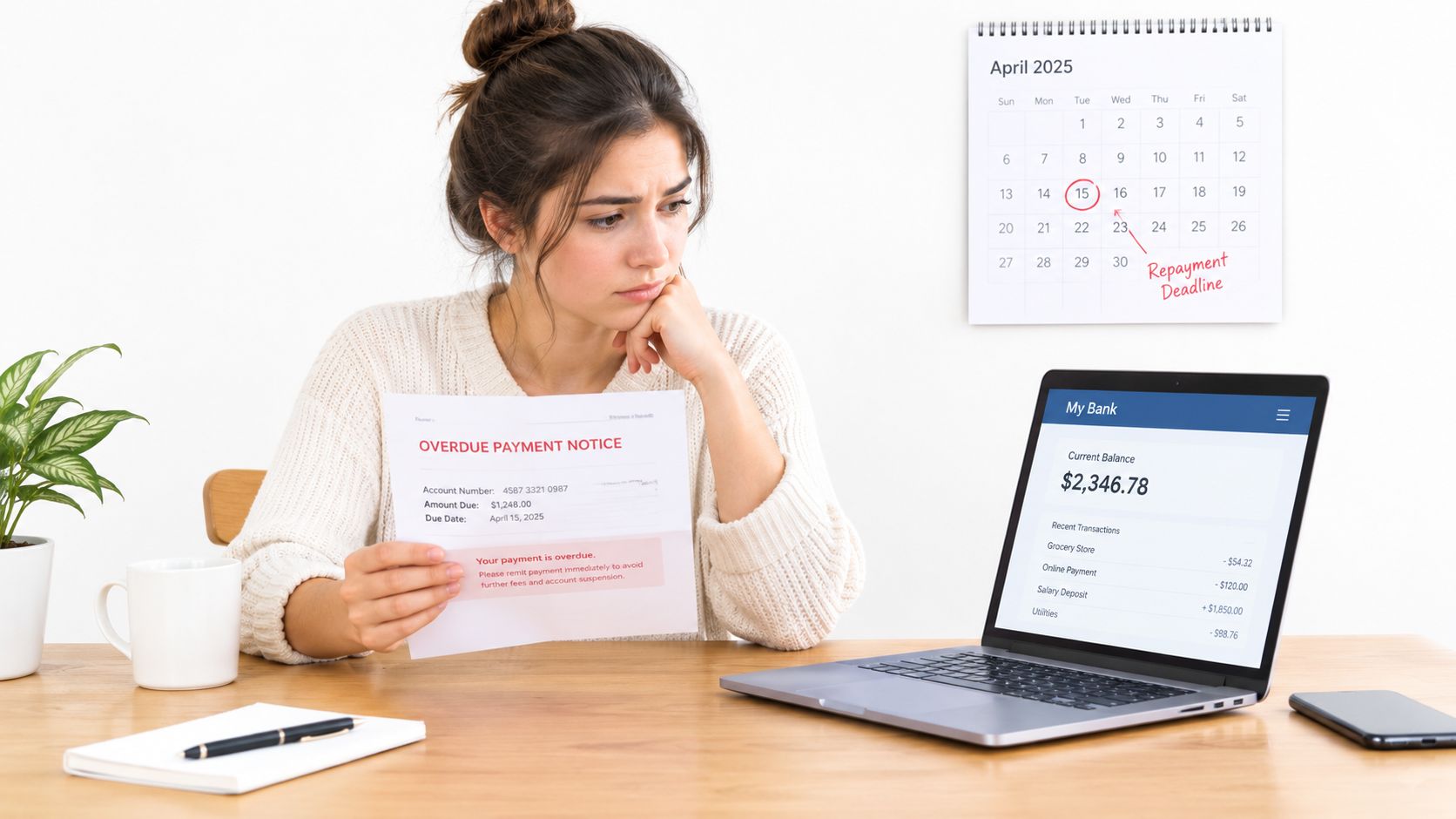
The chain doesn't follow one identical path for every borrower. Some lenders accept a payment arrangement. Some attempt further debits. Some refer the balance to a collection agency. A creditor may eventually sue, but a missed payment doesn't automatically authorize wage or bank-account seizure. The Federal Trade Commission's payday-loan legal brief documents concerns involving repeated electronic payment attempts and contract provisions related to wage withholding, while also showing why the agreement and state law matter.
If you're comparing other high-cost borrowing products, review the risks before taking another loan. For example, an explanation of Colorado car title loans can help you see how secured borrowing creates a different kind of exposure. The safest first move after a failed payment is to preserve cash for essential living costs, contact the bank and lender, and find out what legal protections apply where you live.
How Often Default Turns Into Repeated Borrowing
Default can indicate more than a one-time scheduling mistake. It may show that the borrower's income and required expenses don't leave enough cash to repay the entire balance when it comes due. In that situation, a renewal or a later payday loan can postpone the problem without removing it.
Historical North Dakota borrower data show how quickly a missed payment could become a longer-term issue. In that study, 39% of borrowers defaulted within one year of taking out their first payday loan, and 46% defaulted within two years. Those figures describe North Dakota borrowers in the study, not a nationwide default rate. Payday-loan availability, limits, payment practices, and enforcement differ across states. The North Dakota payday-loan default study provides the state-specific context.
The same research found that roughly two-thirds of borrowers who defaulted eventually repaid the debt in full. At the same time, 39% of defaulters borrowed again later, and one-third experienced another subsequent default. These outcomes can occur together. A borrower may catch up once, then face another shortfall and return to short-term borrowing.
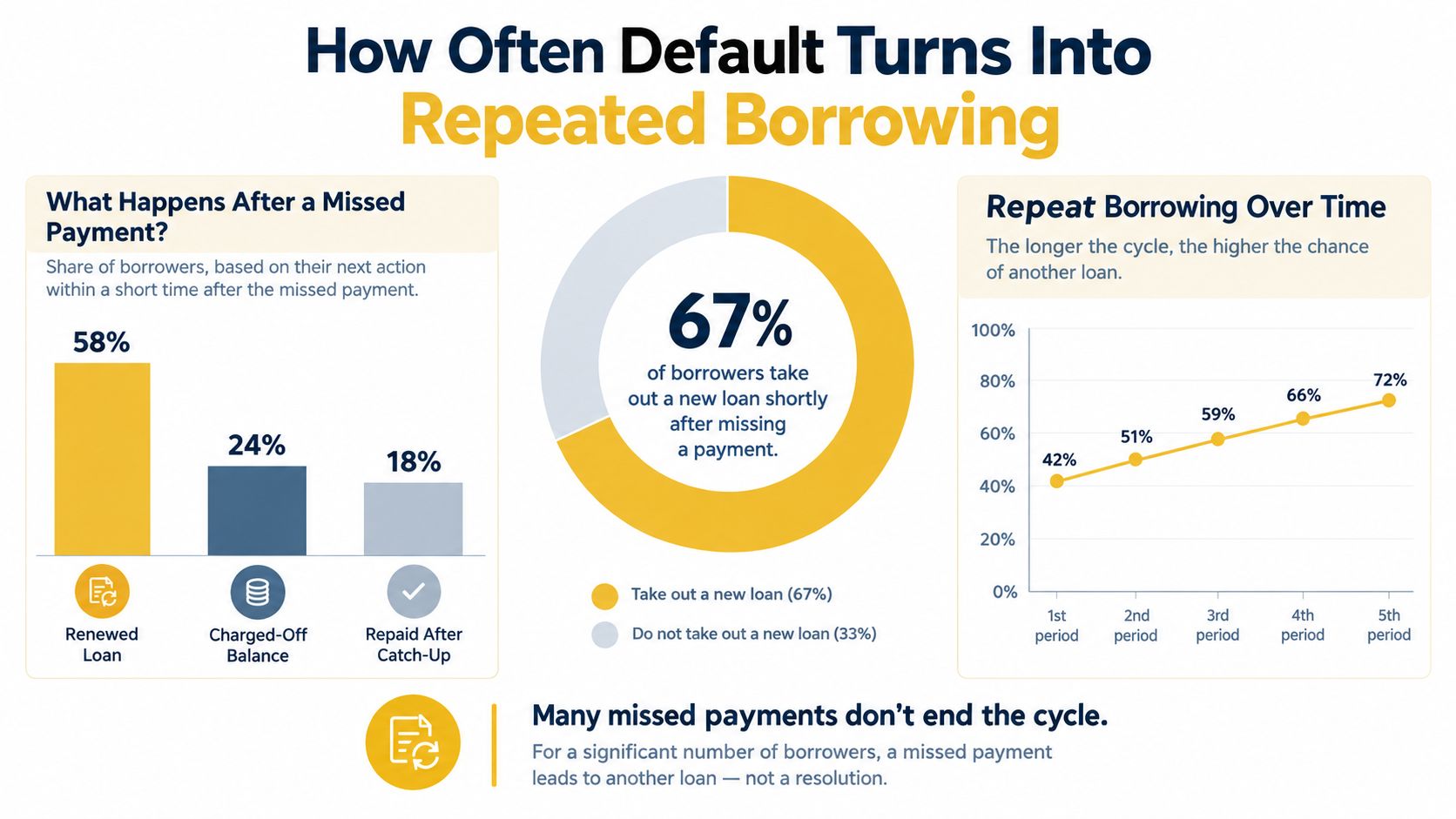
The infographic's design brief uses a simplified visual message, but the verified historical study above reports 39% of defaulters borrowed again later. Don't treat the image's label as a national measure or as a precise description of every borrower's next step.
Charge-offs are not the same as cancellation
In that North Dakota dataset, 19% of all borrowers had a loan charged off, while the share was 39% among defaulters. The study defined a charge-off as removing the account from the lender's books after it had been more than 60 days past due. A charge-off is an accounting or servicing event. It doesn't automatically mean the borrower no longer owes the balance.
The study also found that nearly half of borrowers incurred an overdraft or nonsufficient-funds fee within two weeks of a payday transaction, with typical fees around $35 per incident. Those findings are historical and state-specific, but they illustrate why a borrower should manage the bank account separately from the debt itself.
A rollover may buy time, but it usually adds another cost while the original balance remains. Before accepting one, ask whether the new arrangement reduces the balance or merely moves the due date. If it only postpones the same obligation, contact a nonprofit credit counselor or legal-aid provider instead of treating another loan as the default solution.
Bank Fees, Failed Withdrawals, and Account Risk
The first practical danger may be your checking account. A lender or servicer with electronic debit authorization can submit a payment request when the account lacks enough money. The bank may reject the transaction or allow it to overdraw the account, and either result can create a separate fee under the account agreement.
A failed debit may not happen only once. Repeated attempts can consume available funds, interfere with direct deposits and bill payments, and generate multiple bank charges. A successful withdrawal can also leave too little money for rent, utilities, groceries, or other scheduled payments.
Research from the Consumer Financial Protection Bureau's payday-loan payment fact sheet found that borrowers with a failed online-payday-loan debit incurred an average of $185 in bank penalty fees. The same research found that 36% of affected accounts were ultimately closed, usually within 90 days of the first insufficient-funds transaction. These figures concern the studied online-payday-loan accounts and shouldn't be treated as a guaranteed outcome for every borrower.
Protect the account before debating the debt
Take these steps promptly:
- Call the bank. Ask which debits are pending, whether recurring ACH authorization can be revoked or blocked, and what options exist for preventing further unauthorized withdrawals.
- Review the loan agreement. Identify the permitted payment method, scheduled dates, returned-payment terms, and any authorization language.
- Ask about debit limits. Under the CFPB payment-withdrawal framework, after two consecutive failed attempts, a lender generally must obtain new authorization before trying additional withdrawals. The exact application can depend on the transaction and applicable law.
- Protect essential income. Change bill timing or deposit arrangements only after understanding the consequences, especially if account closure could disrupt direct deposit.
- Keep records. Save bank statements, screenshots, emails, and notices showing every attempted debit and fee.
Blocking an unwanted debit doesn't erase the underlying loan. It separates two tasks that borrowers often confuse: stopping potentially improper account activity and resolving the balance under the contract and state law. If the account is at risk of closure, speak with the bank immediately because losing access can affect ordinary payments long after the payday loan is resolved.
From Collection Calls to Court Judgments
A default can move through several hands. The original lender may continue servicing the account, assign it to a collection agency, or sell it to another company. Each situation raises a practical question: who is contacting you, what authority do they claim, and what amount do they say you owe?
Collection calls and letters aren't the same as legal seizure. A collector may demand payment, but a payday lender or collection company generally must sue and obtain a judgment before it can garnish wages or take money from a bank account. The CFPB's answer on payday-loan garnishment explains this distinction and notes that state exemptions and procedures control what may happen after a judgment.
What a collector can and cannot do
Federal law generally bars covered debt collectors from using abusive, unfair, or deceptive tactics. That doesn't mean every call is unlawful, and it doesn't make a valid debt disappear. It does mean you should preserve evidence if someone misrepresents the balance, threatens action they can't legally take, or uses prohibited pressure.
A threat to take money immediately from your paycheck is different from a notice that a lawsuit may be filed. An attempted ACH debit is different from garnishment. A court judgment is different from a collection letter. Keeping those categories separate helps you respond to the actual risk instead of reacting to a frightening message.
If court papers arrive, read the summons carefully and identify the response deadline. Ignoring the case can allow the creditor to obtain a judgment without hearing your defenses. After a judgment, the court may authorize collection methods subject to state procedures, exemptions, and limits. Certain federal benefits, including Social Security payments in many circumstances, receive statutory protection, but your bank and state rules still matter.
The CFPB payday-loan examination manual recommends preserving notices and payment records, verifying the debt and collector, responding before a court deadline, and seeking legal or counseling help. Contact a lawyer or legal-aid organization quickly if the papers mention garnishment, an account levy, an exemption, or a hearing. Don't assume a collector's phone demand has the same force as a court order.
Comparing Your Options After Default
Once the payment has failed, borrowers usually face competing priorities. Paying the balance may stop collection activity, but using the last available cash for a payday loan could leave essential bills unpaid. Negotiating may reduce immediate pressure, while a new short-term loan can create another due date and another payment risk.
Use the comparison below as a starting point, not as a substitute for your contract or state-specific legal advice.
| Option | Immediate effect | Main cost or risk | Best fit |
|---|---|---|---|
| Pay the balance in full | Resolves the account if the amount is accurate and payment clears | Can leave too little for housing, food, utilities, or transportation | You can pay without missing essential obligations |
| Negotiate directly | May create a written payment plan or settlement | The lender may refuse, and verbal promises can be disputed | You can make a realistic offer and obtain written terms |
| Roll over or renew | Delays the due date | Adds cost while the original obligation continues | Only after reviewing the total cost and legal limits |
| Use nonprofit credit counseling | Gives you a broader budget and debt review | It won't provide instant cash or guarantee a lender agreement | Your default reflects several connected debts |
| Respond to a lawsuit | Preserves defenses and possible exemptions | Requires meeting court deadlines and preparing a response | You've received formal court papers |
| Take another high-cost loan | Provides cash for the current payment | Can deepen the shortfall and increase total repayment pressure | Rarely suitable when income already cannot cover existing bills |
A lender may prefer an arrangement that produces payment directly rather than continued collection activity, but never rely on a phone agreement. Ask for the balance, payment dates, fees, and consequences of default in writing. If the document promises a settlement, it should clearly state what happens to the remaining balance after you complete the agreed payments.
Before replacing the debt, compare the full cost and repayment schedule of alternatives. An overview of installment loans for borrowers with imperfect credit may help you identify differences in repayment structure, but a longer term doesn't automatically make a loan affordable. The right option is the one that addresses the cash shortage without creating a payment that your budget still can't support.
Steps to Respond and Protect Your Rights
Silence gives the lender, collector, and court process more room to move without your input. You don't need to solve the entire debt on the first day, but you should create a record and protect the account immediately.
Start with a simple file, digital or paper, containing the original agreement, account statements, payment history, emails, letters, and call notes. Write down the caller's name, company, phone number, date, time, claimed balance, and requested action. Don't give a collector more personal information than needed before you confirm who is contacting you.
A practical response sequence
- Stabilize the bank account. Ask your bank about stopping or revoking recurring electronic debits and about fees already charged.
- Verify the debt. Request the creditor's name, account details, balance calculation, and proof that the collector has authority to collect. Don't assume a new company's demand is accurate.
- Check your state's rules. Payday-loan licensing, fee limits, rollover restrictions, court procedures, exemptions, and collection standards vary. Use your state regulator or attorney general as a starting point.
- Respond to legal papers. Mark every deadline immediately. A nonprofit legal-aid office can help you understand forms, defenses, exemptions, and hearing requirements.
- Report suspected misconduct. If a collector uses unfair or deceptive conduct, preserve the evidence and consider a complaint to the CFPB or the appropriate state regulator.
Nonprofit credit counselors can help organize the broader budget, while legal-aid organizations can address lawsuits, garnishment questions, and state-law protections. These services have different roles, so choose the one that matches the immediate problem.
Before paying: Verify the balance and the collector's authority, then get every negotiated term in writing.
If a creditor asks for information connected to employment or a background review, don't assume that process answers the debt question. A plain-language guide to whether a background check includes a credit check can help separate employment screening from credit reporting. The important point is to keep responding to the actual notice in front of you and not to let fear delay a required action.
Does Paying Off Default Actually Fix Credit?
Paying a defaulted payday loan can resolve the debt, but it doesn't guarantee a dramatic or immediate credit-score recovery. The credit result depends on whether the account was reported, whether a collection account exists, what other negative information appears, and how the rest of your payment history develops.
A 2025 Columbia Law School paper on payday-loan default and credit outcomes found that borrowers who later defaulted already had disproportionately large credit-score declines for at least two years beforehand. The paper associated the default with a relatively small additional decline of 15 points or less. That finding doesn't mean default is harmless. It means the default may be one part of a broader financial deterioration rather than the sole cause of the decline.
Choose priorities without chasing a score
If you can pay only one bill, compare the immediate consequences. Housing, utilities, food, transportation, insurance, and obligations tied to a court order may require attention before an unsecured payday balance. A nonprofit counselor or attorney can help evaluate the order for your circumstances, especially if a collector is threatening legal action.
Paying the account can still be useful when you can do so safely. It may stop additional collection work under the agreement, prevent further payment attempts, or satisfy a judgment. But don't promise a credit-score increase, and don't drain money needed for necessities just to pursue an uncertain reporting result.
Credit recovery is usually built through consistent payments, fewer new high-cost debts, correction of reporting errors, and a sustainable budget. A written explanation may help provide context in some applications, and a guide to a letter of explanation for derogatory credit can help you understand that process. It won't erase accurate negative information or replace responsible repayment.
Key Takeaways and Next Steps for Borrowers
Defaulting on a payday loan doesn't usually end the obligation. The first missed payment can lead to failed ACH withdrawals, bank charges, repeated collection attempts, renewed borrowing, a charge-off, or litigation. Those events don't always occur in that order, and some may never occur, but each deserves a separate response.
The most important distinctions are practical:
- A failed debit isn't garnishment. A bank transaction may be rejected or cause a fee, but wage or bank-account garnishment generally requires a court judgment or other court order.
- A charge-off isn't cancellation. Removing an account from a lender's books doesn't automatically eliminate the balance.
- A collection call isn't a judgment. Verify who is contacting you and what authority they have.
- A judgment isn't unlimited power. State exemptions, procedures, limits, and protections for certain federal benefits can affect what a creditor may collect.
- Payoff isn't guaranteed credit repair. Your score may reflect financial strain that existed before the payday-loan default.
Your first response should protect the essentials. Contact the bank about recurring debits, preserve every notice and statement, and ask the lender or collector for a written accounting. Don't take another payday loan because it postpones today's demand. Compare the proposed payment with the money you need for housing, food, utilities, transportation, and other urgent obligations.
Next, identify the legal setting. Check your state regulator's payday-lending and debt-collection rules. If you receive court papers, record the response deadline and contact legal aid promptly. If a collector appears to violate federal or state rules, document the conduct before filing a complaint with the relevant regulator.
Finally, treat the default as a budget and assistance problem, not just a single bill. A nonprofit credit counselor can review several debts together, while a legal-aid provider can address court procedure and exemptions. Free community resources, including 211 and public-benefit directories, may also help reduce the pressure that led to the original loan.
You don't have to make every decision at once. You do need to stop avoidable withdrawals, verify the debt, preserve your rights, and choose a repayment path that doesn't create another unaffordable due date.
BadCreditMD provides plain-language loan explainers, state-specific payday and installment-loan guides, and directories for nonprofit credit counseling, legal aid, 211, and regulator complaints. Visit BadCreditMD to compare your options after a payday-loan default and find practical assistance for your state.