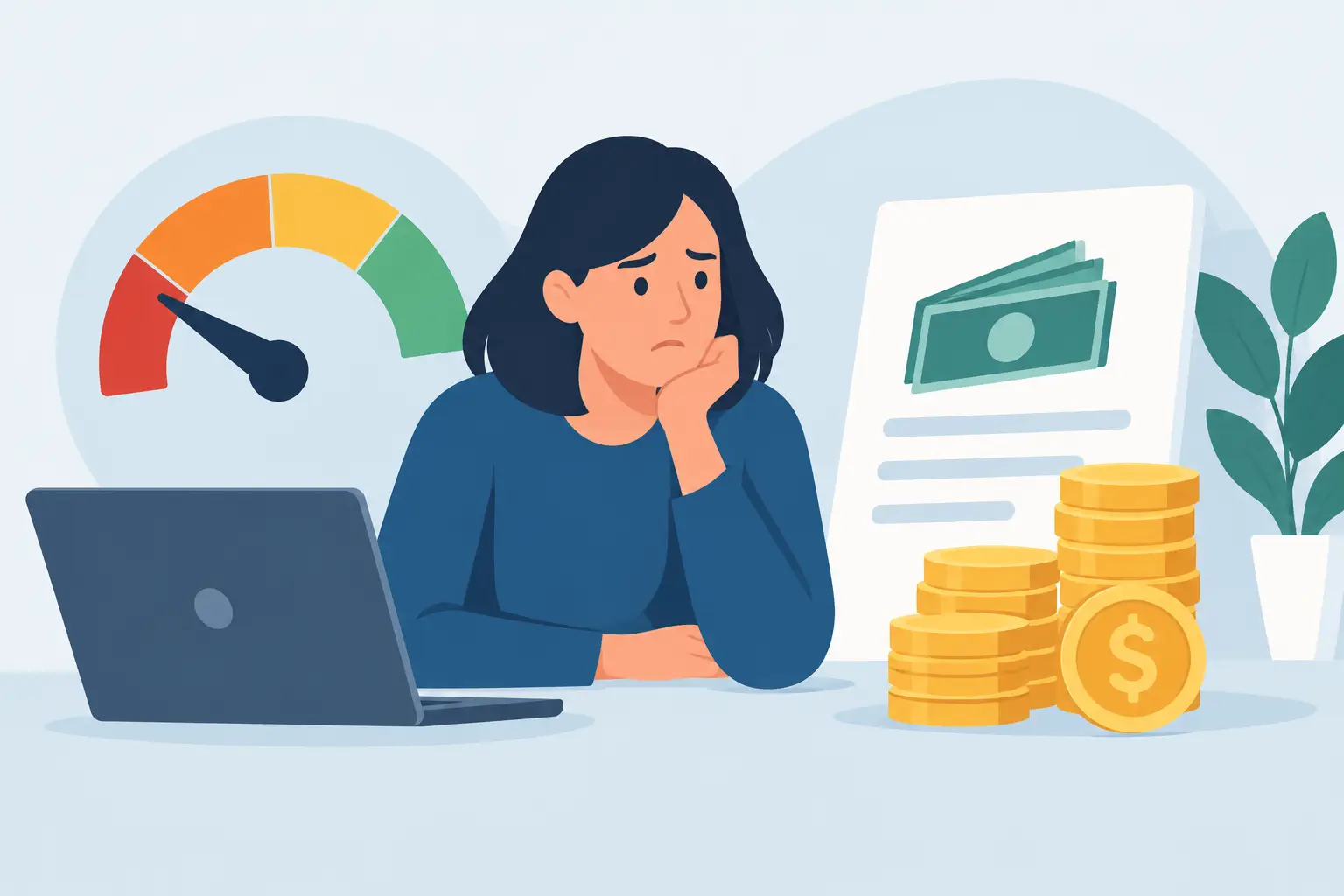
A $500 shortage can feel urgent when rent, a car repair, or a utility shutoff notice is involved. That urgency is why bad credit loans are common - and why borrowers need to see the full repayment amount before accepting an offer. A loan that puts cash in your account quickly can still create a larger problem if its payments do not fit your next few paychecks.
Bad credit does not mean you have no options. It does mean that offers may carry higher rates, fees, shorter repayment periods, or collateral requirements. The right choice depends on the amount you need, your income timing, your state’s laws, and whether borrowing actually solves the immediate problem.
What are bad credit loans?
Bad credit loans are loans marketed to people with poor, limited, or rebuilding credit histories. Lenders may use a credit score, but they can also weigh income, employment, bank-account activity, existing debts, and the requested loan amount. Approval is never guaranteed, and different lenders can reach different decisions using the same application information.
The phrase describes an audience, not one product. A bad-credit borrower may be offered a personal installment loan, a payday loan, a title loan, or a secured loan. These products work very differently. Treating them as interchangeable can hide the biggest issue: what you will owe, when you will owe it, and what happens if you cannot pay.
Some websites let you submit a loan request that is shared with third-party lenders. Those sites do not make the loan decision or set the final terms. Before you agree to any offer, review the lender’s identity, license information where applicable, disclosures, payment schedule, and total cost. A prequalification or request submission is not the same as a final loan agreement.
The loan type changes the risk
An installment loan is repaid through scheduled payments over weeks, months, or sometimes years. It can be easier to budget than a single-payment loan because the balance is divided into installments. Still, a longer term can mean paying more interest overall, especially when the rate is high or the loan includes an origination fee.
A payday loan is generally designed to be repaid quickly, often around your next paycheck. The dollar fee may appear small, but a short repayment window can make the effective annual percentage rate extremely high. If repayment leaves you unable to cover groceries, transportation, or another bill, taking another advance can start a costly cycle.
A title loan uses your vehicle title as collateral. You may be able to keep driving the car while making payments, but your car is at risk if you default. For a worker who depends on a vehicle to reach a job, medical appointments, or child care, that consequence can be far more serious than the original cash shortfall.
Secured credit cards and credit-builder loans are different from emergency borrowing. They may help establish a record of on-time payments over time, but they generally do not provide immediate cash for a crisis. They can be useful if your goal is rebuilding credit and you can make every required payment.
What bad credit loans can cost
APR is a useful comparison tool because it expresses interest and certain fees as a yearly cost. But APR alone does not tell you whether a payment works with your budget. Look at the actual dollar figures: the amount funded to you, each payment amount, the number of payments, the due dates, and the total of all payments.
For example, suppose you borrow $600 through an installment loan and receive the full $600. If you repay $78 every two weeks for 12 payments, you would pay $936 total. The $336 difference is the cost of borrowing. That may be manageable for one household and impossible for another, particularly if the payments overlap with rent or insurance.
Now consider a loan with a $75 origination fee deducted before funding. A $600 loan could put only $525 in your account, while you still repay based on a $600 obligation. If you need $600 for the bill, you may be tempted to borrow more, which can increase both the payment and total cost.
Ask whether the stated payment is fixed and whether there are penalties or additional charges for late payments, insufficient funds, refinancing, or extending the term. Also ask whether the lender reports payments to credit bureaus. On-time reporting may help build credit, but missed payments reported to bureaus can hurt it further.
State law matters more than many ads suggest
Loan availability and consumer protections vary by state. Some states restrict or prohibit payday lending, title lending, or certain fee structures. Others permit particular products but cap loan amounts, rates, fees, or repayment terms. A lender’s online ad is not proof that a product is lawful or appropriate where you live.
Check the rules for your state and Washington, DC before you apply. Pay attention to whether the lender is licensed or otherwise authorized to make the type of loan offered, and whether the contract identifies the governing law. State-specific limits can affect how much you can borrow, how long you have to repay, and the remedies available if a dispute occurs.
Be cautious when a lender pressures you to act immediately, asks you to pay an upfront fee before receiving funds, guarantees approval, or tells you to ignore a contract term you do not understand. Legitimate credit can still be expensive, but confusing or evasive answers are a warning sign.
Compare the offer against your next paychecks
Before accepting a loan, write down your expected take-home pay for each due date. Then subtract rent, food, transportation, child care, medication, insurance, existing debt payments, and other required bills. The amount left is not necessarily available for a new payment because irregular expenses happen. Leave room for them.
A useful test is simple: if this payment were due after your next paycheck, could you make it without missing another essential bill or borrowing again? If the answer is no, a lower loan amount, a longer but reasonably priced term, or a non-loan solution may be safer. Extending a loan may reduce the individual payment, but it can also raise the total amount repaid.
Do not focus only on the maximum amount a lender says you qualify for. Lenders assess risk differently than you assess household stability. Borrow only the amount needed for the specific expense, and avoid adding extra cash just because it is available.
Consider alternatives before high-cost borrowing
When the need is urgent, alternatives can feel slower than a loan application. Some can move faster than expected, particularly when the expense involves housing, utilities, food, health care, or transportation. Calling the company you owe may be a practical first step. Many utility providers, landlords, medical offices, and creditors can offer payment arrangements, due-date changes, hardship plans, or temporary forbearance.
Federal credit unions may offer payday alternative loans to eligible members. These loans can have more protective structures than traditional payday loans, though membership rules, application requirements, and funding times vary. Community banks and credit unions may also have small-dollar loan programs worth comparing.
For broader household pressure, free resources may help without adding debt. Dialing 211 can connect many callers with local programs for food, housing, utility assistance, and other essentials. Nonprofit credit counseling agencies can help organize debts and evaluate a debt management plan. Legal aid may be useful when a collection action, eviction risk, wage issue, or disputed debt is involved.
A clear decision is better than a rushed one
Bad credit loans may be a workable tool when the expense is necessary, the lender is legitimate, and the repayment plan fits your actual budget. They are a poor fit when the payment forces you to skip essentials, pledge a vehicle you cannot lose, or borrow again to cover the first loan.
Take a few extra minutes to read the contract, calculate the total repayment, and check the rules that apply in your state. If the numbers do not work on paper, they are unlikely to work better after the money arrives.