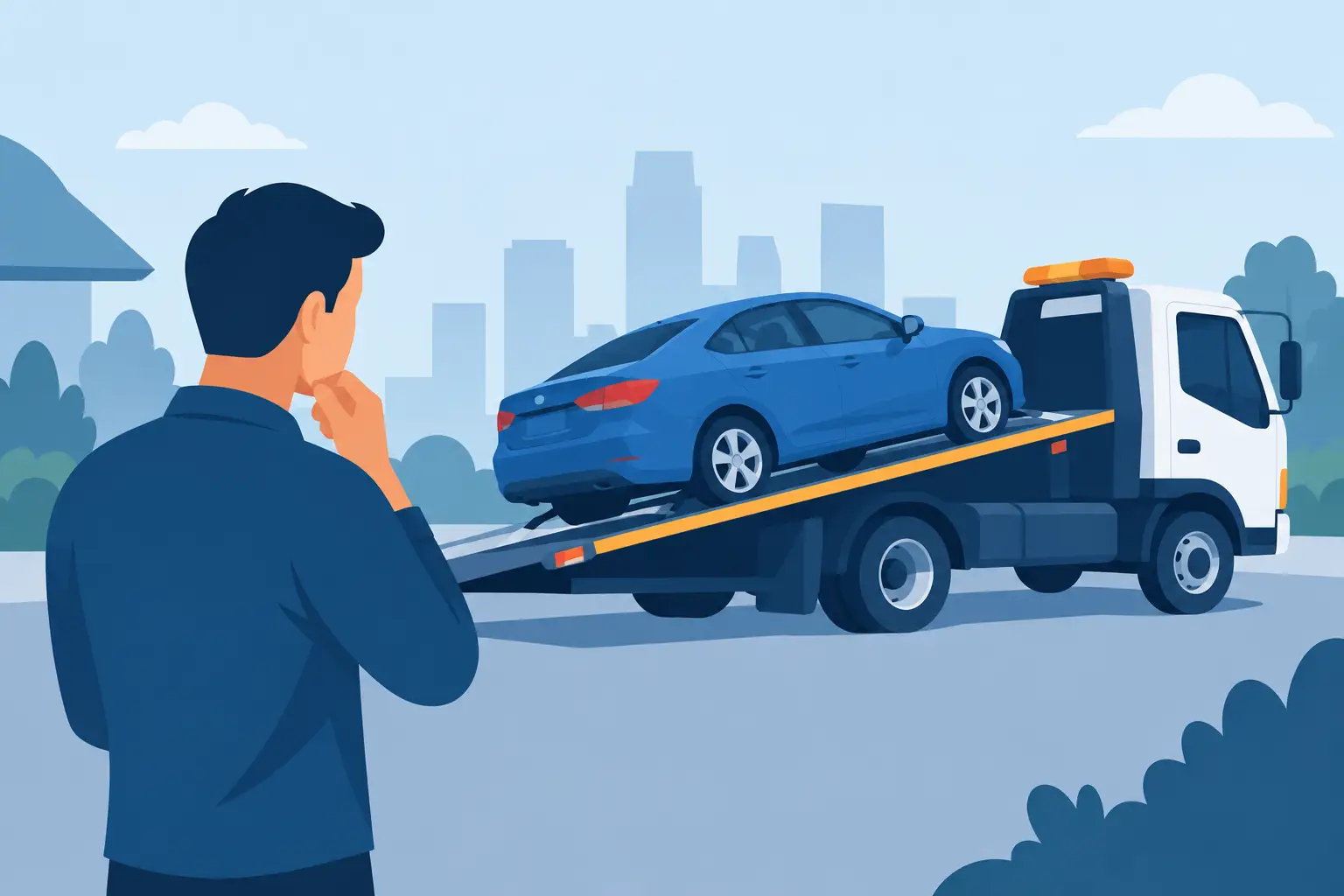
A title loan can put cash in your hands quickly, but the car you need to get to work, take children to school, or handle daily errands is part of the deal. That is the central car title loan repossession risk: if you do not meet the loan terms, the lender may be able to take the vehicle used as collateral.
That possibility does not mean repossession happens after one rough week. The timing, notices, fees, and lender remedies depend on your contract and state law. Still, a title loan deserves more scrutiny than an unsecured loan because the consequence of falling behind can be losing transportation as well as owing money.
How a title loan puts your vehicle at risk
In a typical car title loan, you borrow against the value of a vehicle you own. The lender takes a security interest in the car and may hold the physical title or record its lien with the state, depending on local rules. You keep driving the car while making payments.
If the account goes into default, the lender may have the right to repossess the vehicle. Default can mean a missed payment, but it can also include other contract violations, such as failing to maintain required insurance, providing inaccurate information, or moving the vehicle out of state without permission. Read the default section before signing. It is often broader than borrowers expect.
Title loans may have short repayment periods, large lump-sum payments, or high finance charges. Those structures can make the payment hard to absorb when a household is already dealing with an emergency expense. Rolling over, renewing, or refinancing a balance can extend the debt and add more charges where permitted.
What repossession can look like
Repossession is not always preceded by a court hearing. In many states, a lender with a valid security interest may hire a repossession company after default, as long as the repossession does not breach the peace. The precise rule and required notices vary by state.
A vehicle may be taken from a driveway, parking lot, or other location where it can be recovered lawfully. A repossession agent generally cannot use force, threaten you, or break into a locked garage. If a confrontation is developing, do not try to physically stop the tow. Document what happened and get legal advice if you believe the repossession was unlawful.
Once the car is taken, you may face more than the missed payment. The account can accumulate towing, storage, repossession, and legal fees if your agreement and state law allow them. Those costs can rise quickly, particularly if you do not act promptly.
You may have a chance to get the car back
Some states give borrowers a right to reinstate the loan by catching up on overdue amounts and permitted costs. Others may allow redemption, which generally means paying the full balance plus allowable expenses before the vehicle is sold. Whether either option applies, and how long you have, depends on your state and contract.
Ask the lender in writing for the exact amount needed to reinstate or redeem, the deadline, the vehicle location, and an itemized list of fees. Keep copies of every message, receipt, and payment confirmation. Do not assume a verbal promise changes the written loan terms.
If the vehicle is sold, state law may require the lender to provide notice of the sale. A sale does not necessarily end the financial problem. In some situations, the sale proceeds may be less than the amount owed and allowable costs. The remaining amount is often called a deficiency balance. Whether a lender can seek that balance depends on state law, the loan agreement, and how the sale was handled.
Car title loan repossession risk is more than losing a car
For many borrowers, transportation is income protection. Losing a car can mean missed shifts, reduced hours, difficulty finding child care, and added costs for rideshares or public transit. Those disruptions can make it even harder to resolve the loan balance.
There can also be credit consequences. A lender may report late payments, default, a repossession, or a collection account to credit reporting agencies. Reporting practices differ, and not every lender reports to every bureau, but a repossession can make rebuilding credit harder if it appears on your reports.
Personal belongings create another concern. Items left in the vehicle are not usually collateral for the loan, but recovering them may require contacting the lender or repossession company quickly. Make a written inventory of what was in the car and ask for a pickup process. Keep records of the request.
Before you borrow, test the payment against real life
The safest time to address repossession risk is before you sign. Do not compare title loans only by the amount you can receive. Compare the full repayment amount, payment dates, finance charges, late fees, whether renewals are possible, and the specific events that trigger default.
A payment that works only if every paycheck arrives on time is fragile. Consider what happens if your work hours are cut, a child gets sick, or another bill comes due. If the car is essential to your job or household, the cost of losing it may be far higher than the cash advance solves.
State rules matter. Title lending is restricted, regulated differently, or unavailable in some states. Rate limits, licensing requirements, renewal rules, repossession rights, and borrower notices can vary widely. Check the rules that apply where you live rather than relying on a lender's general advertising or information from another state.
A lender's willingness to approve you is not proof that the payment is affordable. Approval decisions are made by lenders, not by educational websites, and lenders may use different underwriting standards. Your decision should be based on whether you can repay without putting basic housing, food, utilities, or transportation at risk.
If you are worried about missing a payment
Contact the lender before the due date if possible. Explain the issue briefly and ask whether it offers a payment arrangement, due-date change, hardship option, or written extension. There is no guarantee a lender will agree, and an extension may add interest or fees, so ask for the total new cost and get any agreement in writing.
Do not ignore calls, letters, or notices about the account. Ignoring the problem can shorten the time you have to explore options. Review your contract for the lender's contact information, default terms, and required notices. If a payment has already been made, verify that it was properly credited.
Avoid taking a new high-cost loan simply to cover the title loan payment unless you understand both repayment schedules and can realistically afford them. Replacing one urgent debt with another can leave you with two payment problems instead of one.
Depending on the situation, a lower-cost option may be available. A federal credit union payday alternative loan, a small loan from a community bank or credit union, a hardship plan with a utility or medical provider, an employer advance program, or help from family may be worth comparing. These options are not right or available for everyone, but they may protect the vehicle from becoming collateral.
For urgent help with rent, utilities, food, transportation, or local benefits, dialing 211 may connect you with community resources. Nonprofit credit counseling can help you review a budget and debt options. If repossession is threatened or has occurred, legal aid may be able to explain state-specific rights, especially when fees, notices, or the repossession process appear questionable.
Questions to ask before signing
Ask the lender for clear answers to these questions: What is the total dollar amount I will repay if I pay on time? Is the payment due in one lump sum or installments? What happens after a late payment? Can the loan be renewed, and what will that cost? When can the lender repossess the car? What fees may be added after default? Will the lender report to credit bureaus? Can I still owe money after the car is sold?
If the answers are rushed, unclear, or missing from the written agreement, pause. A legitimate financial decision should leave room for you to read the terms and compare alternatives.
A title loan may feel like the only available option when money is tight. Before putting your vehicle on the line, treat the payment as a transportation decision, not just a borrowing decision. Protecting the car that keeps your household moving can be worth taking an extra day to seek a less risky solution.