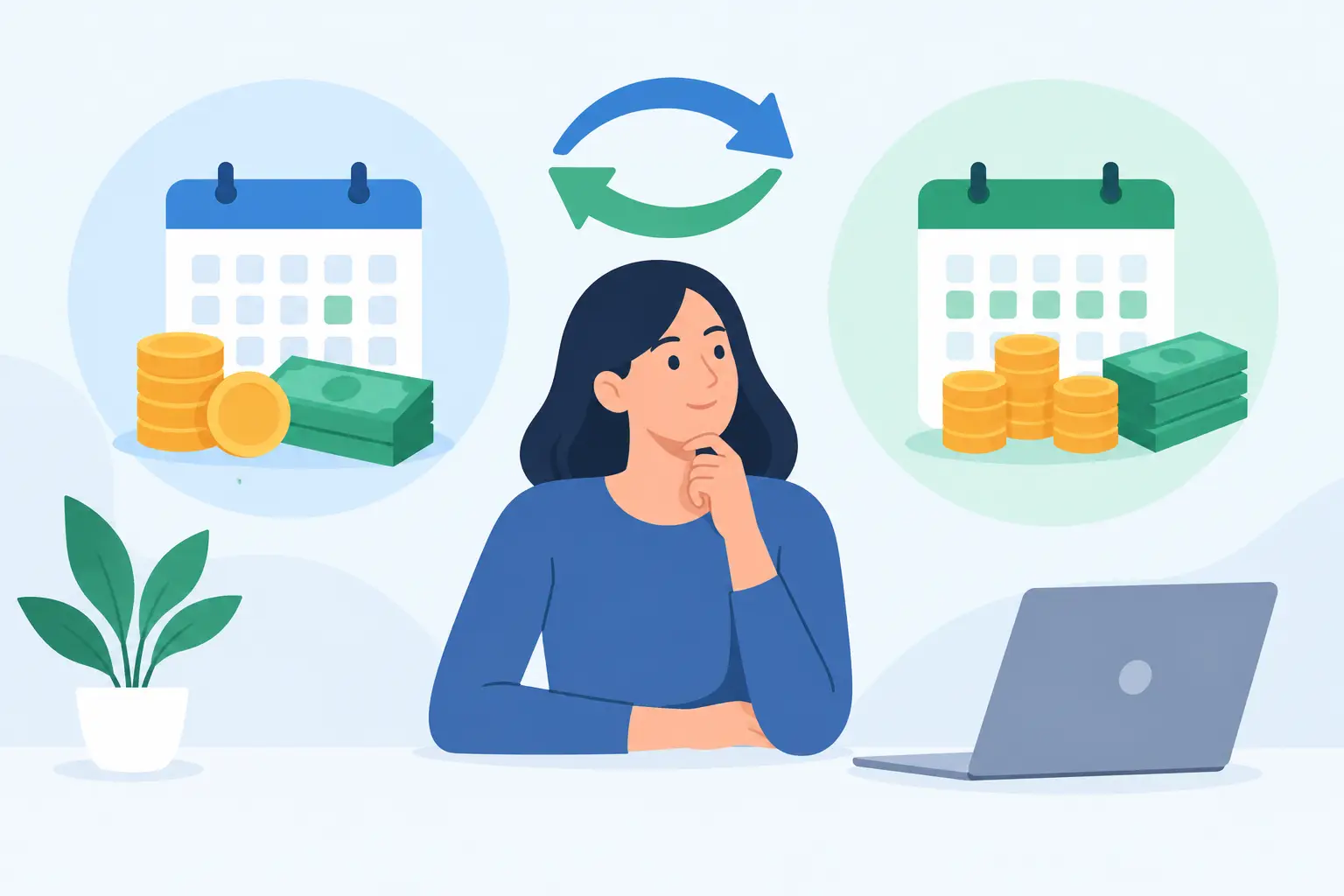
A payday installment comparison can look simple at first: one loan is paid in a single lump sum, while another is split into scheduled payments. But a longer repayment period does not automatically mean a lower-cost loan. For a borrower already managing a tight paycheck-to-paycheck budget, the key question is whether the payment fits without creating a new cash shortage next month.
A payday loan and a payday installment loan may be offered to borrowers with bad credit, limited credit history, or an urgent expense. Their terms, legal status, and cost can vary sharply by state and by lender. Before submitting a loan request, compare the full repayment amount, payment dates, annual percentage rate, fees, and what happens if you cannot pay as agreed.
Payday installment comparison: start with the structure
Traditional payday loans are generally small, short-term loans due on your next payday or within a few weeks. Depending on state law, repayment may be made through a postdated check, electronic withdrawal authorization, or another agreed payment method. A single payment can be difficult to absorb because the entire balance, including the finance charge, comes out at once.
A payday installment loan divides the amount borrowed and finance charges into multiple payments over weeks or months. That may lower each individual payment, but the lender may charge interest for longer. A smaller scheduled payment can therefore come with a substantially larger total cost.
For example, imagine two ways to borrow $500:
- A two-week payday loan with a $75 finance charge requires repayment of $575 at once.
- A six-month installment loan with payments of $120 requires $720 in total.
The installment option may be easier to fit into a biweekly or monthly budget. Still, it costs $145 more in this illustration. The better choice depends on whether you can realistically repay the lump sum without missing rent, utilities, food, transportation, or another essential bill. If neither payment works, taking either loan may deepen the problem.
Compare total dollars, not just the payment
A lender may emphasize a payment such as "$85 every two weeks." That figure matters, but it does not tell you how much the loan costs overall. Write down the amount financed, every scheduled payment, the number of payments, and the total of those payments. Then subtract the amount you receive. The difference is the cost of borrowing before any late or returned-payment charges.
APR is also useful because it expresses the cost as a yearly rate. A high APR can make a short loan look less expensive than it is when you focus only on a dollar fee. At the same time, APR is not the only figure to review. On a short-term loan, the actual dollar cost and the due date may be more immediately important to your household budget.
Ask for or review these terms before agreeing to a loan:
- The cash amount you will receive and whether any fees are deducted before funding.
- The total number, amount, and dates of required payments.
- The APR, finance charge, origination fee, and any optional product charges.
- Late-payment, nonsufficient-funds, or returned-payment fees.
- Whether the lender can debit your bank account automatically and how authorization can be revoked under applicable law.
- Whether paying early reduces interest or whether the full scheduled finance charge still applies.
Do not assume a loan has no prepayment benefit or penalty based on its name. Read the agreement. State law and the specific contract can affect how early payoff is handled.
Watch the calendar, not only the contract term
Payment timing is often the deciding issue. A monthly installment loan can be harder to manage if you are paid weekly, have irregular hours, or face several large bills at the beginning of the month. A biweekly schedule may line up better with paydays, but only if it does not leave too little for groceries and transportation between checks.
Put each proposed payment beside your actual pay dates and required expenses. Include rent, utilities, insurance, child care, medication, fuel, minimum debt payments, and food. A payment that works on paper before those essentials are counted is not truly affordable.
State rules can change the comparison
Payday and installment lending are regulated differently across the United States. Some states prohibit payday lending or impose interest-rate caps and other limits that make the typical payday model unavailable. Other states allow certain products but limit loan amounts, fees, terms, renewals, repayment plans, or collection practices. Rules for installment loans may be different from rules for single-payment payday loans.
That means an offer available in one state may not be lawful, licensed, or structured the same way in another. A lender operating online does not remove the need to understand the rules that apply where you live. Check your state-specific consumer guidance and the lender's licensing information before moving forward.
Also be careful with broad labels. Some lenders use terms such as "cash advance," "short-term loan," or "installment loan" for products with very different pricing. The disclosure documents matter more than the marketing label.
Consider the risk of repeat borrowing
The central risk with high-cost short-term credit is not just one fee. It is the possibility that repayment creates another gap, leading to another loan, overdraft fee, missed bill, or collection problem. An installment schedule can reduce the immediate pressure of one large payoff, but it also keeps a payment in your budget for longer.
Before borrowing, ask a direct question: what will be different when the loan payment is due? If the answer is "nothing," and the budget is already short each pay period, the loan may only move the shortage forward. A loan for a one-time car repair can be different from borrowing every month for rent or utilities. Repeated borrowing for ongoing bills is a sign to look for lower-cost support and a longer-term budget solution.
Avoid rolling over a balance, refinancing it, or taking a second loan solely to make the first payment unless you fully understand the additional cost and have no safer option. These choices can extend the time you remain in debt.
Check lower-cost options before accepting high-cost credit
When an expense is urgent, calling for help may feel slower than completing an online request. Yet a few calls can sometimes reduce or postpone the bill that created the emergency. Ask a utility, landlord, medical provider, insurer, or auto repair shop whether it offers a hardship plan, due-date change, installment arrangement, or reduced payment. Get any agreement in writing when possible.
Federal credit union payday alternative loans, where available, may offer a lower-cost small-dollar option than many payday products. A credit-builder loan or secured credit card is usually not an emergency cash solution, but either may help some consumers establish a borrowing record over time. Local 211 services, nonprofit credit counseling agencies, legal aid offices, and public benefits programs may also help with food, housing, utility, medical, or transportation needs.
These options are not right or available for everyone. A credit union loan may require membership, and assistance programs may have eligibility rules or waitlists. But comparing them before accepting a high-cost loan can protect more of your next paycheck.
A practical decision rule
A payday installment loan may be less disruptive than a single-payment payday loan when the scheduled payments fit your budget and the total cost is clearly disclosed. It may be a poor fit when the longer term dramatically raises the amount repaid, the lender's withdrawal schedule conflicts with your income, or the payment leaves no room for essentials.
Take time to compare at least the amount received, total repayment, payment schedule, APR, fees, and state-specific legal protections. If you decide to submit a request through a loan-referral service, remember that submitting information does not guarantee approval, a specific rate, or a particular loan amount. Lenders make their own underwriting and credit decisions.
The safest borrowing decision is not always the fastest one. When the payment would force another loan next payday, pause and look first for a bill arrangement, community resource, or lower-cost option that gives your budget room to recover.