Most Illinois consumer installment loans now sit under a 36% all-in APR cap and a $40,000 maximum under CILA. Since March 2021, that cap has shaped both what lenders can charge and what borrowers should expect to see in a legal offer.
An Illinois installment loan is no longer a simple question of “can I get funded?” The key question is whether the loan fits Illinois's product rules, pricing cap, and enforceability standards, because an over-cap structure can create collection risk instead of just a bad deal.
Table of Contents
- Illinois Installment Loans at a Glance
- Key Illinois Installment Loan Rules and Limits
- Product Types and Which Loans Are Permitted
- Representative Cost Examples and Payment Scenarios
- How to Choose Compliant Installment Loans
- Illinois BNPL Regulation and Credit Boundaries
- Quick Reference Rules Contacts and Next Steps
- Getting Help and Submitting a Borrower Request
Illinois Installment Loans at a Glance
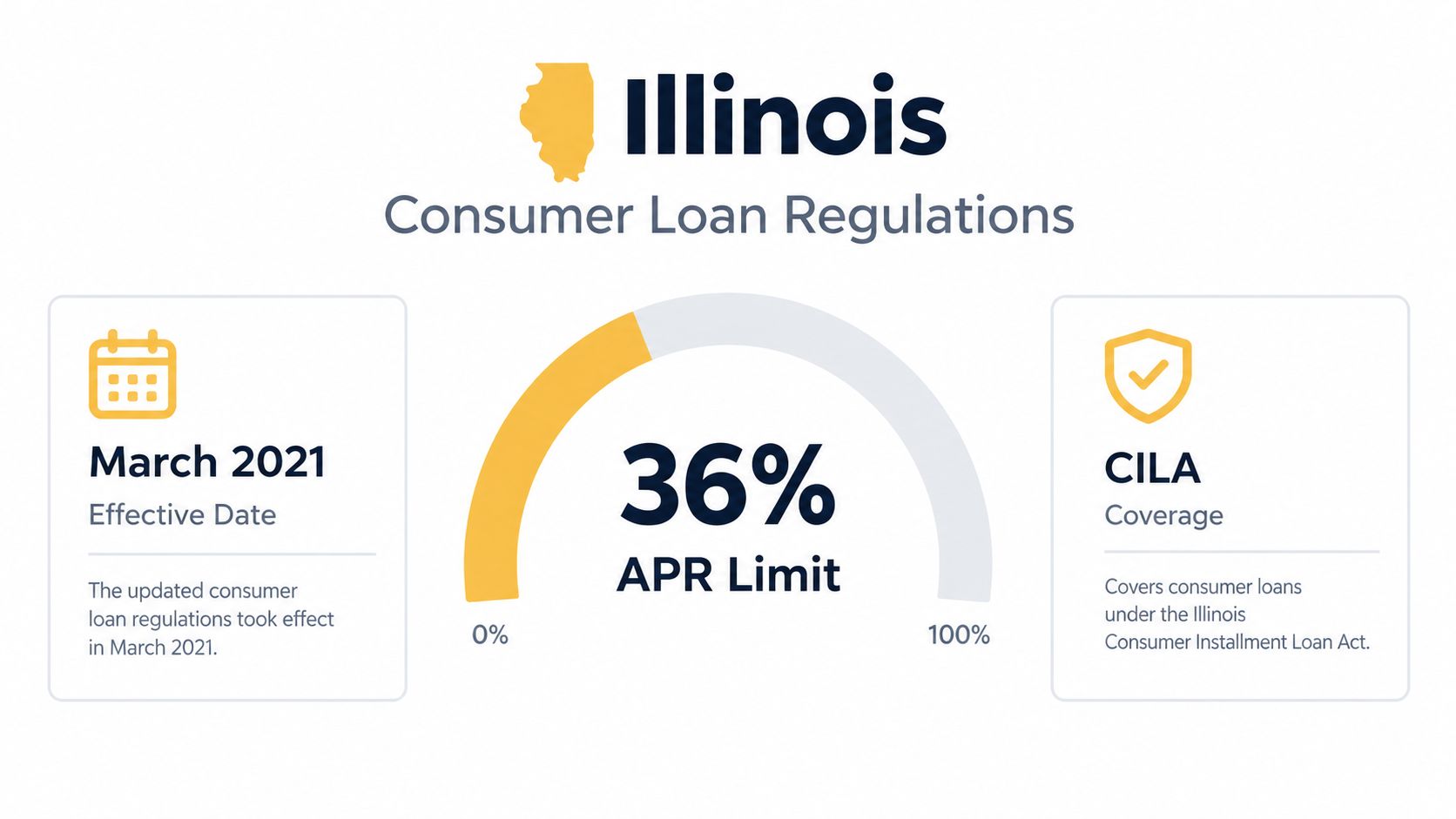
Illinois sets the baseline plainly. Licensed consumer installment lenders may make loans up to $40,000, and the state applies a 36% APR cap to most consumer loans, including CILA loans, under the statewide framework that took effect in March 2021. That pairing matters because it lets borrowers compare offers on two fronts at once, the amount allowed and the maximum price allowed.
BadCreditMD's Illinois loan guide is useful only as a starting point. The real work happens when you test an offer against the statute, the disclosures, and the fee structure, because a legal product can still be expensive and a mislabeled product can still violate Illinois law.
Practical rule: In Illinois, the label on the loan doesn't control the result. The APR cap, the included fees, and the legal product category do.
Why the cap changes the borrower's leverage
A borrower with imperfect credit still has room to compare offers, but the comparison is narrower than in many states. A lender can't offset risk with a higher rate if the loan is subject to the statewide cap. That forces pricing, amortization, and fees into a tighter box, which makes the paperwork more important than the marketing.
The borrower's advantage is clearer too. If an offer appears to exceed the all-in cap, it's not a “maybe” problem. It can raise enforceability issues, which means the structure itself may be flawed, not just the disclosure language.
What to look for first
Start with the loan amount, then check the APR, then read the fee language. If any part of the cost picture seems detached from the stated rate, pause and verify the structure before signing. The best offers in Illinois usually read cleanly because the lender has already built the product to stay inside the cap.
Key Illinois Installment Loan Rules and Limits
The hard ceiling is simple, but the compliance design behind it isn't. Under CILA, licensed lenders may make consumer installment loans up to $40,000 and charge no more than 36% APR, and Illinois regulators treat that cap as all-in, meaning interest, fees, and charges all matter in the pricing test. That is why a loan can fail compliance even if the stated interest rate looks modest.
Illinois state rules on installment lending are best read through an enforceability lens. If the effective APR rises above the cap once all charges are counted, the issue isn't just that the disclosure is incomplete. The structure itself can become a collection problem.
The legal threshold is cumulative
Illinois does not reward creative fee packaging. Origination charges, service charges, and any other included amounts have to be tested together so the effective APR stays within the cap. That means lenders need a pricing model that survives the math, not just a marketing page that sounds compliant.
If the economics only work when a fee is hidden outside the rate discussion, the loan deserves a second look.
What “null and void” means in practice
Illinois materials state that a loan with PLPA APR over 36% is null and void. That's a strong enforcement position because it moves the issue from disclosure into validity. A borrower facing an over-cap structure isn't just looking at a higher bill, they may be looking at a contract that can't be enforced as written.
What compliant design usually requires
A compliant lender has to engineer the whole offer, not just the headline rate. Amortization has to match the stated term, fee architecture has to be visible, and any add-on charge has to be tested against the cap from day one. If the loan only works after the lender reclassifies costs, the deal is probably not compliant enough for Illinois.
Product Types and Which Loans Are Permitted
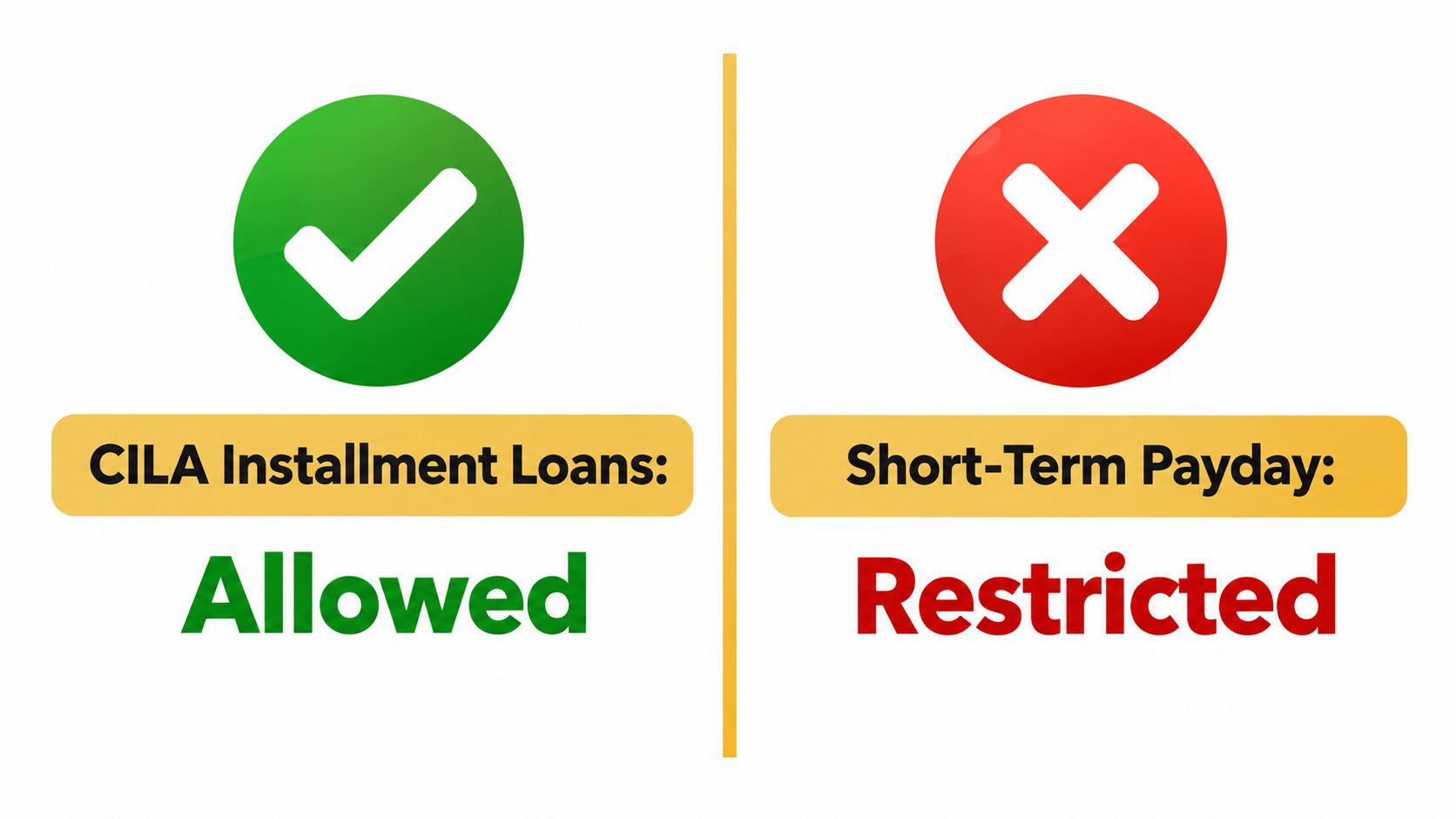
Illinois borrowers need to separate loan format from legal status. A payment plan that uses installments is not automatically a lawful installment loan, and a short-term product that advertises installments is not automatically permitted. The state's current guidance distinguishes between traditional CILA installment loans and the now-disallowed installment payday structure.
Loan-type comparisons for Illinois borrowers help make that distinction practical. The safest mental model is to ask whether the product is a CILA installment loan, another consumer credit product subject to the statewide cap, or a structure the state no longer permits.
CILA installment loans versus installment payday structures
Traditional consumer installment loans under CILA remain legal if they satisfy the statute and regulations. Installment payday loans are not treated the same way under current state guidance. That difference matters because both products can look similar in a storefront or online application, but only one sits comfortably inside the current legal framework.
A borrower should never assume that “installment” means safer or legal. The decisive questions are whether the lender is licensed, whether the product category is allowed, and whether the all-in APR stays within the cap.
Why older market descriptions can mislead
Illinois's earlier trend reporting described smaller CILA loans as loans of $4,000 or less with APRs above 36% but below 99% before later reforms tightened the market. That history explains why older blog posts, comparison charts, and ads can be out of date. What used to be a common product description may no longer reflect today's legal pricing environment.
A simple decision rule
If the product is a cash loan with repayments over time, ask three questions. Is it a lawful CILA structure, is it capped at 36%, and is every fee included in that calculation? If the answer to any one of those is unclear, the borrower should treat the offer as unverified.
Representative Cost Examples and Payment Scenarios
The cost math in Illinois starts with the cap, not the monthly payment. Once the APR ceiling is fixed at 36%, the lender's room to shape payments comes from term length, principal size, and whether any included charges push the effective cost higher. That is why two loans with similar monthly payments can still differ in total cost and compliance risk.
Illinois Installment Loan Cost Examples
| Principal | Term | APR Cap | Estimated Total Cost |
|---|---|---|---|
| $1,000 | 12 months | 36% | a moderate amount above principal, with the exact total depending on amortization and any included charges |
| $4,000 | 24 months | 36% | a larger dollar cost than the smaller loan, even when the monthly payment feels manageable |
These examples are intentionally qualitative because Illinois compliance depends on the full pricing structure, not a one-size-fits-all payment formula. The point is simple, a longer term can lower the payment but raise the total amount repaid, and any included fee can shift the APR.
How to read a quote without getting tricked by the payment
A low monthly payment can still mask a high total cost if the term is stretched or if fees are folded into the finance charge. The APR tells you how expensive the credit is relative to the amount borrowed, while the payment schedule tells you how the lender spreads that cost across time.
Borrower test: Don't compare offers by payment alone. Compare principal, total repayment, and whether every charge is inside the 36% all-in APR.
What works and what doesn't
What works is a quote that shows the amount, the number of payments, and a clear breakdown of charges. What doesn't work is a quote that hides fees in separate line items or relies on verbal assurances about affordability. In Illinois, the question isn't just whether you can make the payment, it's whether the pricing survives the statutory cap.
How to Choose Compliant Installment Loans
A marketing label doesn't make a loan legal. The safer approach is to verify the lender, then test the APR, then review every fee that could affect the all-in cost. In Illinois, that order matters because the cap applies to the whole deal, not just the headline rate.
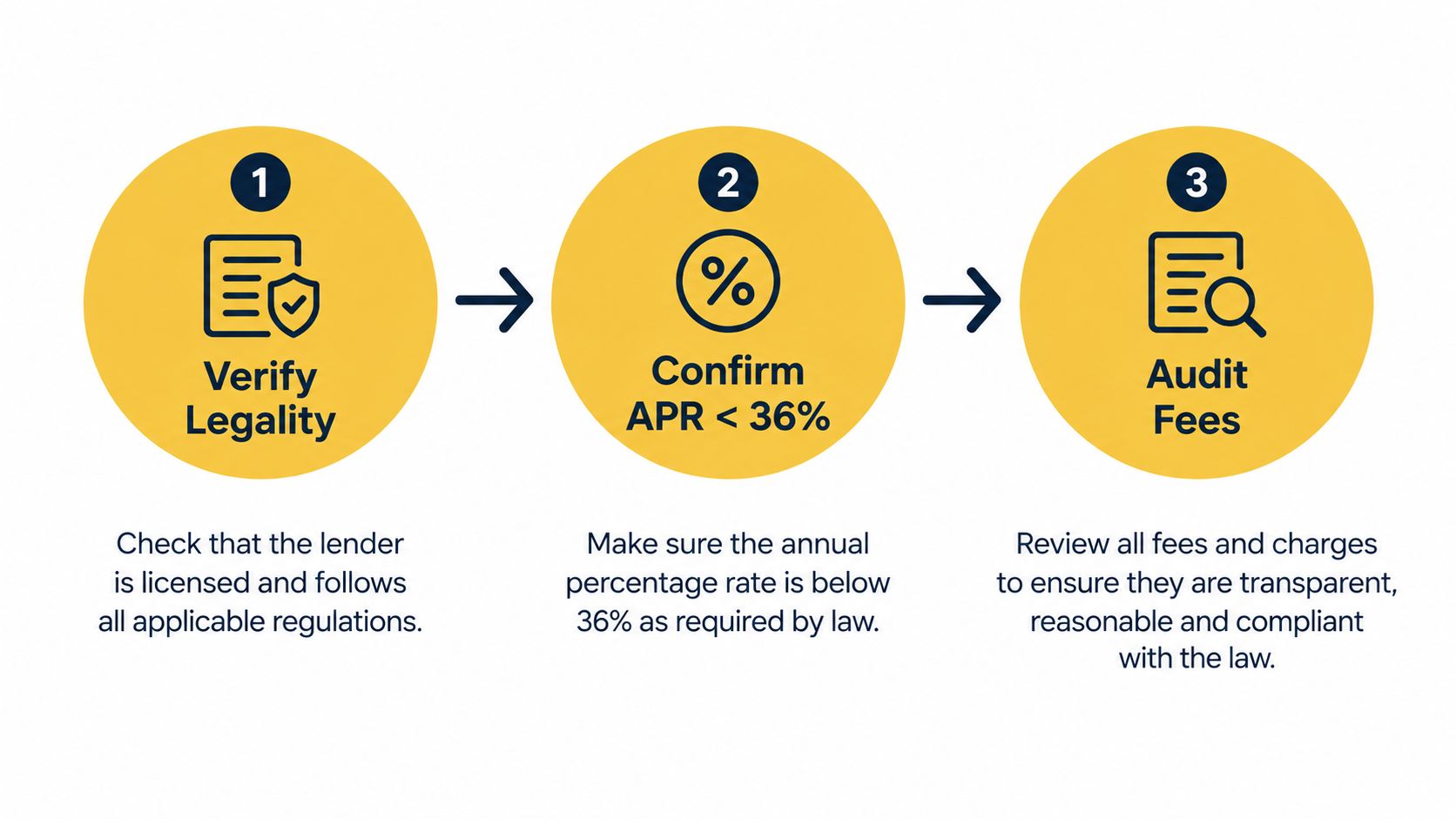
Step 1 Verify the product category
First, identify whether the lender is offering a lawful CILA installment loan or something that only looks similar. If the product sounds like a short-term installment payday structure, slow down and verify the category before moving ahead. Illinois treats product type as a legal question, not a branding choice.
Step 2 Confirm the APR is below the cap
Next, check whether the stated APR stays below 36% and whether the lender is treating the cap as all-in. A rate quote that looks fine until you add “service” or “processing” charges is a warning sign. If the total cost changes when fees are included, the offer needs a closer look.
Step 3 Audit the fee language
Finally, read the fee schedule and the payment terms together. A compliant offer should show how charges are allocated across the loan, not bury them in separate disclosures that don't seem to match the APR. If the math isn't transparent, the borrower is being asked to trust the lender instead of the statute.
Red flags that deserve a pause
- Vague cost language: If the lender won't clearly explain what counts in the APR, that's a problem.
- Mismatched disclosures: If the payment schedule and fee sheet don't line up, review the entire offer again.
- Pressure to sign quickly: In Illinois, speed is not a substitute for compliance.
Illinois BNPL Regulation and Credit Boundaries
Illinois is no longer treating every repayment plan as if it sits outside consumer-credit oversight. In 2026, the state enacted a BNPL law that creates a licensing framework and is set to take effect no earlier than January 1, 2028, while carving out some retail installment transactions and other credit structures. That matters because many consumers compare BNPL, retail financing, and installment loans as if they were interchangeable.
Illinois BNPL and payday-related consumer credit guidance helps frame the boundary issue. The key takeaway is that a short-term payment plan can become regulated credit depending on how it works, who offers it, and how the transaction is structured.
Why this affects installment loan searches
A consumer who searches for an installment loan may be comparing three different things: a cash installment loan, a retail point-of-sale financing plan, and a BNPL-style arrangement. Illinois is drawing sharper lines among those products, which means the legal analysis now has to start with structure, not with the word “installment.”
That distinction matters for both borrowers and merchants. A retail installment transaction may be carved out from one framework, while a BNPL arrangement may fall under another, and a cash loan can still be governed by the APR cap discussed earlier.
What to check before relying on a payment plan
Ask whether the plan is credit, whether the provider is licensed for the product being offered, and whether the transaction falls into an express exclusion. If the answer is unclear, the safest assumption is that the plan needs legal review before you rely on it. The more a payment plan looks like closed-end credit, the more likely Illinois will care about how it's labeled and regulated.
Why the boundary keeps moving
Illinois is expanding oversight across multiple repayment-plan products, not only traditional cash loans. That doesn't mean every plan is treated the same way, but it does mean consumers should stop treating installment language as a shortcut around credit law. In this state, the structure determines the rule.
Quick Reference Rules Contacts and Next Steps
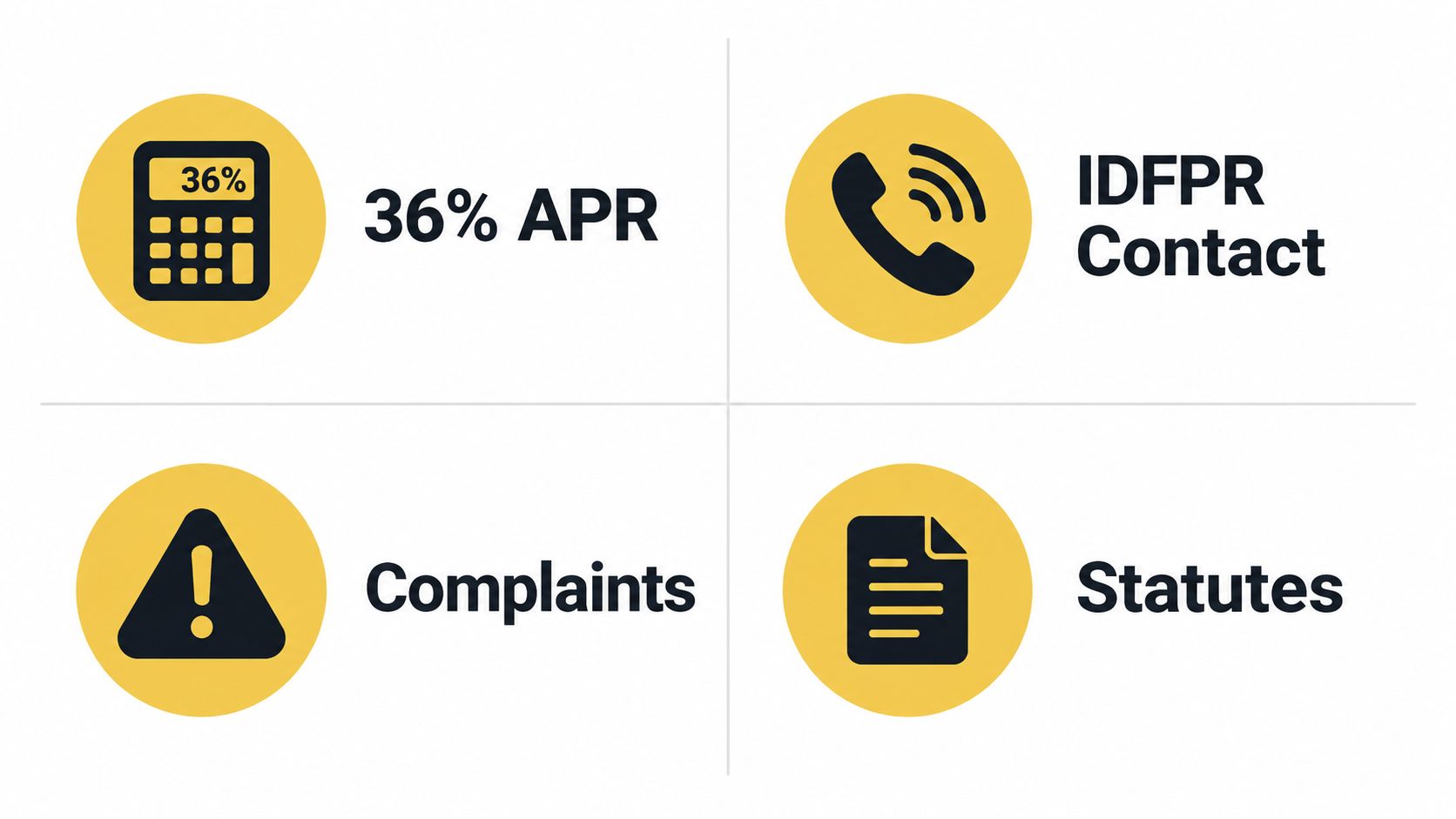
Illinois installment loan review comes down to four checkpoints. The lender has to be allowed to make the product, the price has to stay inside the 36% all-in APR cap, the fees have to be part of the same calculation, and the contract has to remain enforceable if challenged.
Fast lookup
- Rate ceiling: 36% APR for most consumer loans under the statewide framework.
- Product ceiling: up to $40,000 for consumer installment loans under CILA.
- Compliance test: all-in pricing, including interest, fees, and charges.
- Risk signal: an over-cap structure can create null-and-void and collection problems.
Where to direct a problem
If a quote looks wrong, the borrower should keep the disclosures and contact the relevant Illinois consumer-credit regulator or enforcement office listed in the state materials. For a formal dispute, complaint, or enforcement question, the paper trail matters more than the sales pitch. Save the offer, the payment schedule, and every fee disclosure before you act.
The safest next step
The best next step is to compare the offer against the statutory cap, not against a lender's promotional language. If the offer still looks unclear after that, don't sign until the lender explains exactly how the loan stays compliant in Illinois.
Getting Help and Submitting a Borrower Request
A borrower who doesn't qualify for a compliant Illinois installment loan still has options. In practice, the better move is often to compare the loan quote with lower-pressure alternatives like a credit union payday alternative loan, a credit-builder loan, a secured credit card, or a payment plan with the creditor directly. Those options aren't right for every situation, but they can reduce the chance of paying for credit that doesn't fit the budget.
A common mistake is to treat research as a credit event. Reading guidance doesn't affect a credit score, and a score check only happens when a borrower submits an actual request through a lender or lending network where available. That distinction matters because it lets people compare Illinois options without adding unnecessary risk.
Good habit: Match the urgency of the expense to the cheapest workable repayment plan, not the fastest ad on a search page.
A borrower with a tight budget can also ask for help outside the lending market. Local 211 directories, nonprofit credit counseling, legal aid, public benefits portals, and the CFPB complaint process can all be useful when the issue is a disputed charge, a confusing loan offer, or a repayment plan that isn't structured fairly. If the expense can wait, a payment plan or counseling appointment may beat a high-cost loan.
BadCreditMD is an informational resource, not a lender or broker, and a separate lending network partner may transmit requests to third-party lenders where available. If you want a clearer read on Illinois borrowing rules and safer alternatives, visit BadCreditMD to compare loan types, review state-specific guidance, and find practical next steps before you sign anything.