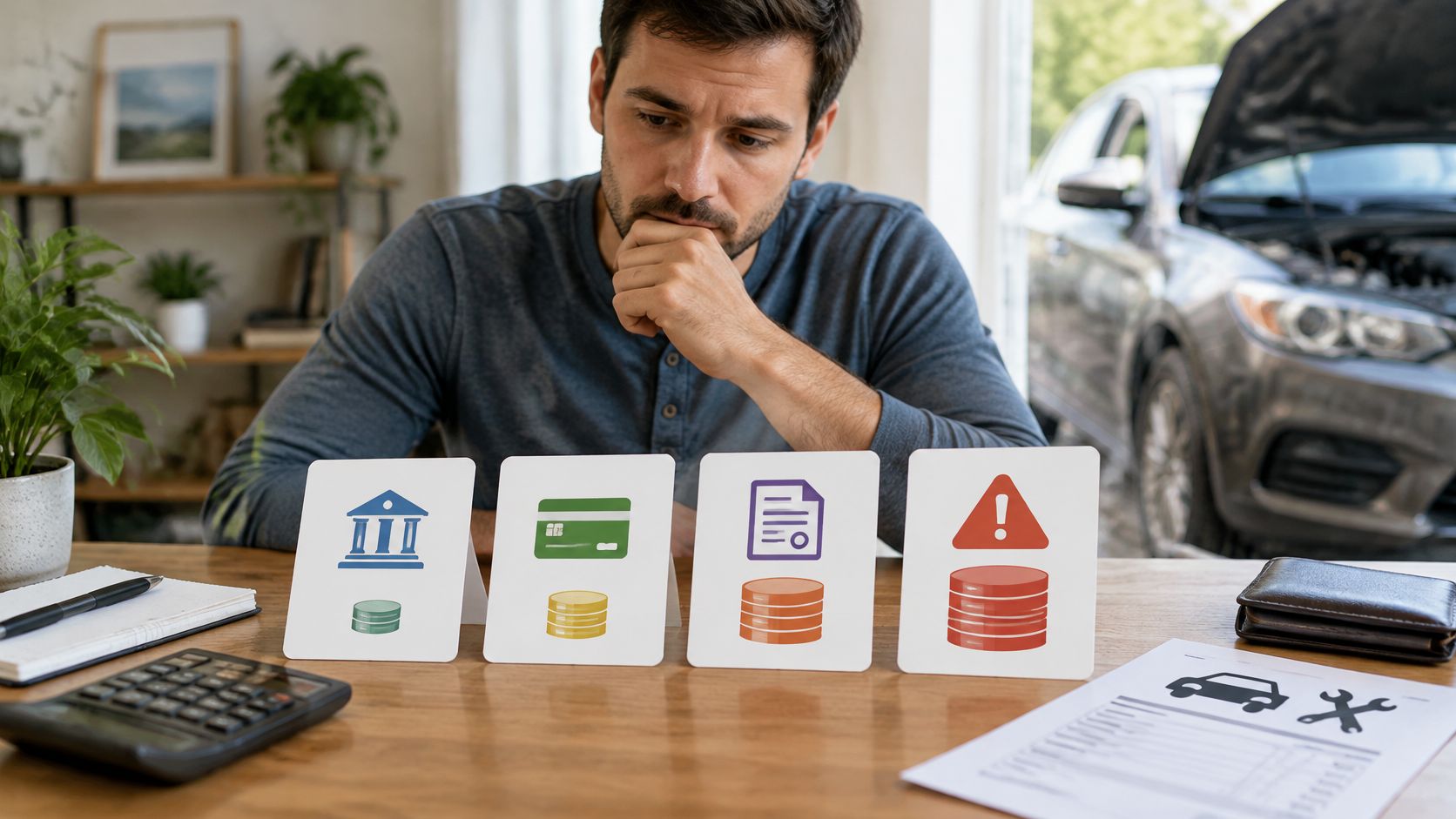
The repair shop says your car needs a $900 repair. You need it to get to work, your credit score is low, and payday is still out of reach. In this hypothetical situation, getting approved feels urgent. But an approval doesn't tell you whether the loan will leave you better off.
The same repair could be covered with a personal installment loan, a credit union loan, or a short-term loan secured by your vehicle. Each creates a different repayment obligation. A manageable-looking payment can hide a long repayment term, while a modest fee can become expensive if you have to renew the loan.
The best loan options for bad credit are the ones you can repay without borrowing again. Compare the cash you'll receive with every required payment and fee. Then ask whether the lender reports your payments and what you could lose if repayment goes wrong.
Start with the exit: Identify the income that will repay the debt, not just the lender willing to provide it.
The numbered options below aren't a cheapest-to-most-expensive ladder. Actual costs overlap, and credit union products deserve an early look even though they appear later. Judge every offer by total borrowing cost, useful credit reporting, and collateral risk. Your state's rules also matter, so verify the permitted product, lender authorization, and applicable limits before submitting an application.
Table of Contents
- 1. Subprime Personal Installment Loans
- 2. Payday Loans
- 3. Title Loans
- 4. Pawn Loans
- 5. Payday Alternative Loans (PALs) from Credit Unions
- 6. Credit-Builder Loans
- 7. Secured Personal Loans
- 8. Installment Loans from Credit Unions and Community Lenders
- How the 8 bad credit loan options compare on amount, term, credit role, and main risk
- Your Next Steps for Comparing Costs, Verifying State Rules, and Getting Free Help
1. Subprime Personal Installment Loans
A subprime personal installment loan gives you cash upfront and a schedule for paying it back. For a necessary repair, that structure can be easier to budget around than a short-term loan requiring a lump-sum payoff. Predictability helps, but it doesn't make an expensive contract affordable.

Compare net proceeds, not just the loan amount. If the lender deducts an origination fee before sending the money, you could receive less than the repair requires while owing the full contractual balance. Ask for the APR, finance charge, total of payments, and payment schedule before accepting.
For a household consolidating credit card debt, the loan works only if the complete borrowing cost makes sense and the household stops adding replacement card balances. A lower monthly payment achieved by stretching repayment can leave you paying interest longer.
Make the Contract Earn Your Signature
- Price early payoff. Ask whether prepayment carries a penalty and how an early payoff changes the interest owed.
- Verify reporting. Ask which credit bureaus receive payment information, whether applying triggers a hard inquiry, and how late payments are reported.
- Check state authorization. Confirm the lender's legal name with your state financial regulator and ask which lending rules govern the offer.
Credit-building payoff: Potentially useful when the lender reports affordable, on-time payments. Approval alone doesn't establish that benefit, and refinancing isn't a guaranteed route to a cheaper loan.
When not to borrow: Decline if the payment fits only by postponing rent, utilities, insurance, or another essential obligation. Don't borrow extra just because the lender approves a larger amount.
2. Payday Loans
Payday loans belong near the bottom of your shopping list. Their central weakness is the repayment deadline: you may need to repay the balance and fees before your budget has recovered from the original emergency.
In its historical analysis, the Consumer Financial Protection Bureau payday loan fact sheet described a median loan of $350, carrying a $15 fee per $100 borrowed over 14 days, equivalent to 391% APR. Those figures describe the studied loans, not a current nationwide price or a quote for your state.
Say a worker borrows to prevent a utility shutoff. If repaying the lender leaves the worker unable to cover groceries and transportation, the loan hasn't resolved the shortage. It has moved the shortage to the next paycheck.
Don't count refinancing as your repayment plan. A workable payoff must leave enough money for ordinary living expenses.
Examine the Payoff, Not the Approval Speed
Before signing, establish the exact debit date, full payoff amount, and what happens if the debit fails. Read any bank-account authorization separately from the loan agreement, including the lender's permissions and your cancellation instructions.
State rules are decisive. Verify whether payday lending is permitted, what charges apply, and whether renewal restrictions or extended-payment options cover your contract. Don't assume an online lender can legally offer the same product everywhere.
Credit-building payoff: Don't assume successful repayment will create positive credit history. Get the reporting policy in writing, including how defaults or collections may be handled.
When not to borrow: Avoid the loan if you already expect to need another advance after repayment. If you're struggling with an existing balance, review what happens if you default on a payday loan and ask about repayment arrangements before taking replacement debt.
3. Title Loans
Pledging your car changes the decision. You're not just comparing interest and fees, you're deciding whether emergency cash justifies putting transportation at risk.
A title lender takes a security interest in the vehicle. Depending on the contract and applicable law, default can lead to repossession. Vehicle ownership doesn't make the loan safe for you because it gives the lender collateral.
Consider a self-employed cleaner who needs money for equipment repairs. A title loan might solve the immediate equipment problem, but losing the vehicle could also prevent travel to jobs. Compare that combined risk with an unsecured installment offer or a repair payment arrangement.
The following video provides additional context for evaluating this option.
Price the Risk to Your Transportation
Ask for the scheduled payoff and the cost of any permitted renewal. Read provisions covering repossession, vehicle tracking, spare keys, notices, and any opportunity to correct a default. Don't rely on a salesperson's verbal description of what will happen.
- Total cost: Include mandatory charges and examine whether payments reduce principal or primarily cover fees.
- Credit-building payoff: Ask whether the lender reports positive payments, not merely whether it checks credit.
- State availability: Verify title-loan legality and lender authorization with your regulator before handing over documents.
Use the online title loans guide to identify contract questions, then confirm the answers against your actual agreement and official state guidance.
When not to borrow: Don't pledge a vehicle you depend on for work, medical appointments, or caregiving unless you've evaluated the consequences of losing it. If repayment depends on repeated renewals, look for a different solution.
4. Pawn Loans
A pawn loan exchanges temporary possession of an item for cash. You reclaim the property by meeting the pawn agreement's repayment terms. If you don't, you risk losing the item.
The practical trade-off depends heavily on what you're pledging. Pawning an unused piece of jewelry is different from pawning the tools you need to earn money. The item's importance to your household matters as much as its resale value.
Say you're covering an urgent utility bill and considering pawning a musical instrument. First ask the utility about a payment arrangement. If borrowing remains necessary, compare the pawn redemption cost with the cost and consequences of another available loan.
Read the Pawn Ticket as a Contract
- Identify the property. Make sure the ticket accurately describes the item, condition, identifying marks, and included accessories.
- Get the redemption total. Ask for principal, required charges, the deadline, and the cost of any extension.
- Clarify nonpayment. Ask what happens to the item and whether any additional obligation can remain under the agreement and state law.
- Compare selling. If you don't realistically expect to reclaim the property, compare an outright sale rather than paying for a loan you can't finish.
Credit-building payoff: Don't choose a pawn transaction expecting conventional credit improvement. Ask whether any payment information is reported and whether nonpayment can create an obligation beyond surrendering the property.
State rules: Check local licensing, permitted charges, redemption requirements, and sale procedures through the relevant regulator. Don't assume another state's pawn terms apply to your transaction.
When not to borrow: Avoid pawning essential work equipment or irreplaceable sentimental property. A small cash advance can carry a large personal cost when the item can't realistically be replaced.
5. Payday Alternative Loans (PALs) from Credit Unions
Ask about a Payday Alternative Loan before accepting a commercial payday offer. PALs are a specific federal credit union program, not just a marketing name for any small loan.
Under the program described by the National Credit Union Administration, interest is capped at 28%, and an application fee is limited to actual processing costs, up to $20. The same NCUA guidance describes PAL I amounts from $200 to $1,000, with repayment terms of one to six months, while PAL II permits repayment extending to 12 months.
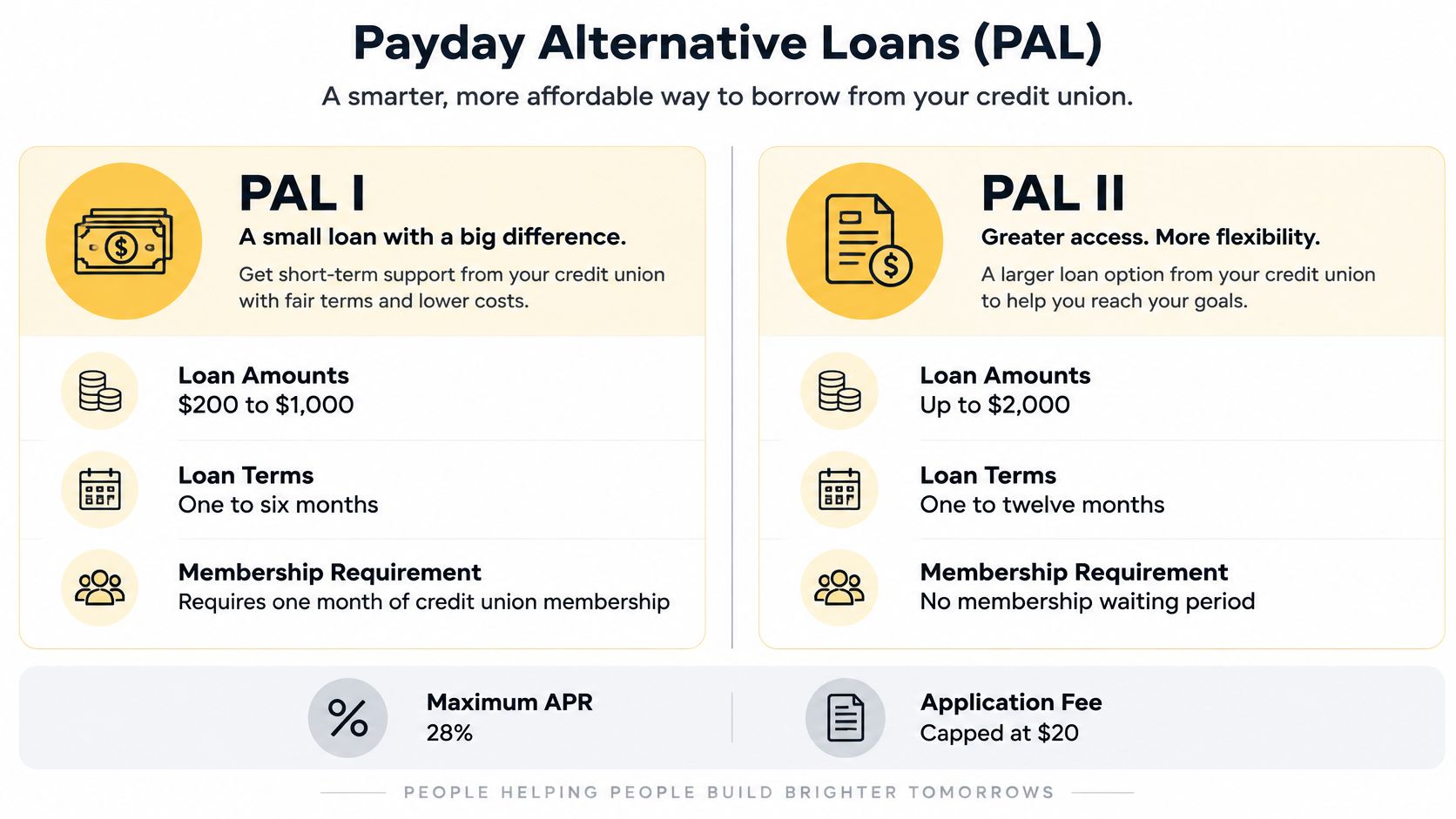
For a member facing a necessary car repair, a PAL can spread repayment across scheduled installments rather than require an immediate lump-sum payoff. But the credit union still needs to offer the program, and its eligibility requirements must fit your situation.
Ask for the Specific Program
Call and ask whether the institution offers PAL I, PAL II, or a different small-dollar loan. Confirm membership eligibility, any waiting requirement, application documents, and when funds could become available. Don't assume every credit union participates.
Total cost: Request the actual APR, application fee, and total scheduled repayment. Even a capped fee deserves attention when you're borrowing a small amount.
Credit-building payoff: Ask which bureaus receive payment information and how reporting works. A lower-cost product and useful credit reporting are separate features.
State availability: Federal PAL program rules differ from state payday-loan rules. Verify the institution's charter and the exact product rather than treating every credit union cash advance as a PAL.
When not to borrow: A PAL still isn't affordable if the payment requires missing essentials. Ask about counseling and assistance if the expense reflects an ongoing shortage rather than a temporary disruption.
6. Credit-Builder Loans
A credit-builder loan generally isn't the answer to an unpaid repair bill. In a common structure, the lender holds the loan proceeds while you make payments, then releases the funds under the agreement's terms.
Its purpose is different: establish reported payment history while setting aside money. The Federal Reserve's overview of credit-building products reported that more than 3 million people held secured small-dollar credit-building products as of early 2024. That category includes credit-building products broadly, not a promise that a particular loan will improve your score.

A thin-file borrower with stable income might use this structure to establish payment history before applying for future financing. It makes less sense for someone who needs accessible cash immediately or can't maintain the scheduled payments.
Buy Useful Reporting, Not a Score Promise
Confirm where the held funds sit, when you can access them, and what happens if you close the account early. Compare interest and fees with any interest credited to the savings balance.
Credit-building payoff: Ask which bureaus receive reports, how frequently reporting occurs, and whether missed payments are reported. Check your credit reports after reporting begins, and dispute inaccurate information.
State availability: Verify that the provider serves your state and identify the actual lender. An app's branding doesn't necessarily identify the institution holding the funds or extending credit.
For a revolving-credit alternative, the DIY credit card guide offers another route to investigate. Compare costs and reporting rather than opening multiple products to chase a score.
When not to borrow: Skip a credit-builder loan when essential bills are overdue or the held funds would leave you without emergency cash.
7. Secured Personal Loans
A savings-secured loan and a vehicle-secured loan both involve collateral, but they expose you to different losses. With the former, you may lose pledged savings; with the latter, you may lose transportation.
Collateral can make an offer more attractive to a lender, but it doesn't automatically make the offer cheaper for you. Compare an unsecured quote for the same borrowing need before deciding that pledging property is worthwhile.
In its credit-bureau analysis, the Federal Reserve study of small-dollar loans found that nearly one-third of outstanding balances were secured. That finding describes the studied small-dollar market, not the rate or approval prospects for your application.
Compare Borrowing With Using the Asset
Say you have savings pledged to a credit union and want a share-secured loan for a necessary purchase. Compare the complete loan cost with using some savings. Borrowing preserves ownership of the pledged account, but the restricted funds may not be available for another emergency.
Collateral test: If losing the pledged asset would create a bigger emergency than the expense you're financing, reconsider the loan.
Total cost: Include interest, origination charges, lien-related charges, and required add-ons. Ask whether the lender releases collateral gradually or only after full repayment.
Credit-building payoff: Confirm positive-payment reporting and default reporting. Collateral protects the lender; it doesn't guarantee a credit benefit for you.
State rules: Verify lender authorization and the contract's collateral enforcement provisions. Vehicle liens and deposit-account pledges shouldn't be treated as interchangeable arrangements.
When not to borrow: Don't secure discretionary spending with essential property. Avoid locking up your entire emergency reserve just to establish payment history.
8. Installment Loans from Credit Unions and Community Lenders
A local credit union, community development financial institution, or nonprofit lender is worth contacting before accepting an expensive online offer. Ask whether it considers income, repayment capacity, membership history, or circumstances beyond the credit score.
Credit barriers are common: the Federal Reserve's household credit report found that one-third of adults who applied for credit in 2024 were denied or approved for less than requested. That doesn't establish your eligibility, but a rejection from one lender isn't a reason to accept an unaffordable alternative.

For example, a community lender might evaluate a worker's repair expense alongside pay records and existing obligations. Ask whether payment dates can align with income and whether counseling or hardship arrangements accompany the loan. Neither approval nor a lower price is guaranteed.
Bring a Budget, Not Just an Application
- Establish eligibility. Ask about membership, service-area restrictions, and whether the program currently accepts applications.
- Request written pricing. Compare APR, fees, net proceeds, payment dates, and total repayment with competing offers.
- Check credit reporting. Confirm which bureaus receive information and whether checking eligibility involves a hard inquiry.
- Identify assistance. Ask about coaching, hardship contacts, and grants or payment plans that could reduce the amount borrowed.
The small-dollar loan program guide can help you identify questions to bring to a local institution.
State availability: Confirm the actual lender and the rules governing its product. A community-focused name isn't a substitute for checking authorization and written terms.
When not to borrow: Don't take a loan merely because the organization offers counseling. If ordinary income can't cover ordinary expenses plus repayment, ask for help addressing the shortage first.
How the 8 bad credit loan options compare on amount, term, credit role, and main risk
The cheapest-looking payment can still carry a high total cost if the term is long, fees are steep, or collateral is at risk. Compare the amount you can borrow and the repayment period alongside the loan's credit-building role and the rules that determine whether it is available in your state.
| Item | Typical Amount | Typical Term | Role of Credit Score | Main Risk |
|---|---|---|---|---|
| Subprime Personal Installment Loans | A few hundred to several thousand dollars | 12–60 months | Affects approval and rate, alongside income and debt | High APRs, fees, and more interest over longer terms |
| Payday Loans | Usually $100–$500 | Due on next payday or in about two weeks | Poor or limited credit may be accepted; underwriting is minimal | High fees, rollovers, and possible overdraft charges |
| Title Loans | Based on vehicle value | Typically 30 days | Usually secondary to vehicle value and clear ownership | Repossession and loss of transportation |
| Pawn Loans | A fraction of the item's resale value | Typically 30–90 days | Not required; loan is based on collateral | Losing the pawned item and accumulating renewal fees |
| Payday Alternative Loans (PALs) from Credit Unions | PAL I: $200–$1,000; PAL II: up to $2,000 | PAL I: 1–6 months; PAL II: 1–12 months | Credit unions may consider factors beyond credit score | Limited availability and loan amounts; approval not guaranteed |
| Credit-Builder Loans | Often $300–$1,000 | Commonly 6–24 months | Designed to build credit through reported payments | Funds are held until repayment; fees may reduce benefits |
| Secured Personal Loans | Often a few hundred to several thousand dollars, limited by the pledged asset's value | Commonly 12–60 months | Collateral may make approval easier with limited credit | Collateral may be seized or liquidated after missed payments |
| Installment Loans from Credit Unions and Community Lenders | Typically $500–$5,000 | Several months to several years | Income and relationship history may matter more than score alone | Membership or location limits, slower approval, and limited availability |
A longer term may lower each payment while increasing total interest. Loans secured by a vehicle or other property also put that asset at risk. Credit-builder loans can support a credit history through reported payments, but the funds remain held until repayment. Check state rules before applying, since availability and terms vary by loan type and location. When repayment would strain the budget or require another loan, don't borrow.
Your Next Steps for Comparing Costs, Verifying State Rules, and Getting Free Help
Start by separating a payment-timing problem from a recurring budget shortfall. A delayed paycheck may support a defined repayment plan. Borrowing for expenses that exceed your income every month requires a different response.
Historical payday lending evidence shows why that distinction matters: the Consumer Financial Protection Bureau's analysis of repayment sequences found that more than 80% of loans were rolled over or renewed within 14 days. Don't use that historical figure to predict your outcome, but take the underlying warning seriously: a loan needs a realistic ending.
Follow a Practical Action Sequence
- Check your state first. Use the BadCreditMD state guide to identify permitted loan types and applicable limits, then follow its official regulator or statute references. Verify the actual lender's authorization before sharing sensitive documents.
- Price competing offers. Put a credit union or community-lender quote beside another available offer. Compare cash received, all required payments, upfront fees, final payoff, and collateral exposure, not just the advertised payment.
- Contact a credit union directly. Ask about PAL availability for immediate borrowing and credit-builder programs for future credit goals. Explain whether you need cash now or want reported payment history.
- Try assistance before additional debt. Contact 211 for local resources, ask utilities or medical providers about payment arrangements, and consult nonprofit credit counseling when recurring obligations no longer fit your income.
- Escalate concerning practices. Keep agreements, payment records, debit authorizations, and collection messages. Contact your state regulator, legal aid, or the CFPB complaint process when terms or collection conduct raise concerns.
Before signing, write down where each payment will come from and what remains for essentials afterward. Include irregular expenses you already know are coming. If that exercise requires another loan, the proposed borrowing isn't a workable solution.
Treat credit improvement as a secondary benefit, not a justification for excessive charges. Ask whether positive payments are reported, whether applying creates a hard inquiry, and how missed payments are handled. Nobody can responsibly promise a particular score increase from your contract.
BadCreditMD is an informational resource, not a lender or broker, and it doesn't make approval decisions. Its loan explainers, state summaries, and assistance directories can support your comparison, but the lender's written disclosures and applicable law determine the actual offer.
Choose the option with an affordable exit, not the easiest entrance. If no available loan passes that test, negotiating the bill or obtaining assistance is a better next step than accepting debt you already know you can't repay.
BadCreditMD explains loan options for people with imperfect credit and provides state-specific guidance and directories for free assistance. Visit BadCreditMD to compare loan types, review your state's rules, and find alternatives before applying.