
You're looking at credit card offers because you want to improve your credit, but every option seems to ask for something you're short on: an established credit history, extra cash, or confidence that you're choosing correctly. A secured card sounds promising, a prepaid card looks safer, and becoming an authorized user seems simpler. It's hard to tell which option helps.
A DIY credit card strategy starts with a different question: what do you need the account to accomplish? Separating payment access, budgeting, credit reporting, and emergency borrowing makes the choice more manageable. You don't need a clever workaround. You need a suitable tool, understandable costs, and a repayment plan you can maintain.
Table of Contents
- What DIY Credit Building Really Means
- The Three Main DIY Credit Tools
- Choosing the Right Tool for Your Goal
- How to Set Up a Secured Card Step by Step
- When Negotiating with Your Current Issuer Is Smarter
- Building a Six-Month Action Plan
- Frequently Asked Questions About DIY Credit
What DIY Credit Building Really Means
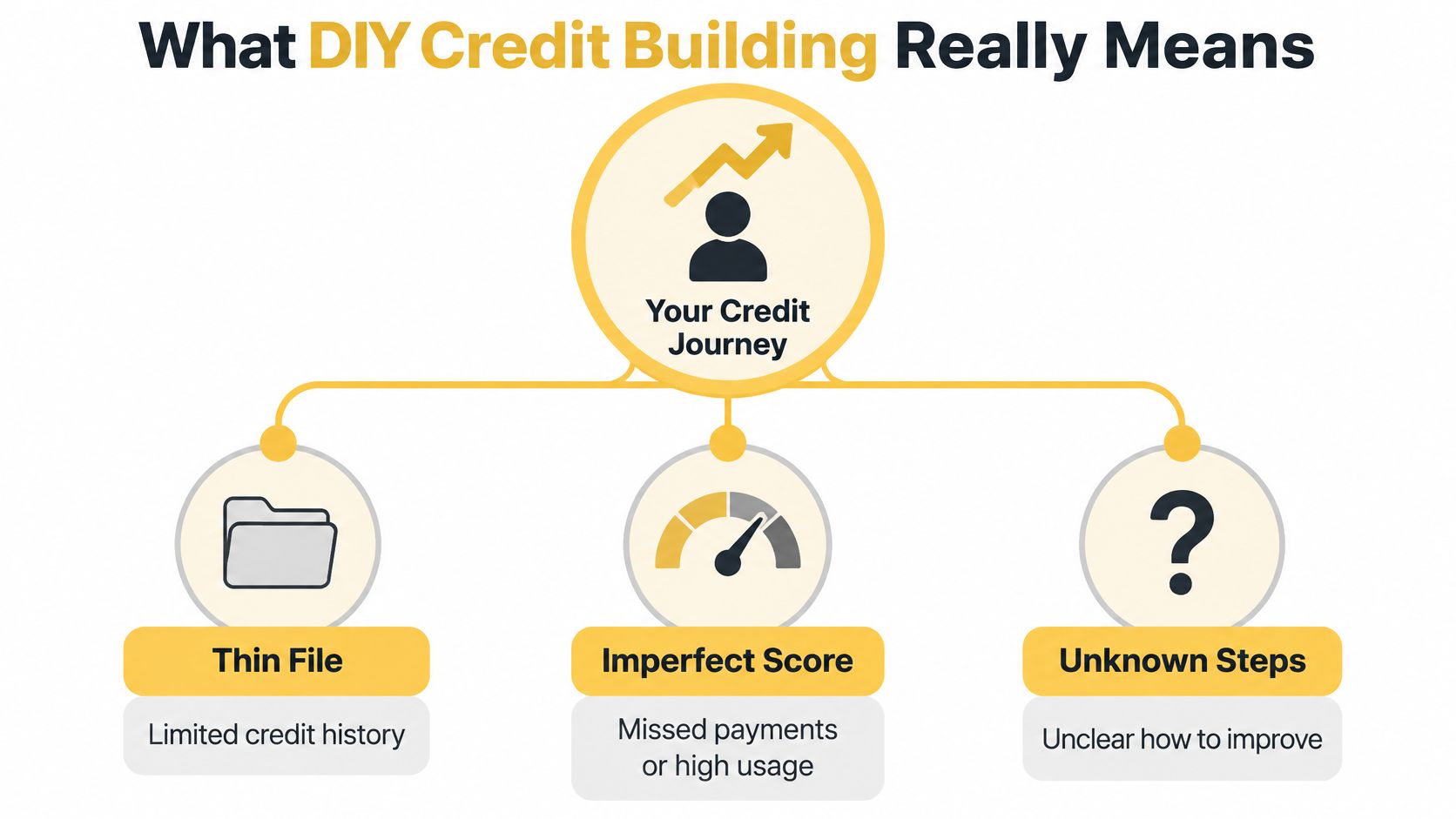
Suppose you've mostly used cash or a debit card. You've managed your bills, but you're unsure what a lender can see about your borrowing history. Or perhaps you've had payment problems and want to establish better habits without paying someone else to choose a financial product.
DIY credit building means directing that process yourself. You compare accounts, read their agreements, choose an appropriate product, and manage the payments and balances. It doesn't mean creating your own credit account or making a physical payment card at home.
Start with what's already on your report
A thin file means limited credit history, not necessarily a history of mistakes. Someone rebuilding after missed payments faces a different problem from someone who hasn't borrowed before. Your starting point should guide your choice rather than an advertisement promising easy approval.
Use a guide to understanding your credit report to organize what you're reviewing. Identify accounts you recognize, information you don't understand, and anything you believe needs correction before choosing a new account.
- Limited history: Focus on whether a prospective account will report useful payment information.
- Existing balances: Decide whether another account would help or add another bill.
- Unclear information: Investigate unfamiliar entries rather than assuming a new card will solve the problem.
Access is only the beginning
Self-managed borrowing isn't new. U.S. revolving consumer credit grew from approximately $2 billion at the end of 1968 to $626 billion in June 2000, according to the Federal Reserve's historical analysis of credit card borrowing. Those figures describe revolving credit broadly, not a separate market for “DIY” products.
The practical lesson is more useful than the historical scale: getting access to credit and managing credit are different tasks. Your purchases, balances, and repayment decisions determine whether the account supports rebuilding or becomes expensive debt.
Practical rule: Choose an account you can manage during an ordinary, imperfect month, not just during your best financial month.
For example, consider a reader who wants to put groceries on a new card. Before applying, they should decide which purchases fit their existing budget and where the repayment money will come from. Approval doesn't answer either question.
The Three Main DIY Credit Tools
A secured card, authorized user arrangement, and credit-builder loan involve different responsibilities. Don't compare them only by how easy they sound to obtain. Compare who owes the money, what activity gets reported, and what cash you must commit.
The overview below is a starting point, not a guarantee of any provider's reporting practices or approval terms.
Secured cards give you direct responsibility
A secured credit card is a real revolving credit account backed by a refundable security deposit. The issuer determines the credit limit, and payment history may be reported to credit bureaus. “Secured” doesn't mean prepaid, interest-free, or automatically inexpensive.
The Build Secured Card agreement available through the CFPB illustrates why the agreement matters: secured-card arrangements can involve annual fees, interest, and restrictions on access to deposited cash. An annual fee may reduce available credit before you make a purchase.
This option deserves consideration when you want to manage your own account and can spare the deposit without compromising essentials. Ask whether the issuer reports to every major bureau, rather than treating the phrase “credit building” as sufficient confirmation.
Authorized user arrangements depend on another person
An authorized user arrangement involves another person's account rather than an independently managed account of your own. Before relying on it, ask the issuer whether it reports authorized users, what information it reports, and whether any eligibility restrictions apply.
Discuss expectations with the primary cardholder, too. Will you receive a card? Are you expected to make purchases or contribute payments? What happens if either person wants to end the arrangement?
- Verify the benefit: Don't assume the account's history will appear on your reports.
- Consider the downside: Ask how missed payments or high balances on the primary account could affect reported information.
- Protect the relationship: Agree on spending boundaries before anyone uses the card.
Credit-builder loans require a different comparison
For a product advertised as a credit-builder loan, investigate how the payments, held funds, and eventual release of money work. Ask whether payments go toward funds held in savings, when you can access those funds, and which bureaus receive account information.
Request the complete payment schedule and total cost. An account marketed around saving can still create a payment obligation that doesn't fit your budget.
If you're also considering retail offers, use this store credit card approval guide as a comparison resource. Keep the same standard throughout: availability alone doesn't establish suitability.
Choosing the Right Tool for Your Goal
A card can solve a payment problem without solving a credit-history problem. That distinction matters when you're trying to avoid borrowing mistakes.
Start by finishing this sentence: “I need this account primarily to…” Choose the answer that describes your immediate need, not the benefit an advertisement emphasizes.
Separate the job from the product
- Make payments: You need a way to complete purchases. Ask whether borrowing is necessary at all.
- Control spending: You want a boundary around available spending money. A borrowing limit isn't automatically the right budgeting boundary.
- Establish reported history: You need an account whose reporting practices match that objective.
- Cover an emergency: You need usable funds now, which is a different problem from building a record over time.
A prepaid card generally draws from deposited funds rather than creating revolving credit or a conventional credit history. It may fit payment access or budgeting, but don't choose it expecting the same credit-building function as a reporting credit account.
DIY Credit Tool Decision Matrix
| Tool | Reports to Bureaus | Requires Deposit | Annual Fees | Best For |
|---|---|---|---|---|
| Secured credit card | May report; verify each bureau | Yes | May apply | Managing your own revolving account |
| Authorized user arrangement | Confirm the issuer's policy | Ask about account requirements | Check account terms | Exploring reported history through a trusted account |
| Credit-builder loan | Confirm lender reporting | Ask about held funds and upfront costs | Request the complete fee schedule | Considering a structured payment arrangement |
| Prepaid card | Generally not conventional credit reporting | Requires loaded funds, not a credit security deposit | Check the fee schedule | Payment access and spending boundaries |
Treat the matrix as a set of questions, not a product ranking. A tool that suits your neighbor may tie up cash you need for rent or introduce a payment you can't comfortably make.
A product isn't affordable merely because the application is accessible.
For a secured card, separate cash committed from credit available. The deposit reduces cash you can use elsewhere, while account fees may reduce the borrowing room you expected. Before funding anything, ask whether the deposit is refundable, what conditions govern its return, and what happens when the account closes.
Consider a hypothetical reader who wants a reserve for an unexpected repair. If funding a deposit would consume their available savings, a secured card may conflict with their immediate goal even if it could support longer-term credit development.
If you're comparing options within a particular credit profile, the guide to the 580–669 credit score range provides another way to organize your research. Use score-based information alongside affordability and product terms, not instead of them.
How to Set Up a Secured Card Step by Step
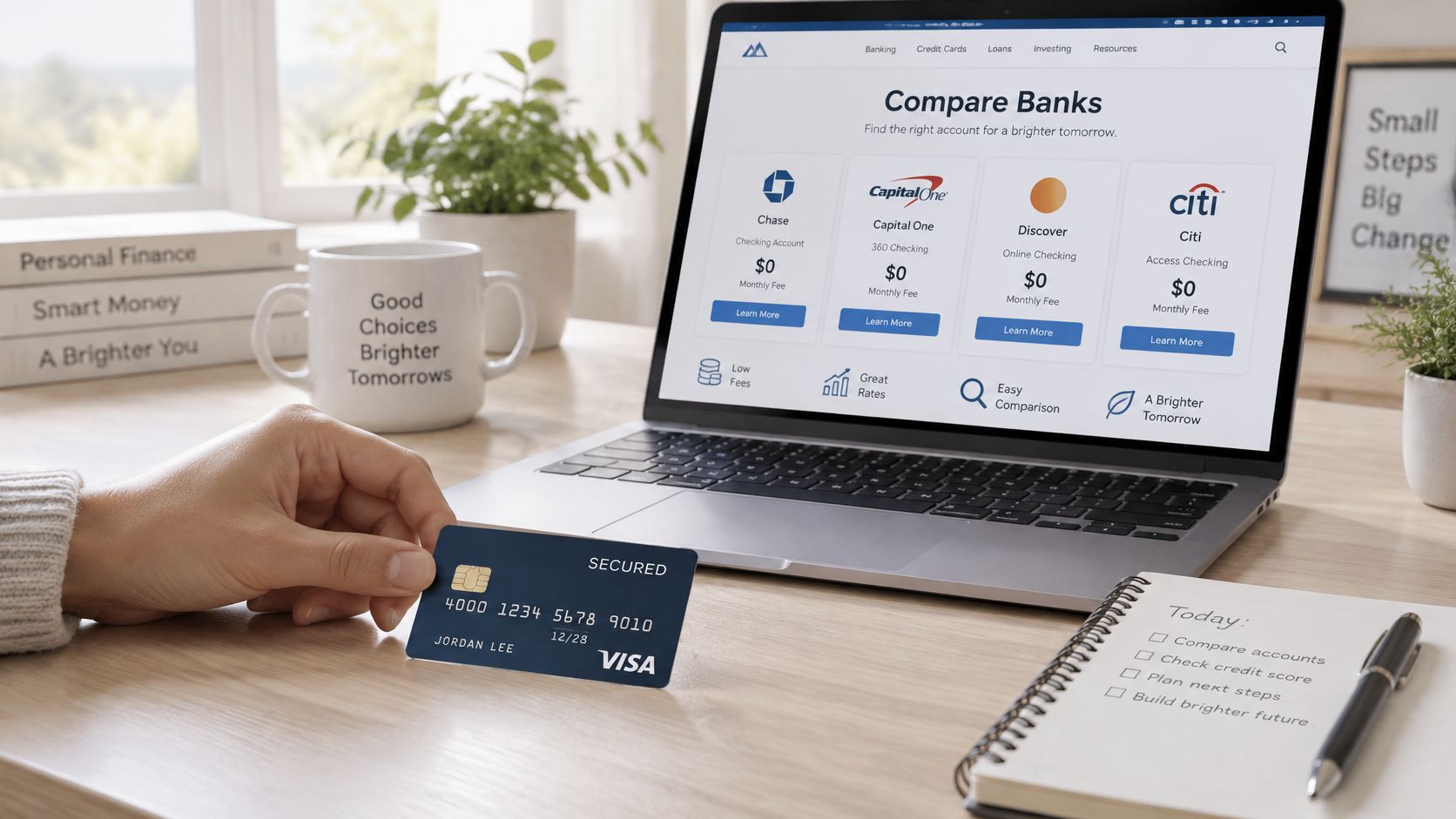
Before applying, turn each offer into a short written comparison. The goal is to understand the account without relying on the application page's most prominent promises.
Set aside time to compare the actual agreements.
Compare the agreement before committing cash
Record the deposit requirement, annual fee, interest rate, other account charges, and reporting policy. Ask the issuer to clarify anything you can't locate in writing, including how the initial available credit is calculated.
Don't assume the deposit and credit limit will match exactly. Use the issuer's stated terms to determine what you'll deposit, what limit it will assign, and what fees could reduce usable credit.
- Check reporting: Ask which major credit bureaus receive account information.
- Check refund conditions: Find the rules for returning the deposit after closure or a change in account status.
- Check purchase interest: Identify when interest applies and what payment conditions avoid it.
- Check exit options: Ask whether an unsecured transition is possible and whether it requires a separate application.
Choose a deposit you can leave unavailable without jeopardizing essential bills. If that isn't possible, pause rather than forcing the application into your budget.
Build the payment routine before the first purchase
After approval, review the final terms and account access instructions before using the card. Locate the statement balance, minimum payment, due date, and payment-processing information so you know what you'll need to monitor.
Pick a modest, predictable purchase that already fits your budget. Set aside its repayment money when you make the purchase, rather than waiting to see what remains when the bill arrives.
Utilization means how much of your credit limit you're using. Keep the balance comfortably below the limit and focus on manageable purchases rather than trying to reach a supposed magic threshold. A low balance won't compensate for a payment you can't make.
Use this video as an additional learning resource, while treating your own agreement as the authority for account terms.
Verify what happens after opening
Review statements for charges and payments you recognize. If you use automatic payments, confirm the setup and keep enough money in the linked account; automation still needs supervision.
Then check whether the account appears as expected on your credit reports. Contact the issuer about missing or unfamiliar information rather than assuming everything is working.
Don't set a promised score-improvement date. Your useful early milestones are administrative: the account is correctly established, payments are manageable, and reporting matches the issuer's explanation. Consider an unsecured transition only after reviewing eligibility, deposit-return terms, and whether changing accounts would reduce your costs.
When Negotiating with Your Current Issuer Is Smarter
Opening another account can feel like taking action. But if you're already struggling with payments, the more useful action may be calling the issuer you already owe.
Credit card ownership doesn't mean everyone pays in full. The GAO reported that 82% of U.S. adults had a credit card in 2022, while its analysis of active accounts found that approximately half carried balances during the period from June 2013 through 2019, in its review of credit card use and market conditions. These are different measures, but together they reinforce an important distinction between having access and managing ongoing debt.
Identify whether the shortfall will end
A delayed paycheck and a budget that falls short every month require different responses. For a temporary disruption, ask what payment arrangement could bridge the gap. For persistent unaffordability, focus on reducing obligations rather than adding another one.
Write down what you can realistically pay after essentials. That gives you a concrete starting point for the conversation instead of agreeing to an arrangement because you feel pressured.
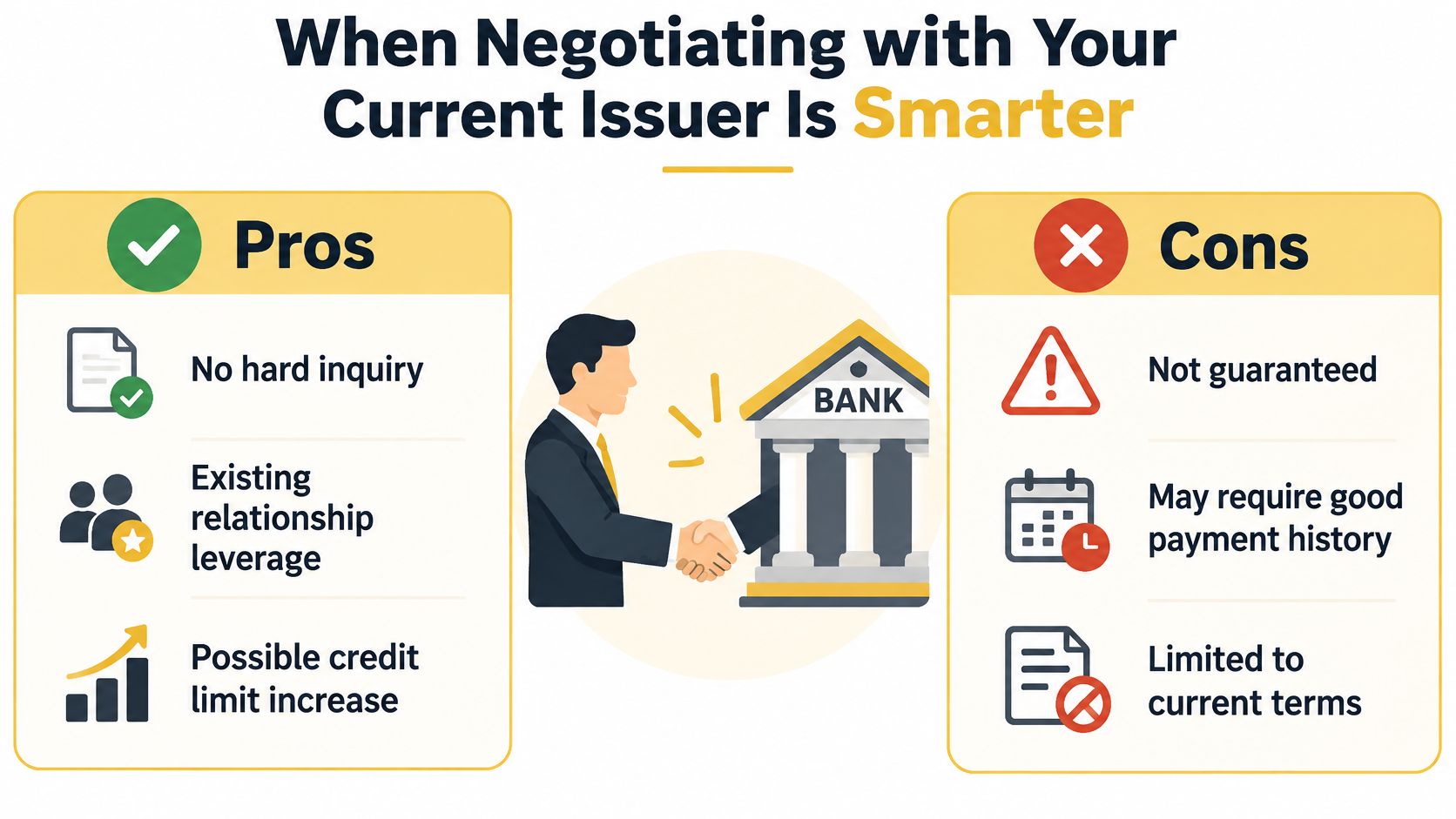
The visual below introduces negotiation considerations. For hardship assistance specifically, verify restrictions directly with your issuer rather than assuming you'll retain spending access or qualify for additional credit.
Ask for terms you can evaluate
Explain the disruption, state your affordable payment, and ask about lower payments, fee relief, or a repayment arrangement. Assistance varies by issuer, and a plan may restrict purchases or close the card.
- Request written details: Confirm the payment, duration, interest treatment, and any fees.
- Ask about account status: Find out whether spending stops and how the arrangement will be reported.
- Test affordability: Make sure the proposed payment fits after housing, food, utilities, and other essentials.
- Compare alternatives carefully: A secured card ties up cash; a small-dollar loan introduces another repayment obligation.
Before the call, you can explore credit card assistance through Velzee to prepare questions about hardship programs. Your issuer must confirm what it offers.
Before borrowing more: Identify the money that will repay the new obligation. Another account isn't a repayment plan.
If an offer merely postpones an unaffordable bill without creating a workable path, don't treat it as a solution. Ask further questions and consider free counseling or local assistance before committing.
Building a Six-Month Action Plan
Use this six-month plan as a schedule for your own actions, not a prediction of score changes. You control your research, purchases, and payments. You don't control an issuer's approval decision or a particular scoring outcome.
First month
Choose your primary goal and review your starting information. If existing payments are already unaffordable, prioritize the issuer conversation rather than a new application.
For a new account, complete the comparison before applying. Save the agreement and record the contact information you'll need if something goes wrong.
- Goal selected: Write down the specific job the account should perform.
- Costs understood: Record both money paid in fees and money temporarily unavailable.
- Routine prepared: Set reminders and decide how you'll reserve repayment funds.
Months two through three
Compare the account's actual operation with what you expected. Review statements, confirm payments were received, and investigate charges you don't recognize.
Check reporting according to the provider's stated practices. Keep a dated record of questions and responses so you don't have to reconstruct a problem later.
If you find information you believe is inaccurate, use a credit repair guide to organize your next steps. Distinguish correcting information from trying to remove an accurate history just because it's unfavorable.
Months four through six
Evaluate whether the tool still fits your goal. Ask whether its costs remain reasonable, whether you can maintain the payment routine, and whether you're preserving enough cash for essentials.
Don't open additional accounts merely because progress feels slow. Likewise, don't close an account impulsively before reviewing outstanding charges, refund conditions, and alternatives.
| Review question | Practical response |
|---|---|
| Is the account costing more than expected? | Compare actual statements with the agreement |
| Are payments becoming difficult? | Reduce planned use and contact the provider |
| Is reporting different from what was promised? | Request an explanation and keep records |
| Is an upgrade available? | Compare its terms before accepting |
A useful result is a system you can repeat without financial strain. Even if the score hasn't moved as you hoped, accurate reporting, understood costs, and sustainable payments give you a clearer basis for deciding what to do next.
Frequently Asked Questions About DIY Credit
Will checking my reports affect my score?
Distinguish reviewing your own information from authorizing a lender to assess an application. Before using a service, check whether you're accessing reports or submitting a credit request. Don't provide application consent just to view educational material.
What happens to my secured-card deposit when I close the account?
Check the agreement's refund process, timing, and treatment of outstanding amounts. Ask how unresolved purchases or fees will be handled, and keep access to statements until the issuer confirms the account and deposit are settled.
Can authorized user status backfire?
Don't assume the arrangement can only help. Ask the issuer how unfavorable account activity is reported and how removal works. If the primary cardholder won't discuss balances or payment habits, reconsider relying on that account.
When can I qualify for an unsecured card?
There's no universal timetable to plan around. Ask whether your issuer offers account reviews, what eligibility conditions apply, and whether moving to an unsecured product requires a new application. Compare the proposed fees and terms rather than accepting an upgrade for its label alone.
BadCreditMD offers explainers on secured cards, borrowing alternatives, state-specific rules, and free assistance resources for people with imperfect credit. Visit BadCreditMD to compare your next step with your actual goal, then write down the costs and questions you need answered before applying.