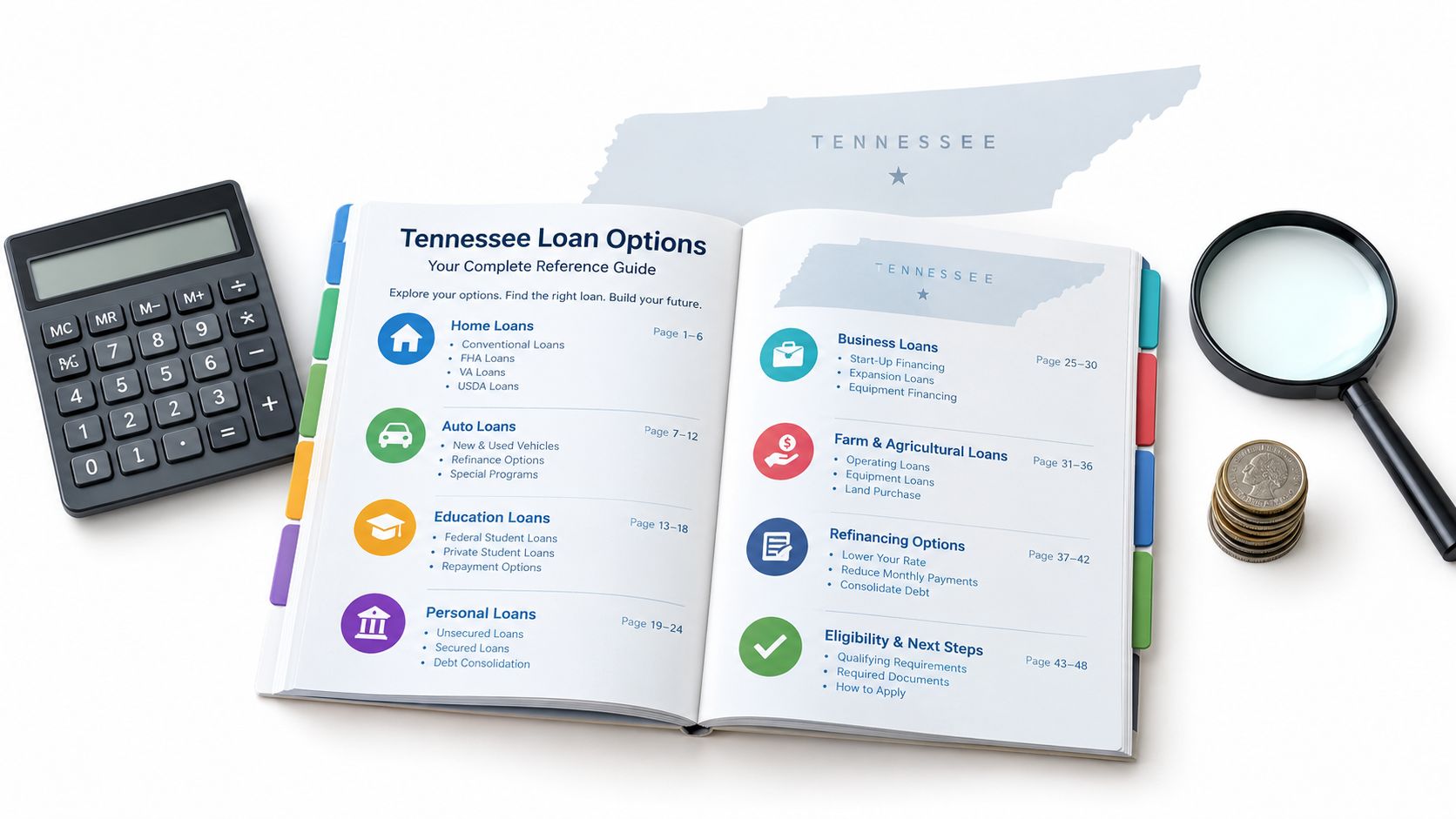
You got denied, the bills are due, and the car repair or rent question doesn't wait for a better credit score. That's the exact moment many start searching for loans for bad credit in TN, and it's also the moment lenders make money from panic. Use your head first, not the ad in front of you.
The right move is not to chase the first approval. It's to compare the few Tennessee options that exist, test whether you can repay without blowing up next month's budget, and avoid getting trapped in repeat borrowing. If you want a broader list of bad credit borrowing options, use it as a starting point, then measure every option against Tennessee law and your own cash flow.
Table of Contents
- Understanding Your Options When Credit Is Challenged
- What Limited Credit Access Looks Like in Tennessee
- Comparing Common Loan Types for Poor Credit
- Tennessee Payday Lending Laws and Limits
- Calculating the True Annual Cost of Short-Term Loans
- Credit Union Alternatives: Payday Alternative Loans (PALs)
- Testing Your Affordability Before You Borrow
- Finding Free Local Assistance and Support
Understanding Your Options When Credit Is Challenged
A denial can leave you boxed in, especially when rent, repairs, or utilities cannot wait. In Tennessee, the actual question is which borrowing path causes the least harm next month, not which lender says yes fastest.
Start with the product, not the promise
A lender's pitch can hide the actual cost. Tennessee law gives you a useful reference point here, since certain regulated payday loans are capped at a $500 face value and a 15% finance charge under T.C.A. §45-17-112(b). That kind of structure matters more than a slick ad.
Quick approval sounds attractive. A short-term cash advance can be easy to get and difficult to repay. An installment loan gives you scheduled payments, which only helps if the payment fits your budget. A credit union option can be safer still if you qualify. If you want a broader map of state-specific products, the BadCreditMD Tennessee overview is a useful reference point for comparing what is usually discussed in this market.
Practical rule: if a lender leads with speed and stays vague about repayment, treat that as a warning sign.
The goal is a decision path, not hype. If a loan leaves you short on groceries, utilities, or gas before the next paycheck lands, it is a bad fit even when approval is easy.
Use the right filter
Do not ask only whether you can get the money. Ask what happens after the deposit hits your account. Ask whether the payment is due all at once, spread across installments, or structured in a way that can be rolled forward.
That difference matters because borrowers with damaged credit are often pushed toward the most expensive product in the room. Start by comparing repayment style, then cost, then speed. If a lender cannot explain those three things clearly, keep looking.
For a wider set of bad credit borrowing options, compare them against Tennessee rules and your own cash flow before you sign anything.
What Limited Credit Access Looks Like in Tennessee
There's a reason so many Tennesseans turn to small-dollar loans after a denial. The St. Louis Fed reports that about 34% of adults in its Eighth District, which includes Tennessee, have limited access to traditional credit, compared with about 30% nationally. That gap explains a lot of what borrowers feel on the ground. The problem is not just bad credit, it is thinner access to mainstream credit than many people expect.
When access is limited, borrowers rarely move in a straight line from denial to a good loan. They run into repeated rejections, application fees, bank requirements, and products that get more expensive as urgency rises. Approval odds alone are a weak way to judge an offer.
What limited access means in practice
Limited access usually shows up in one of three ways. A borrower cannot qualify for a conventional personal loan, the terms are too expensive to be useful, or the payment schedule does not fit the paycheck cycle. In each case, the issue is affordability as much as credit history.
A fast approval is not proof that a loan is reasonable. In a market where many adults face constrained access, a lender's willingness to say yes tells you very little about whether the loan is safe for you.
A denial is not a moral verdict. It is a signal to switch from “find anything” to “find something survivable.”
That shift matters. Once you accept that the problem is access to affordable credit, not just access to credit, the comparison becomes clearer. Judge structured alternatives, payment plans, and lender products by one standard, whether they still leave room for rent, food, utilities, and transportation after the payment clears.
The strongest borrowers in this situation do not chase the first approval. They pick the option that leaves enough cash for the basics and avoids turning one short-term fix into a longer financial problem.
Comparing Common Loan Types for Poor Credit
People use the word “loan” as if every option behaves the same way. It doesn't. If you've got bad credit, the differences between a personal loan, an installment loan, a payday loan, and a title loan are the difference between manageable and reckless.
Read the table before you apply
| Loan Type | Typical Term | Primary Risk |
|---|---|---|
| Traditional personal loan | Longer than payday-style borrowing | Harder approval, but usually more workable if you qualify |
| Installment loan | Scheduled payments over time | Higher cost than prime credit, but payment structure is clearer |
| Payday loan | Very short term, usually tied to your next paycheck | A small fee can become a very expensive way to borrow fast |
| Title loan | Short term with a vehicle as collateral | You can lose your car if the payment breaks down |
A conventional personal loan is usually the cleanest structure if you can get approved. The payment is spread out, and that makes budgeting easier. The catch is obvious, many borrowers with damaged credit won't qualify on terms they can accept.
An installment loan is often the more realistic middle ground. You still borrow at a higher cost than someone with strong credit, but you get a repayment schedule instead of a single hard deadline. That structure matters when your income is tight.
Payday loans are different. They trade speed for pressure. If you want to see how title products fit into the broader Tennessee bad-credit picture, this boat title loans overview shows why collateral-backed borrowing has its own risks, even when approval feels easier.
A title loan is not a casual backup plan. If you need your vehicle to work, parent, or keep your job, putting that vehicle on the line can turn a short-term shortage into a much bigger crisis. The lender gets security. You get risk.
Choose the loan that matches your repayment capacity, not the loan with the easiest approval button.
The pattern is simple. Personal loans can be better if you qualify, installment loans can be workable if the payment fits, payday loans are expensive pressure, and title loans raise the stakes because collateral is involved.
Tennessee Payday Lending Laws and Limits
A Tennessee payday loan may be legal, but the law draws a hard box around it. Under the Deferred Presentment Services Act, the maximum finance charge is 15% of the face amount of the repayment check or Internet-loan amount, and Tennessee Code Annotated §45-17-112(b) sets that ceiling. The state consumer notice from the Tennessee Department of Financial Institutions notice confirms the same limit. On a $500 transaction, that means a $75 fee and a required payoff of $575 before any missed-payment consequences.
The legal ceiling is not a recommendation
Tennessee also caps the face value of a payday loan at $500 and limits added payday credit when the borrower's outstanding balance would run past the statutory limit. That rule protects the market more than the borrower. It tells lenders where the line is, not whether crossing into payday debt makes sense.
A 15% charge looks manageable only if you focus on the fee and ignore the repayment squeeze. That is the trap. If you are comparing loans for bad credit in TN, the central question is whether you can clear the full payoff on schedule without rolling into another loan.
Repeat borrowing is where legal payday lending starts to hurt people. Before committing, it is worth weighing payday loan risks from a legal perspective, because a legal loan can still become a harmful pattern when the due date arrives and the borrower covers one shortfall with another. The fee is only part of the problem. The payoff date drives the damage.
If the lender cannot explain the payoff date, the fee, and the consequences of missing payment in plain English, walk away.
For readers who want a state-specific summary, the BadCreditMD Tennessee payday loan page is a useful reference for how these rules are usually presented.
The bottom line is simple. Tennessee permits payday lending, but the cap is a warning sign, not an invitation.
Calculating the True Annual Cost of Short-Term Loans
Short-term lenders like flat fees because they make the bill look smaller than it is. APR reveals the true cost. The CFPB's payday-loan procedures note that these products often charge $15 to $20 per $100 borrowed, which on a standard two-week term works out to an implied 391% to 521% APR (CFPB payday procedures). That is why the fee line on the contract can hide the actual burden.
Fee amount and annual cost are not the same thing
A Tennessee consumer notice on deferred presentment shows that a 15% charge over a typical 14-day payday term implies an APR of roughly 460% (Tennessee Department of Financial Institutions notice). That figure is not trivia. It shows how quickly a short term turns a small fee into a very expensive loan.
Regulation Z under the Truth in Lending Act requires covered lenders to disclose the finance charge and APR, so borrowers can compare a short-term product with an installment loan, a credit union loan, or a payment plan on the same annualized basis. The disclosure only matters if you use it.
Start with the total repayment. Then identify every fee in the offer, check the payment date and payment method, and ask whether your budget still covers essentials after the debit clears.
A borrower comparing a $300 loan with a $60 fee should see a $360 payoff, and the fee alone equals 20% of principal over that term. The annualized cost changes with the term, but the pressure is already obvious. Fast cash gets expensive fast.
A good habit is simple. If you have to work hard to understand the payoff, the loan is too complicated for a tight budget. Use a loan payment calculator to check the payment structure before you sign anything.
Credit Union Alternatives: Payday Alternative Loans (PALs)
Credit unions can offer a more disciplined route through Payday Alternative Loans, or PALs. The NCUA says PALs I generally run from $200 to $1,000, last one to six months, allow only an application fee that recovers actual processing costs up to $20, and carry a maximum interest rate of 28% when program conditions are met (NCUA access page). That is still not cheap credit, but it is a far safer structure than a payday loan.
Why PALs are worth checking first
PALs II raise the permitted principal to as much as $2,000 and the maturity to one through twelve months. The NCUA also allows a federal credit union to make PALs II after membership is established, and a credit union may offer only one PAL type to a member at a time (NCUA PALs II rules). That structure gives the borrower more room to breathe.
Predictability is the main advantage. PALs are closed-end credit, they use full amortization, and they limit rollovers and repeated borrowing. Those guardrails matter because they keep a short-term cash problem from turning into a repeating debt cycle.
A payday loan works differently. The due date can arrive before your budget has recovered, and the pressure to renew or reborrow can start immediately. A PAL is designed to be paid down over time. That makes it the cleaner choice when your paycheck is already committed.
PALs matter most if your credit is thin or damaged, but you can qualify for credit union membership. Do not assume you are locked out before you ask. Membership rules vary, and the repayment terms are usually much safer than the alternatives.
If a credit union will work with you, start there before you go to a payday shop.
The smartest comparison is not approval odds. Compare total scheduled payments, fee structure, and how much money you will still have after the bill clears. PALs usually win that test.
Testing Your Affordability Before You Borrow
A legal loan can still be the wrong loan. The core test is whether you can repay it without raiding rent money, grocery money, or the cash you need to get to work. Tennessee guidance on payday lending makes the same point in practice, because a $500 advance with a 15% fee means $75 in finance charges before any late-payment or related consequences (The Credit People summary of Tennessee payday rules).
Run the payment through your next paycheck
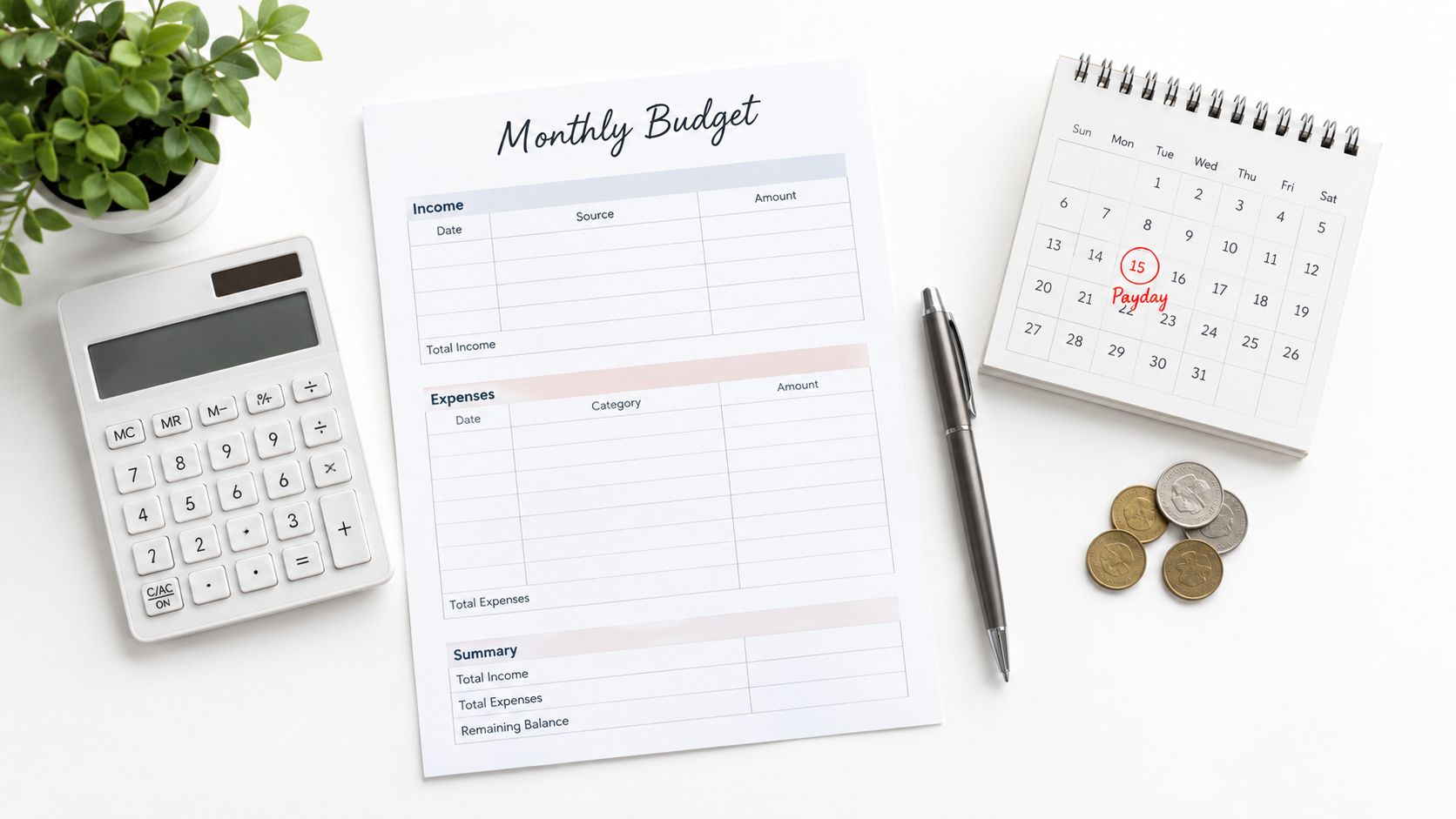
Start with your take-home pay, not your gross income. Subtract rent, utilities, transportation, food, child care, and any minimum debt payments that have to be covered. Whatever is left is your real borrowing room, and borrowers tend to overestimate it.
Then test the loan against a bad week. If your next paycheck is a little smaller than expected, or one bill lands early, can you still pay the loan and keep the lights on? If the answer is no, the loan is too aggressive.
That's the decision point lenders don't like to emphasize. The question isn't only whether you can get the money. It's whether you can repay it without needing another loan right after.
The safer habit is to leave an emergency buffer, even if it's small. If the loan wipes out your cushion, you're one surprise away from reborrowing. That's how people get stuck in cycles they never intended to enter.
You should also check whether the lender's product terms are current, whether the payment date is fixed or flexible, and whether the lender is available in Tennessee before you apply. An application should never be your first form of research.
If you can't describe the payoff in one sentence, you're not ready to borrow.
Finding Free Local Assistance and Support
A loan is not the first answer to every cash problem. If the bill is late, ask for more time, request a payment plan, or use free local help before you agree to expensive debt. Tennessee borrowers with bad credit should start with 211, nonprofit credit counseling, creditor or utility payment plans, legal aid, and the state borrowing guidance already laid out in the BadCreditMD Tennessee resources page.
Use no-cost help before you sign debt papers
Start with the cheapest fix that can solve the problem. Utility companies often allow payment arrangements. Medical providers may split balances into smaller bills. A nonprofit counselor can help you sort which debt gets paid first so you do not borrow just to keep up.
If you still need a borrowing option after that, compare it by total repayment and timing, not by approval speed. BadCreditMD is an informational resource, not a lender, so use it to compare before you apply, not as the application itself.
Keep the standard simple. If you are choosing between a payday loan and a payment plan, choose the payment plan. If you are choosing between a PAL and a payday loan, the PAL usually makes more sense. If you can get help instead of borrowing, get the help first.
A small decision now can keep next month from turning into a new crisis. You do not need perfect finances to make the safer move. You need to protect the next paycheck before you try to solve this one.