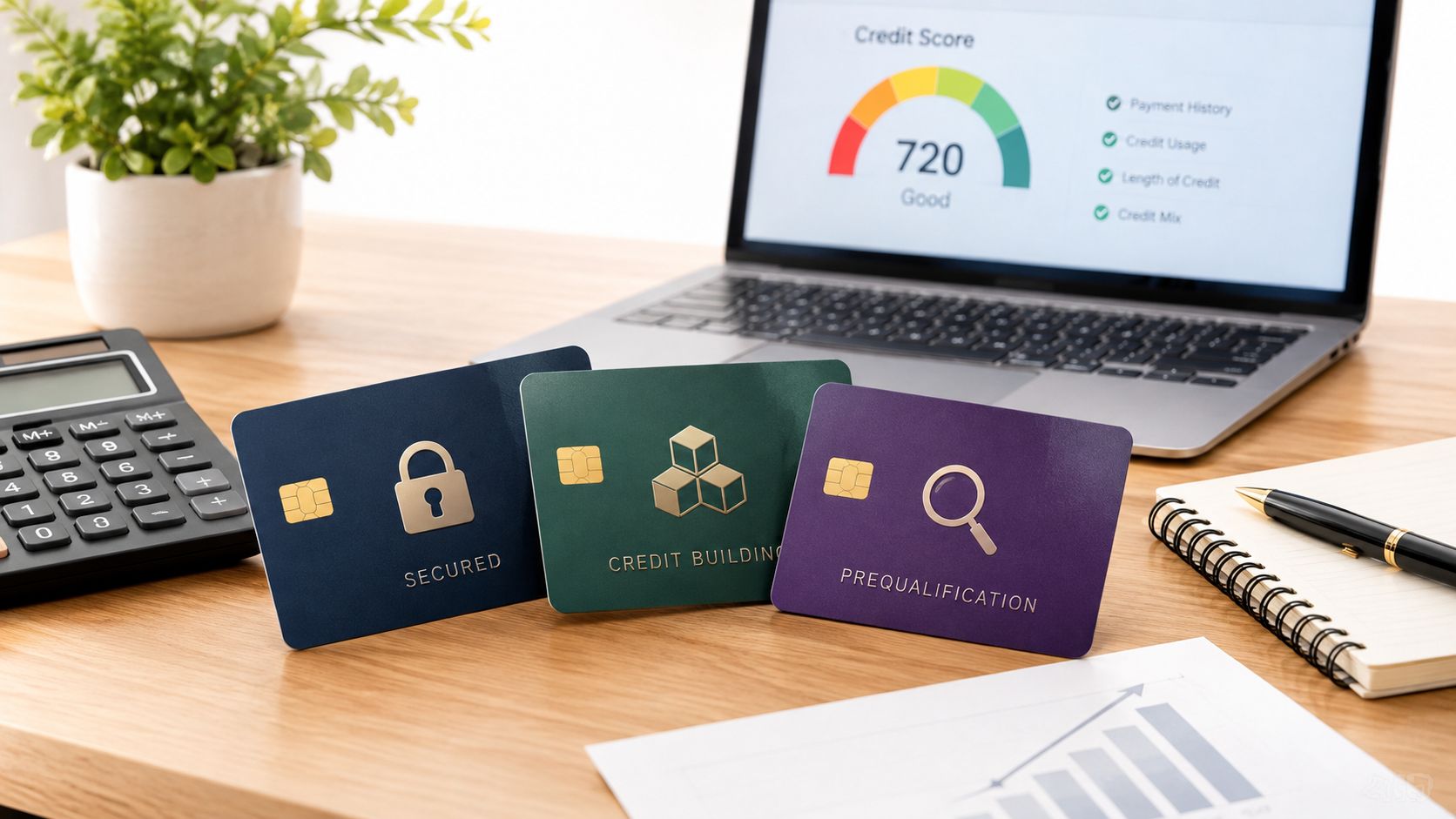
You can finish bankruptcy and still feel stuck. The ads look friendly, the approval language sounds easy, and the budget you have left leaves no room for a bad fee, a high deposit, or a card that never reports in a useful way. That's why bk friendly credit cards need to be judged by mechanics, not promises. In practice, the useful split is simple, secured cards that use a refundable deposit, credit-builder products that focus on payment reporting, and unsecured cards that use softer prequalification rules. The list below does not rank promotions. It sorts the options by how they work, and every offer still needs a current check against the issuer's agreement and your own credit reports. For a broader starting point, see credit cards after bankruptcy options.
Table of Contents
- 1. OpenSky Plus Secured Visa
- 2. First Progress Platinum Prestige Secured Mastercard
- 3. Capital One Platinum Secured Credit Card
- 4. Chime Credit Builder Secured Visa Credit Card
- 5. Mission Lane Visa
- 6. Indigo Platinum Mastercard
- 7. Credit One Bank Platinum Visa for Rebuilding Credit
- Top 7 Bankruptcy-Friendly Credit Cards Compared
- Matching Your First Card to Your Credit Reports and Budget
1. OpenSky Plus Secured Visa
OpenSky's pitch is straightforward. It is a secured Visa, so the issuer can rely on a refundable deposit rather than a traditional credit-file review. That makes it a practical first stop when a bankruptcy is still fresh and an unsecured approval is unlikely.
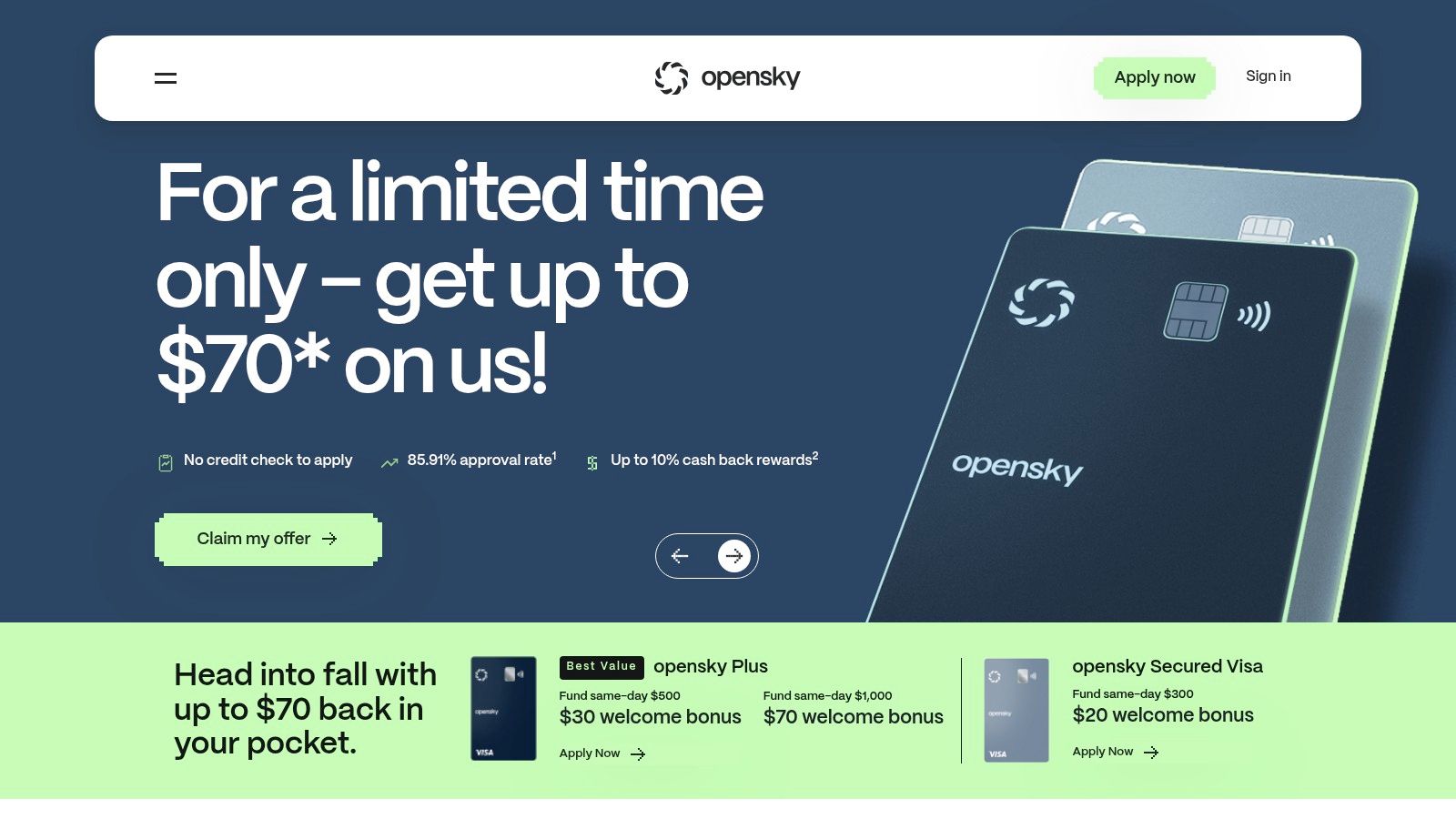
The Plus version is the cleaner fit for fee-sensitive rebuilders because it has a $0 annual fee. It also reports to all three major credit bureaus, which matters more than the headline approval language because the whole point is to create a reportable payment history.
What matters most before you apply
Practical rule: if a secured card doesn't report well, the deposit may buy access but not much rebuild value.
OpenSky publishes fee information for its card variants, which helps when you're comparing the Plus version against other secured offers. It also helps that the application does not require a credit check, so the card may be accessible soon after bankruptcy for some applicants, although approval still isn't guaranteed just because the product is marketed as friendly to damaged credit.
The trade-off is control. There is no guaranteed graduation to an unsecured card, and upgrades are invitation-only. Some OpenSky variants also carry fees and high APRs, so the product family needs a close read, not a casual yes.
For a Chapter 7-specific comparison point, BadCreditMD's Chapter 7 discharge guide is a useful companion when you're checking whether a secured card is the right first move.
Website: OpenSky credit cards
2. First Progress Platinum Prestige Secured Mastercard
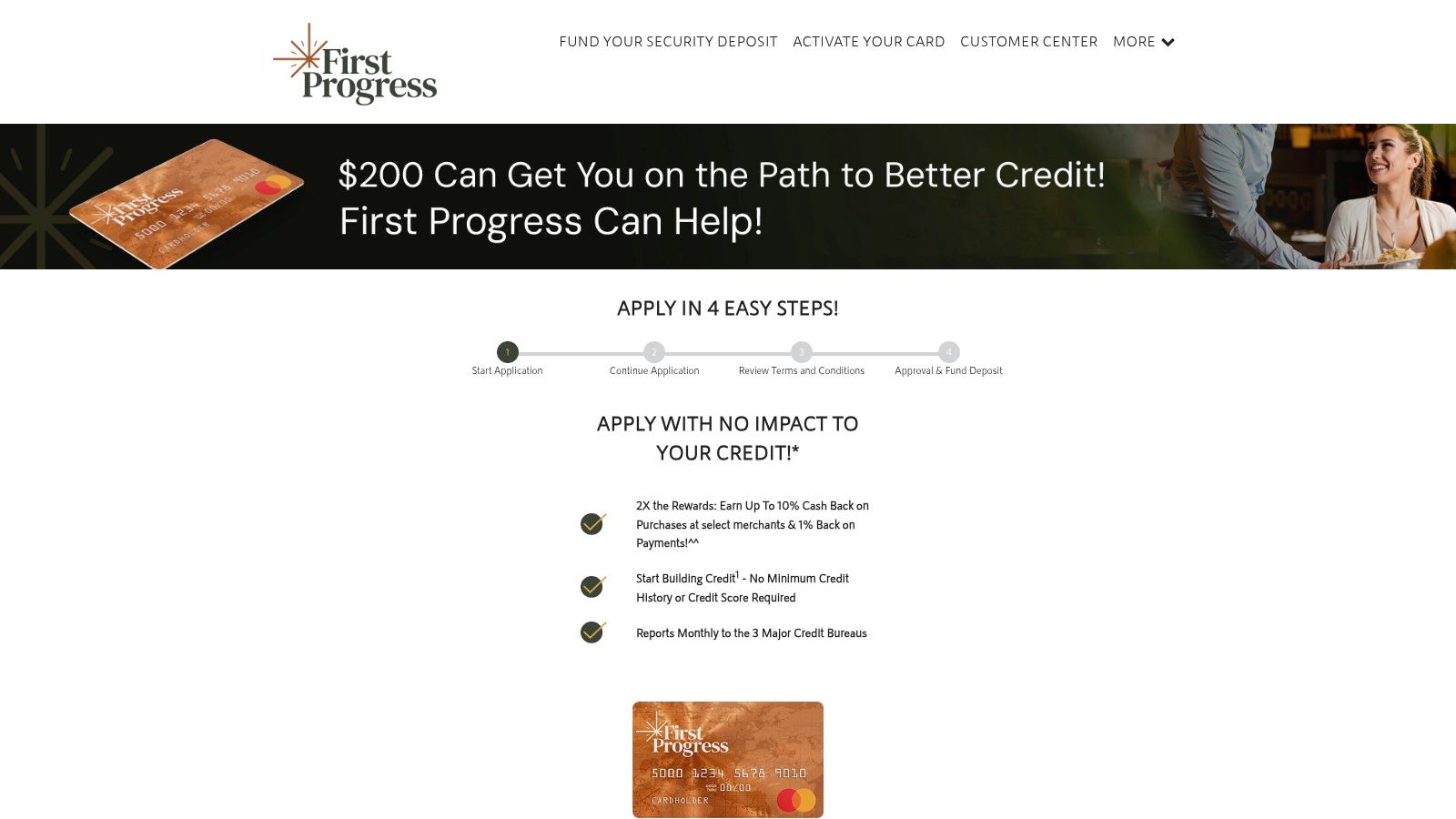
First Progress fits the buyer who wants a secured card with published terms and a less rigid underwriting screen. The issuer describes the card as available nationwide without a minimum credit score requirement, which can matter when a bankruptcy has made your file hard to score in the usual way.
The Prestige version carries a $49 annual fee, so this is not the cheapest card on the list. It does, however, give you a visible secured-account structure and a reporting path to the major bureaus, which is the part that usually counts in the early rebuilding stage.
Why this card works for some post-bankruptcy applicants
A secured card only helps if you can keep it open and use it responsibly. Federal Reserve research found that among secured-card accounts, 82.2% remained open after two years, while 17.6% were reported closed or charged off. The same research found that consumers who kept an account open for two years saw an approximately 24-point increase in median credit scores, while closing because of default was associated with an approximately 60-point decrease. Those figures make the point clearly, the card is only a tool, not a repair kit by itself. Federal Reserve Bank of Philadelphia research on secured-card outcomes
First Progress also publishes card pricing and agreement information, which is a plus when you're trying to compare fee structures rather than just approval odds. The secured limit can be increased over time, but the cash deposit still ties up funds you may need for rent, gas, or an emergency bill.
The right question is not whether the card says “rebuilding.” The question is whether the fee, deposit, and reporting setup still make sense when your budget is tight.
If you're comparing this kind of secured product with other rebuilding tools, BadCreditMD's credit cards guide is a good place to compare mechanics without getting lost in promotions.
Website: First Progress cards
3. Capital One Platinum Secured Credit Card
Capital One's secured card is useful when you want a mainstream issuer with a more flexible deposit structure. Depending on the offer, the required refundable deposit can be $49, $99, or $200 for at least a $200 credit line. That gives it a lower-entry feel than many secured cards that demand a full deposit up front.
It also has a $0 annual fee, which matters if you're trying to keep rebuilding costs low. The account reports to all three major credit bureaus, so on-time use can support your file the way a rebuilding product should.
What makes it different from many secured cards
Capital One says the account may be considered for a higher credit line after as little as six months without an additional deposit. That's the kind of upgrade path people often want after bankruptcy, because a growing limit can help with utilization if you use the card lightly.
The downside is that Capital One uses a hard credit pull. If the bankruptcy included Capital One, approval odds may also be lower, so the product isn't a universal fallback just because it's secured. The current offer still needs to be read carefully, especially if your file is in the early post-discharge stage.
A practical way to compare this card is to treat the deposit as part of the price. If the card gives you a lower starting deposit, that can free up cash for other rebuilding steps. For a related financing angle, BadCreditMD's bad-credit PC financing guide can help you weigh whether a credit-line decision belongs on the card side or the installment side of your budget.
Website: Capital One Platinum Secured Credit Card
4. Chime Credit Builder Secured Visa Credit Card
Chime's product behaves differently from a traditional secured card, and that's the reason people like it. It has no credit check, no annual fee, and no interest, which keeps the cost structure simple for a borrower who is still rebuilding after bankruptcy.
The account reports payment history to Experian, TransUnion, and Equifax, but it does not report a preset credit limit. That's a major trade-off. The card can still support payment history, but it doesn't directly help utilization in the same way a traditional revolving limit can.
When the no-limit structure helps, and when it does not
Chime requires a Chime checking account and qualifying activity, such as direct deposit. That means it is not just a card choice, it is a banking relationship choice. For some post-bankruptcy consumers, that's fine because it creates a controlled environment for full-pay usage. For others, it adds another account they don't want to manage.
If your budget is tight, a no-interest product can reduce the chance that a small balance turns into a bigger problem.
The most practical use case is disciplined payment reporting. If you want a low-cost tradeline that can sit beside a traditional secured card, this can work well. If you want a reported credit limit to help with utilization math, this is less useful than a standard secured account.
For readers comparing a score band rather than a single product, BadCreditMD's 580 to 669 credit score guide can help frame where a product like this fits after bankruptcy.
Website: Chime Credit Builder
5. Mission Lane Visa
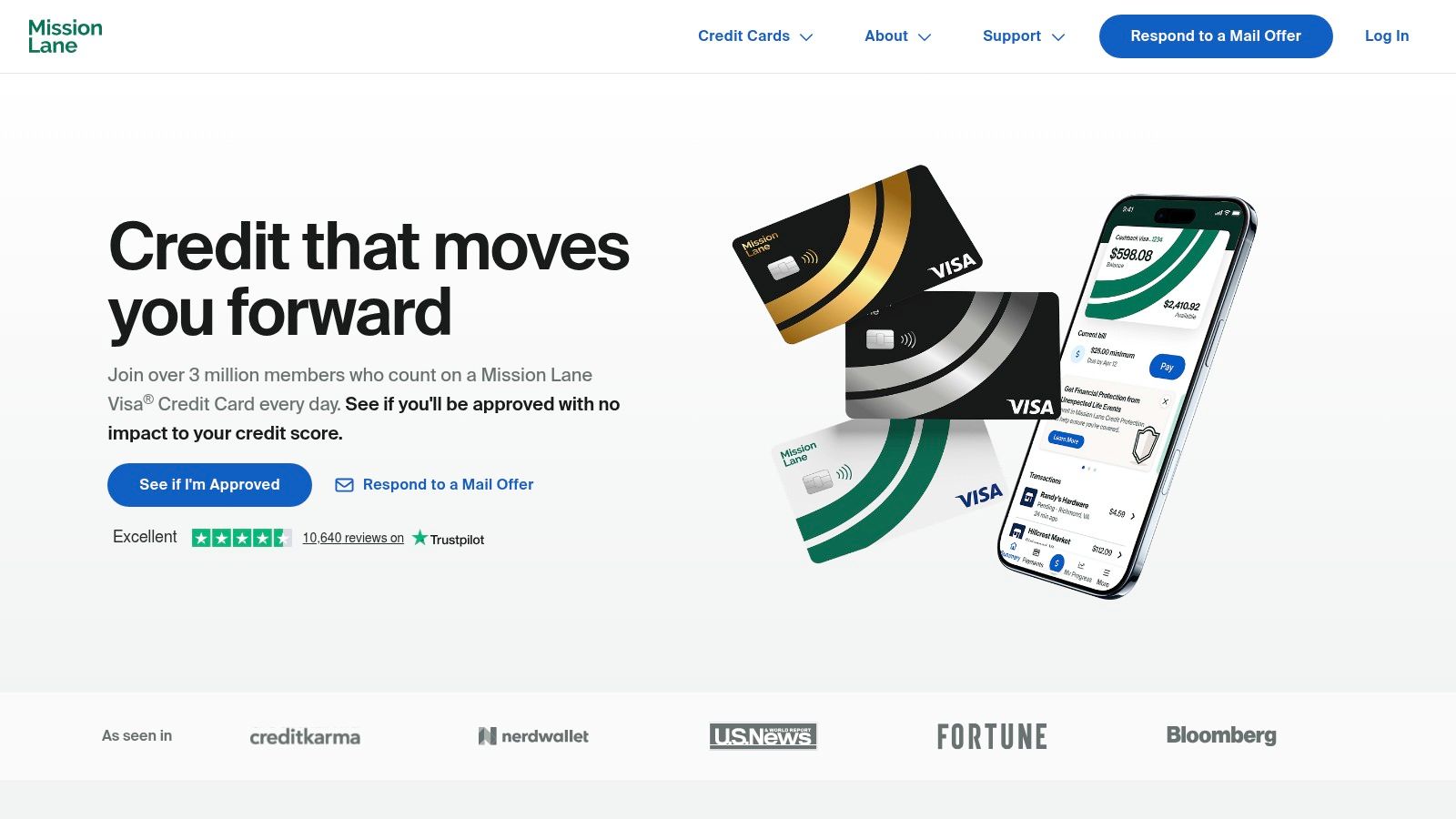
Mission Lane is useful when you want to test for an unsecured offer before you commit to a deposit. It offers soft-pull prequalification, so you can review a possible offer without a hard inquiry at the start. That matters when you're still trying to protect a thin or recovering file.
The card is unsecured, which is its main advantage over secured rebuilders. No cash deposit is required, so you keep more of your money available for day-to-day expenses. Some offers have no annual fee, but the actual pricing still depends on the specific offer.
The trade-off with unsecured rebuilding cards
The bankruptcy can still be part of the underwriting conversation even if the prequalification is soft. That means the offer you see may come with a higher APR, a lower limit, or both. The important part is to compare the total cost of the offer against a secured alternative before you accept anything.
Mission Lane is not available in Maine, Maryland, Nevada, North Dakota, or West Virginia, so state availability has to be checked first. That's easy to overlook when you're reading reviews, but it matters just as much as the card features.
A rebuilt file benefits more from a manageable card than from a flashy one. If the APR is high and the limit is low, the math can get ugly fast. A soft-pull prequal is only useful if you're willing to decline the offer when the terms come back thin.
Website: Mission Lane Visa
6. Indigo Platinum Mastercard
Indigo is another unsecured option that often shows up in post-bankruptcy searches because it's built for less-than-perfect credit. It offers soft-pull prequalification and reports to the major credit bureaus, which makes it easy to compare before you commit to a hard inquiry.

The card's usefulness comes from access, not from generous pricing. Fees and APR vary by offer, and that variation is the whole story here. If the offer is expensive, an unsecured approval can still be a poor rebuilding move.
Read the offer, not just the brand name
Practical rule: an unsecured card that reports well is still a bad fit if the fee structure makes you carry a balance longer.
Indigo can work for an applicant who wants an unsecured tradeline and doesn't want to tie up a deposit. That said, approval is not guaranteed, and the exact terms depend on the offer you receive. A lot of people look at the card name and stop there. Don't. The pricing is the part that decides whether it helps or hurts.
For a broader comparison of rebuilding-card structures, BadCreditMD's credit card guides can help you compare unsecured and secured paths side by side. That's usually the better way to shop than relying on a brand's rebuilding language.
Website: Indigo card
7. Credit One Bank Platinum Visa for Rebuilding Credit
Credit One is built for people who want an unsecured card and are willing to sort through offer differences carefully. Many offers support online prequalification, which lets you check possible terms before a hard pull. That alone can save a wasted application.
The useful part is that some versions include rewards or no annual fee, while others charge an annual or monthly-billed fee. Those pricing differences matter more than the marketing label, because a rebuilding card can become expensive fast if the fee structure and APR don't fit your monthly cash flow.
How to judge this kind of offer
This is the kind of card that looks simple on the surface and becomes complicated once you read the agreement. If you are rebuilding after bankruptcy, you need to compare the offer against the cost of a secured card and ask whether the unsecured status is worth the price.
The main advantage is flexibility. You may get an unsecured credit line without posting a deposit, and prequalification can help you narrow the risk before applying. The main risk is that many offers have relatively high APRs, and some versions charge fees that can be substantial.
A good rebuilding card should make your next twelve months easier, not harder. If the monthly bill is unpredictable or the fee is too heavy, the card may not be the right tool even if it approves you.
For readers who also manage banking statements and want to understand how Credit One appears in documentation workflows, BadCreditMD's Credit One Bank statement automation page can be a helpful reference point.
Website: Credit One Bank
Top 7 Bankruptcy-Friendly Credit Cards Compared
| Card | 🔄 Access & setup | 💵 Cost & resources | 📊 Credit-building impact | ⭐ Best fit & key advantage |
|---|---|---|---|---|
| OpenSky Plus Secured Visa | No credit check; requires refundable deposit | $0 annual fee for Plus; deposit required | Reports to all three major bureaus; no guaranteed upgrade | 💡 Applicants seeking a secured card after serious credit events, including bankruptcy |
| First Progress Platinum Prestige Secured Mastercard | No minimum credit score or history stated; deposit required | $49 annual fee for Prestige; deposit ties up cash | Reports to major bureaus; secured limit may increase | ⭐ Applicants who want secured-card access and credit-education tools |
| Capital One Platinum Secured | Hard credit pull; deposit may be $49, $99, or $200 | $0 annual fee; refundable deposit secures at least a $200 line | Reports to all three major bureaus; may be considered for a higher limit after six months | ⚡ Applicants seeking a potentially low deposit and possible limit increase |
| Chime Credit Builder Secured Visa | Requires Chime checking account and qualifying activity; no credit check | No annual fee or interest; funds are drawn from the account | Reports to all three bureaus; no preset limit is reported, so it does not directly affect utilization | 💡 Chime customers seeking a low-cost way to build payment history |
| Mission Lane Visa | Soft-pull prequalification; unavailable in Maine, Maryland, Nevada, North Dakota, and West Virginia | No deposit; fees and APR vary by offer | Intended for credit rebuilding; review offer terms and reporting details | ⭐ Applicants seeking an unsecured option and a chance to review an offer before a hard inquiry |
| Indigo Platinum Mastercard | Soft-pull prequalification; approval not guaranteed | No deposit; annual fee and APR vary and may be high | Reports to major bureaus | 💡 Applicants seeking an unsecured tradeline who are willing to compare offer terms |
| Credit One Bank Platinum Visa for Rebuilding Credit | Online prequalification available for many offers | No deposit; fees, APR, rewards, and annual-fee terms vary; some fees may be substantial | Rebuilding-focused card; confirm reporting and terms for the specific offer | 📊 Applicants comparing unsecured offers, especially versions with rewards or no annual fee |
Matching Your First Card to Your Credit Reports and Budget
Start with your credit reports, not the application page. Pull all three and confirm how the bankruptcy is listed, whether any accounts are still reporting correctly, and whether any open positive tradelines can help your file. The reporting window matters because bankruptcy information may generally stay on a consumer credit report for up to 10 years from the filing date, while Chapter 13 cases are typically removed after 7 years under the Fair Credit Reporting Act, but that reporting period does not decide whether a lender will approve you. The U.S. Bankruptcy Court explains that each creditor makes its own decision based on the product, your income, your debts, and your payment history. How long bankruptcy can show on a credit report
Then decide how much cash you can tie up in a refundable deposit. If you can't comfortably park money in a secured account, an unsecured prequalification route may be a better fit, but only if the offer terms are manageable. Also confirm whether your state is excluded for any card you're considering, since availability can vary by product.
Read the current agreement before you apply. Check the annual fee, the deposit requirement, the APR, late-payment fees, whether payment history reports to all three major bureaus, and whether the issuer offers a real graduation path to unsecured status. Those details matter because a bankruptcy-friendly label does not guarantee approval, a low rate, or favorable fees.
If you want a broader comparison after that, BadCreditMD's guides on secured cards and credit-builder loans can help you compare alternatives without guessing which product type is cheapest. If you need help beyond self-serve research, nonprofit credit counselors and the CFPB can also help you review options and protect your budget. For a practical way to document what you spend while you rebuild, see find refund evidence for expenses.
BadCreditMD publishes clear, state-aware guides for people with imperfect credit, including secured cards, credit-builder options, and alternatives when a card isn't the best fit. If you want more side-by-side help choosing a rebuilding path after bankruptcy, visit BadCreditMD and compare the current guides before you apply.