
A letter of explanation for derogatory credit is not a magic fix. It is borrower-supplied written evidence that identifies the exact event, gives a concise cause, shows what changed, and adds proof when underwriting asks for it.
You're usually writing because a loan file already hit a friction point. A late payment, charge-off, bankruptcy, foreclosure-related action, or disputed account is sitting in the underwriting review, and the lender needs a clean paper trail before moving forward. The strongest letters read like documentation, not apologies, because underwriters are checking whether the file makes sense and whether the risk is now understood.
Table of Contents
- What a Letter of Explanation Actually Does for Your Loan Application
- When Lenders Expect a Letter of Explanation for Derogatory Credit
- How to Write a Letter That Underwriters Take Seriously
- Extenuating Circumstances Versus Disputed Items
- Common Mistakes That Undermine Your Letter
- Next Steps After Writing Your Letter
What a Letter of Explanation Actually Does for Your Loan Application
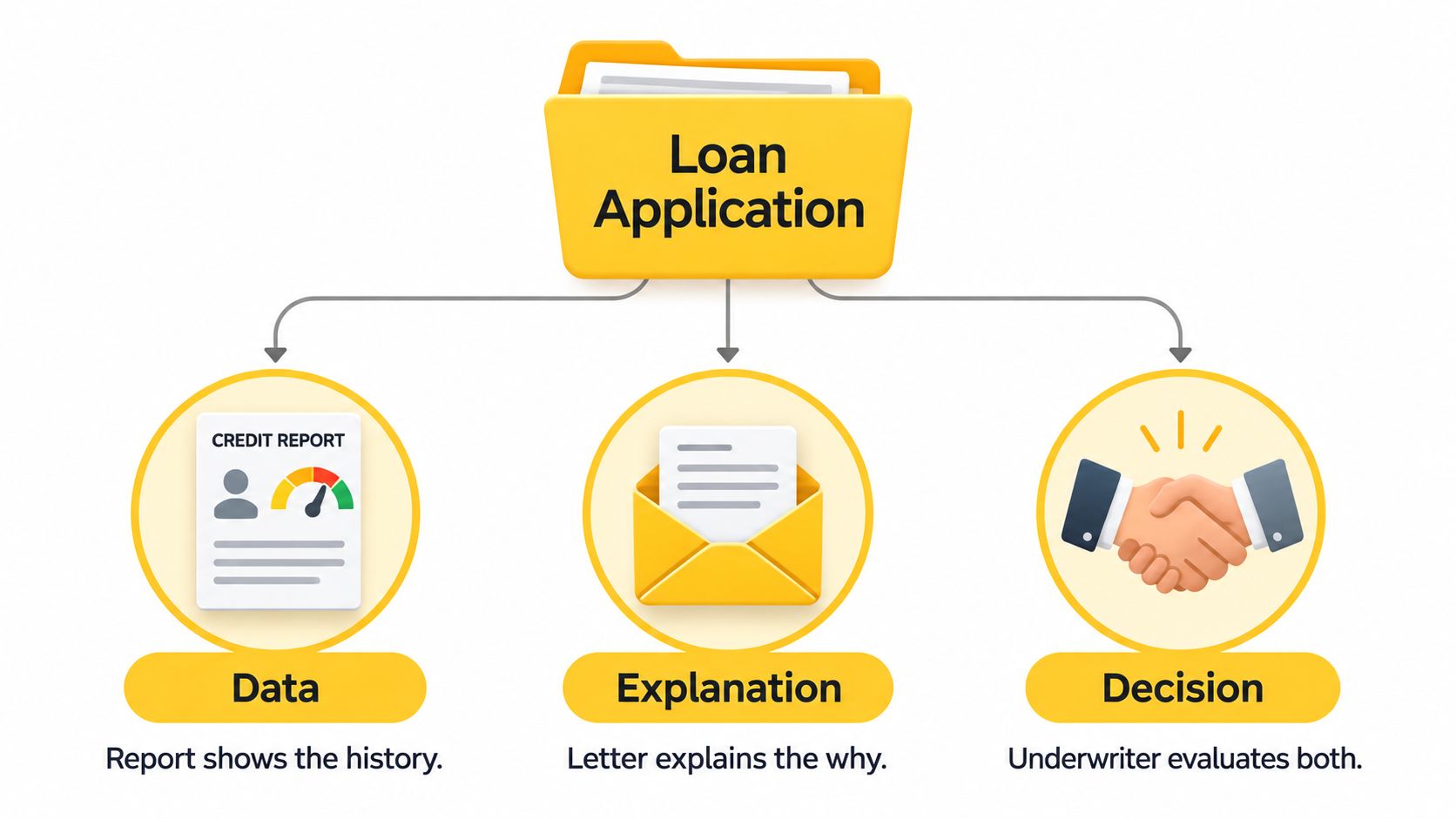
An underwriter opens your file, sees a derogatory entry, and needs to connect that entry to your written explanation without hunting through several pages. That is the letter's job. A letter of explanation is a credibility document placed inside the loan file. It gives the lender a concise, traceable account of the issue and shows how the supporting records relate to it.
Fannie Mae's Selling Guide allows borrower-supplied context in a letter, email, or other written documentation when the lender needs an explanation for derogatory credit. The document does not change the credit report or cancel the event. It helps the underwriter decide whether the file's explanation is clear, consistent, and supported. Fannie Mae's guidance on extenuating circumstances and derogatory credit
Treat it as an underwriting artifact
Underwriters look for three answers: what happened, why it happened, and what evidence supports the account. The letter should match the credit report, application, dates, and attached documents. If those records conflict, polished wording will not repair the problem.
The letter also has to fit the underwriting question. A file involving a reporting dispute requires a different explanation and documentation path from one based on circumstances outside the borrower's control. Fannie Mae says the explanation must support a claim of extenuating circumstances, identify the event connected to the default, and show that the borrower had no reasonable alternative but to default. Keep the account specific to the issue the lender raised.
Practical rule: write the letter as if a stranger has to match it to the file in under a minute.
That standard changes how you draft. Use the account name or reference, relevant dates, a short factual sequence, and a direct description of the attached proof. Avoid broad apologies, emotional claims, and background that does not help the underwriter evaluate this file.
Borrowers with very weak credit should also understand how lenders assess severe risk before spending time refining the narrative. Credit score guidance for severe subprime borrowers
When Lenders Expect a Letter of Explanation for Derogatory Credit
A lender may request a letter when a credit report contains a late payment, collection, charge-off, foreclosure, bankruptcy, or other item that creates an underwriting question. The request does not automatically mean the application will be denied. It means the file needs a clearer record of what occurred, how the item relates to your finances, and whether the issue is resolved.
Underwriting friction points trigger requests
A letter is more likely when the derogatory entry is recent, conflicts with information on the loan application, appears alongside other risk factors, or affects the lender's assessment of your ability to repay. Underwriters may also ask for one when the credit report contains an account you say is inaccurate. Fannie Mae's credit information accuracy guidance explains why accurate, supportable credit information matters during review.
The request often arrives as part of a documentation list. The lender may want an explanation for a specific account, a sequence of missed payments, or a change in financial circumstances. Read the request exactly as written. If it names one account, do not submit a broad autobiography covering every financial difficulty you have experienced.
Underwriters usually compare the letter with the credit report, application, bank statements, and documents already in the file. They look for a consistent timeline and proof that answers the question raised. A polished explanation cannot fix mismatched dates, unexplained gaps, or claims that the attached records do not support.
Match the response to the lender's question
The evidence required depends on what caused the concern. A hardship-related request may require records showing the event, its effect on your income or expenses, and the steps taken afterward. A reporting-related request may require dispute records, account statements, payoff documentation, or correspondence with the creditor or credit bureau.
Keep the explanation narrow. Identify the item, state the relevant facts, and connect each document to the point it supports. Underwriters need a file they can verify quickly, not a persuasive personal statement.
A credit review may also appear within a broader screening process, so borrowers should understand what shows up in a background check with credit review. That context can help explain why a lender requests precise information instead of accepting a general apology.
The strongest trigger-response letters make the underwriter's task easier. They answer the exact concern, provide usable proof, and show whether the issue remains active or has been addressed.
How to Write a Letter That Underwriters Take Seriously
The strongest letters are short, dated, and easy to map to the credit report. Start with your name, current contact information, the date, and the account or event you're addressing. If the lender gave you a loan number or file reference, include it right away. That makes the letter easy to attach to the correct file and cuts down on back-and-forth.

Lead with the item, not the drama
Open with the exact derogatory item. Name the account, the date, and the issue. Then explain what happened in plain language. Don't build suspense. Don't tell your life story. Underwriters need a clean statement they can cross-check against the report and the file notes.
A workable structure looks like this:
- Header: your name, address, phone, email, date, and loan reference if available
- Opening sentence: the specific account or event you're explaining
- Body paragraph: the cause, with dates and facts
- Second paragraph: what changed, how you've stabilized the situation, or why the entry is inaccurate
- Closing: offer to provide supporting documents and sign the letter
Keep the tone professional, even if the underlying event was stressful. The goal is to sound reliable. If you're dealing with a broader credit cleanup, it also helps to keep your underlying credit profile in view, not just the letter itself. Credit score basics and improvement context
Practical rule: one letter, one issue, one clean explanation.
A simple example that works
If the issue was a missed mortgage payment after a layoff, the letter can say the position was eliminated on a specific date, income stopped, savings covered a short period, and the payment was missed before new work began. Then it should note that employment has resumed and the account is current or on a payment plan.
If the issue is a disputed charge-off, the letter should say the account doesn't belong to you, the dates don't match, or the creditor's records conflict with yours. Then it should identify the dispute file, attach the proof, and ask that the underwriter review the corrected record.
The closing should be plain. State that you're available to clarify the file and list any attachments. That's enough. A long closing about your dedication to homeownership usually adds clutter, not value.
Extenuating Circumstances Versus Disputed Items
A missed payment after a layoff and a charge-off tied to identity theft may appear together on a credit report, but they require different underwriting files. An extenuating-circumstances letter explains why a derogatory mark occurred. A disputed-item letter argues that the reporting is inaccurate. Treating both as apologies can make the file unclear. Fannie Mae's guidance on credit report accuracy and disputed information
Use the comparison below to choose the right structure before drafting.
| File type | Purpose | Evidence underwriters may review | Tone | Common attachments |
|---|---|---|---|---|
| Hardship | Explain a valid cause for the derogatory item and show recovery | Records connecting the event to the delinquency, plus evidence of current stability | Factual and accountable | Termination notice, medical records, payment arrangement, current income records |
| Dispute | Identify inaccurate reporting and support a correction request | Records showing the mismatch, dispute activity, and present account status | Precise and firm, without speculation | Bureau correspondence, creditor records, identity documents, account statements |
Match the file to the underwriting question
For a hardship file, organize documents around causation. If a layoff preceded the missed payment, the employment record should establish that sequence. If a medical event affected the account, dated records should cover the relevant period. The letter then needs a separate recovery point, such as resumed employment, a current account, or an approved payment arrangement.
For a dispute, organize documents around the defect. State whether the problem is a mismatched date, duplicate account, incorrect balance, identity mix-up, or payment history that conflicts with your records. Identify what was reported, what should appear instead, and which document supports that distinction.
Do not combine the two theories unless the lender specifically requests both. A disputed account can also create financial hardship, but the evidence still needs separate labels. The correction evidence addresses accuracy. Income or payment records address capacity and recovery.
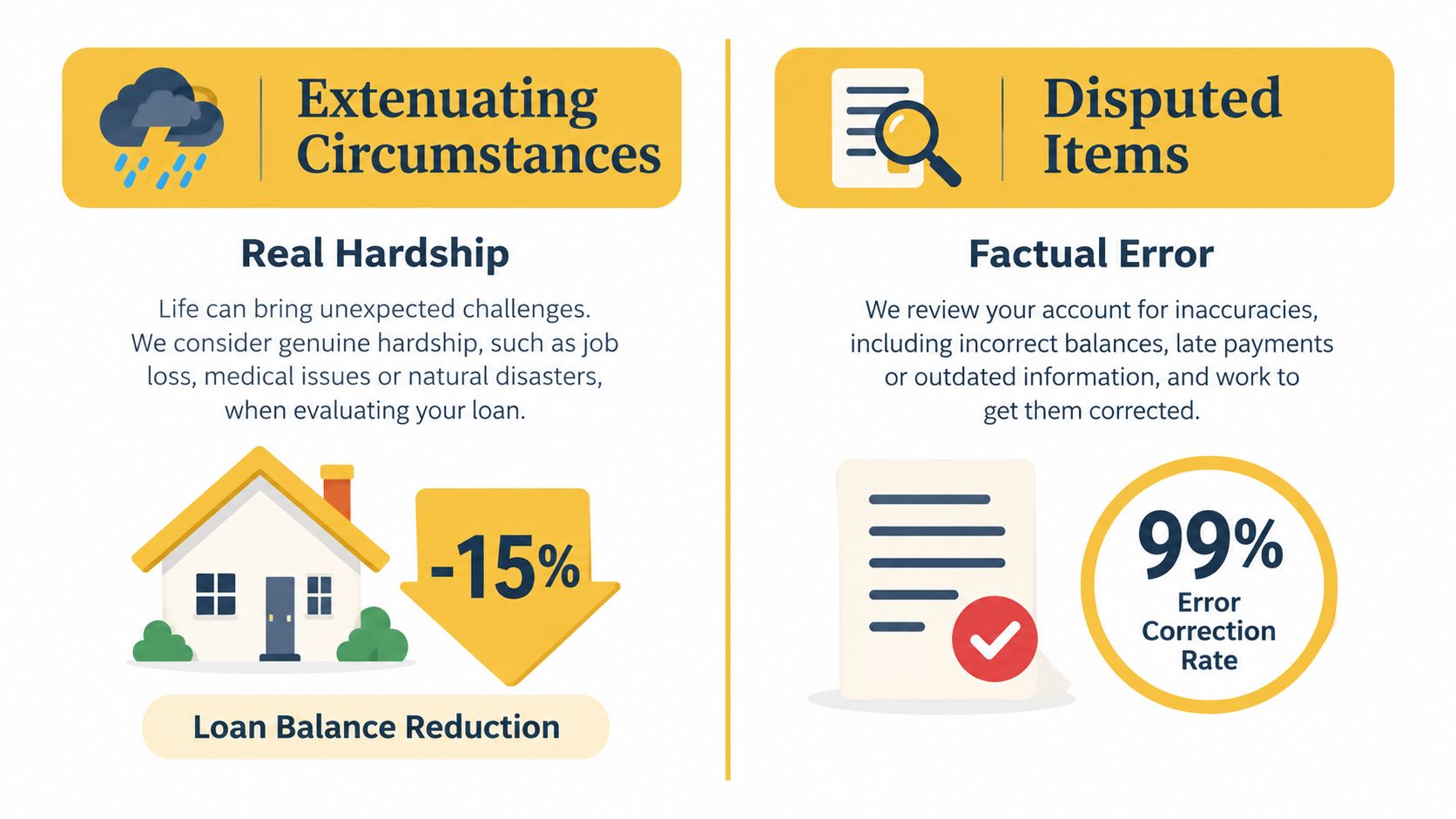
Before submitting, check the requested outcome. Hardship files seek context for an accurate event. Dispute files seek review of an inaccurate record. That distinction determines the documents, wording, and underwriting path.
Common Mistakes That Undermine Your Letter
The biggest mistake is emotional overexplaining. Underwriters don't need a dramatic account of how stressed you were, they need a coherent file. When the letter becomes a confession, a rant, or a blame game, the core facts get buried and the review slows down.
Weak language versus stronger language
“I fell behind because everything went wrong” is weak because it says almost nothing. “My employer eliminated my role on March 7, 2024, and I missed two payments before starting new work on May 20, 2024” is stronger because it names the event, the timeline, and the consequence.
“I'm hoping you'll understand” is also weak. “I've attached the termination notice, current pay records, and proof of the account arrangement” is stronger because it gives the underwriter something to verify. The same logic applies if the item is disputed, the letter should point to the error and the evidence, not just insist that the report is wrong.
A few other mistakes show up again and again:
- No account details: leave the underwriter guessing which item you mean, and the letter loses value
- Too much detail: long backstory distracts from the exact event being reviewed
- Missing proof: if the lender asked for documents, a naked explanation usually isn't enough
- No date or signature: an undated letter looks unfinished and harder to place in the file
- Blaming others without records: third-party blame needs support, not assumptions
A good letter sounds like it was written for underwriting, not for social media.
The cleanest letters stay factual, stay narrow, and respect the lender's review process. If you want more flexibility in a state-specific lending context while you work through the file, this overview of Colorado bad credit loan options shows why documentation quality matters so much in subprime lending.
Next Steps After Writing Your Letter
Send the letter the way the lender asked for it, usually through your loan officer, secure upload, or the application package. Keep a copy of everything you submit, including attachments, because underwriters often circle back with follow-up questions. If they ask for more proof, answer with the same discipline, short, direct, and tied to the item in question.
If the letter alone doesn't solve the issue, the next move depends on the file. Sometimes the lender wants a payment plan, payoff proof, or updated account status. Sometimes the better path is broader credit cleanup, especially if the report contains inaccurate items that should be disputed rather than explained. In that case, a letter is only one piece of the strategy.
For some borrowers, the approval path also depends on whether there are lower-cost or more flexible lending routes available while credit recovers. That's where comparing documentation requirements, loan terms, and local options becomes practical, not theoretical.
If you need a second set of eyes on how a derogatory-credit explanation fits into a larger borrowing plan, BadCreditMD can help you compare options and understand what lenders usually want to see before they move a file forward.