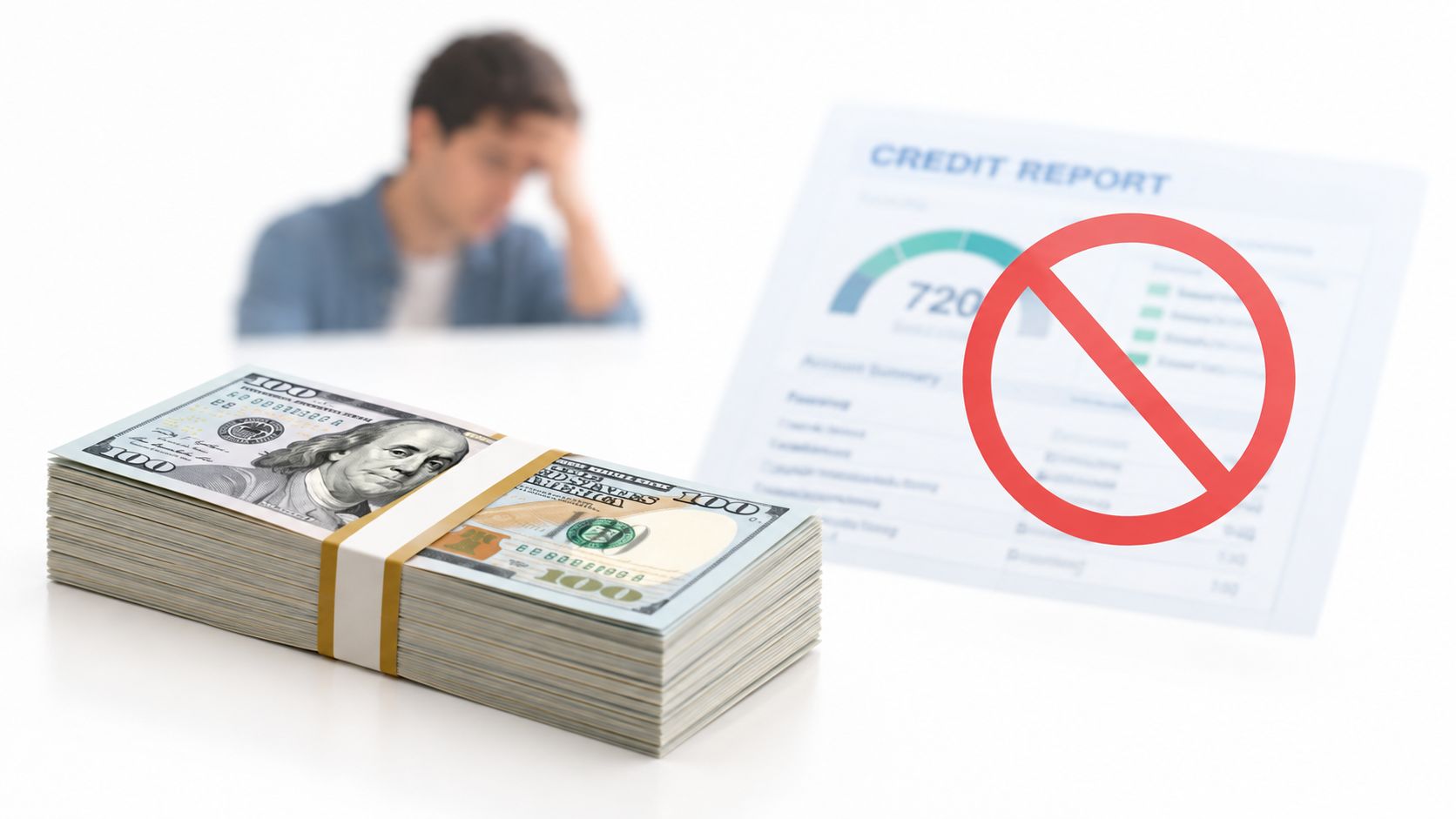
No credit check usually means no traditional bureau inquiry, not free money. A two-week $100 payday loan with a $15 fee works out to about 391% APR, and many states cap or ban these loans outright.
The phrase sounds simple, but the product isn't. A lender can skip the score pull and still charge steep fees, verify your income, and use your bank account access to collect payment, which is why “no credit check” is a marketing phrase, not a safety guarantee. The key question is whether the loan fits your cash flow, because the short term and high fee can turn a small emergency into repeated borrowing.
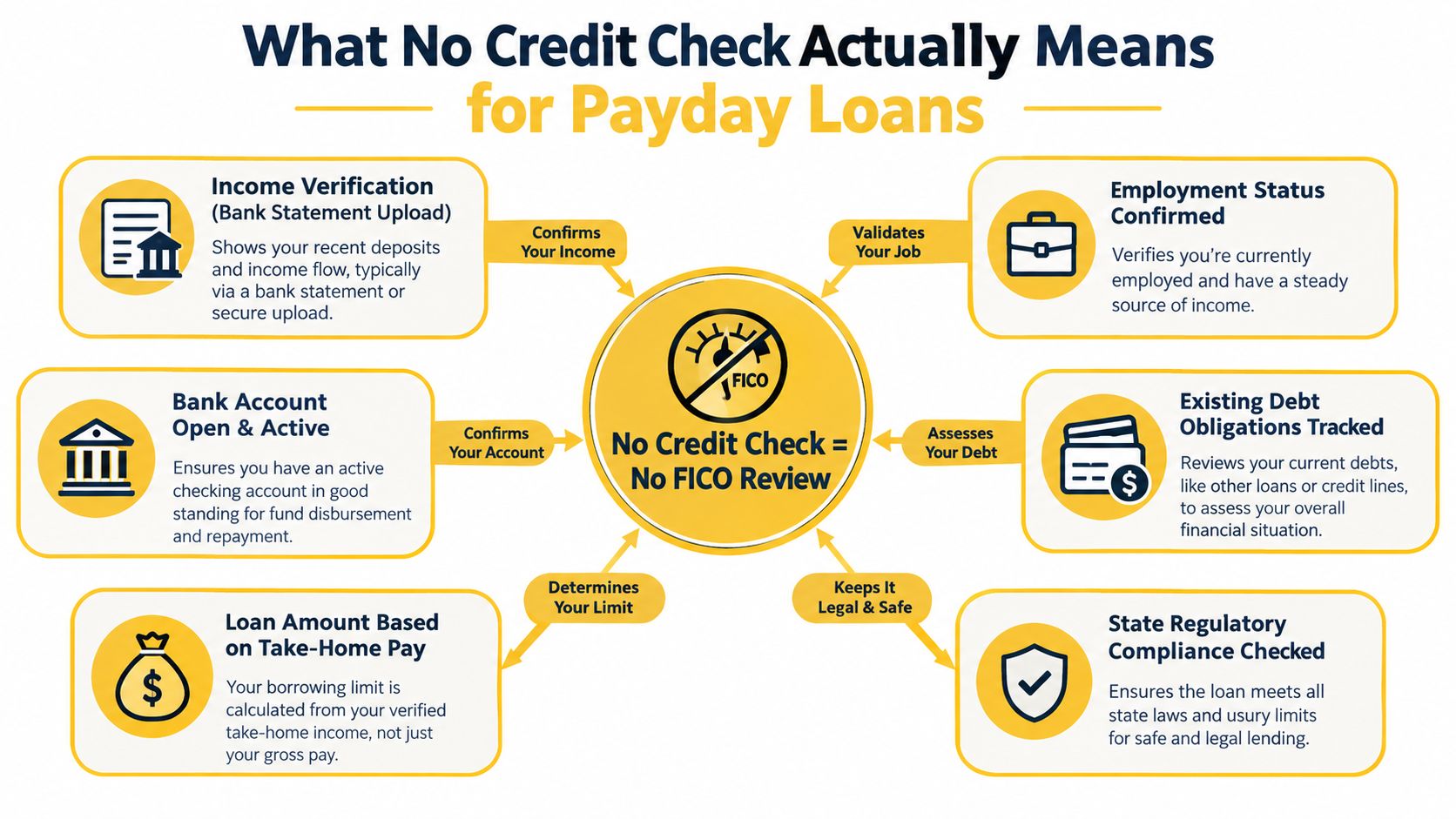
Table of Contents
- What No Credit Check Actually Means for Payday Loans
- How Lenders Underwrite Without a Traditional Credit Score
- State Laws That Control Payday Loan Availability and Cost
- Why Payday Loans Often Become Repeat Borrowing
- Lower-Cost Alternatives to Emergency Borrowing
- How to Make a Smarter Emergency Money Decision
- Real Borrower Scenario and Final Takeaways
What No Credit Check Actually Means for Payday Loans
A “no credit check” payday loan usually means the lender isn't relying on a traditional bureau inquiry to make its decision. It does not mean the lender is ignoring your finances, and it definitely doesn't mean the loan is low cost or low risk.
The Federal Reserve describes payday loans as generally one to four weeks long, for less than $1,000, with fees of about $15 to $30 for every $100 borrowed. On a two-week loan, that fee structure can translate to an APR roughly between 360% and 780%, and a $15 fee on $100 comes out to about 391% APR Federal Reserve payday loan overview. Those numbers matter because the cost is driven by the fee and the timing, not by whether the lender looked at your FICO score.
What borrowers often miss
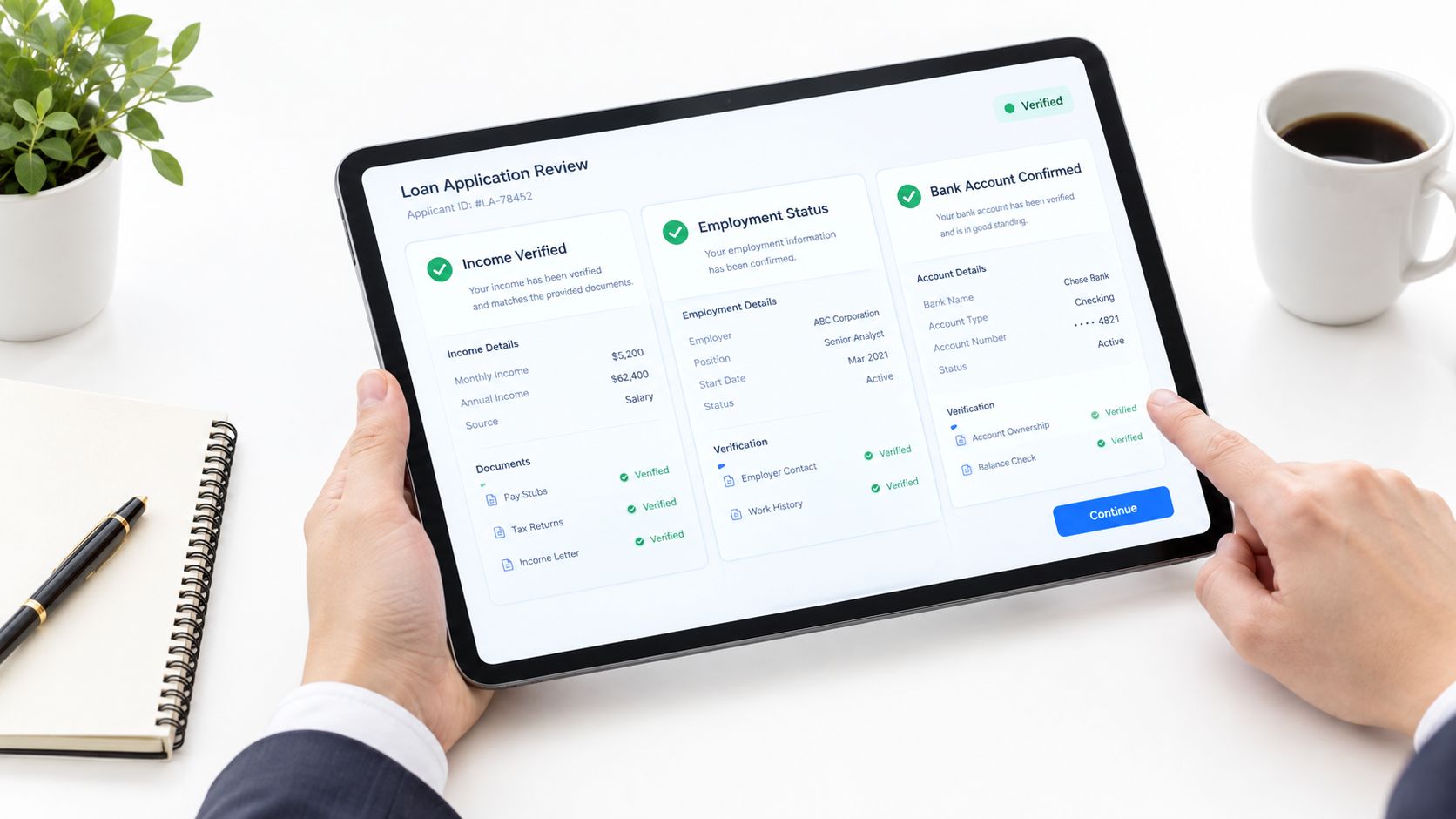
A lender can say “no credit check” and still make a decision based on income, bank activity, and repayment access. That's why the phrase can sound friendlier than the product really is.
Practical rule: If the offer depends on your next paycheck and your bank account, it's still underwriting, just not the old-fashioned credit-score kind.
For readers who want a plain-language explanation of what a background review may involve, BadCreditMD also has a guide on whether a background check includes a credit check. The useful takeaway is simple, if approval is easy, the lender is usually taking comfort from something other than your credit score.
How Lenders Underwrite Without a Traditional Credit Score
When a lender skips the bureau pull, it often replaces that step with other checks. The point isn't to stop evaluating risk, it's to evaluate it differently.
The information they may still use
A no-credit-check offer may still ask for proof of income, recent bank transactions, employment status, and authorization to debit your account. In some cases, lenders may also review alternative cash-flow data, which the Federal Reserve has described as promising for small-dollar credit underwriting, while also warning that alternative data raise concerns around accuracy, explainability, fairness, and disclosure Federal Reserve consumer and community context.
That trade-off matters because the lender may know enough to predict repayment, but you may share more access than you expected. If the lender's debit hits when your balance is low, you can run into overdraft fees or a chain of declined payments. A loan that avoided one credit inquiry can still create a bigger problem through the payment method itself.
A simple checklist before you apply
- Ask what they verify: Income, bank account status, transaction history, or employment.
- Ask how they collect: Automatic debit, postdated check, card authorization, or another method.
- Ask what happens on a failed payment: Late fees, rollover fees, collection calls, or overdraft charges.
- Ask whether a soft or hard inquiry appears: “No credit check” doesn't always mean no inquiry of any kind.
- Ask what data they store: The lender may keep bank-access details or repayment authorization even if it doesn't use a score.
If you're comparing products, an installment loan can sometimes spread repayment into smaller pieces than a payday loan. A plain comparison page like BadCreditMD's installment loan guide is useful because it helps you focus on repayment shape, not just approval speed.
State Laws That Control Payday Loan Availability and Cost
Payday lending is not governed by one nationwide rule. State law often decides whether the loan is allowed at all, what it can cost, and how far a lender can go with rollovers or loan size.
The policy picture is highly uneven. A federal law enacted in 2007 set a 36% interest-rate limit for active-duty service members and their immediate family members, which was the first federal payday-loan rate cap of its kind Pew history of payday lending law. Outside the military market, states have largely controlled the rules, which means “payday loans no credit check” can be legal in one place and effectively unavailable in another.
Why location changes the answer
A 2017 national review reported that 15 states and the District of Columbia had adopted interest-rate caps of 36% or less, and that four states, Arizona, Montana, Ohio, and South Dakota, had enacted caps through ballot initiatives Pew history of payday lending law. The same source notes that the District of Columbia effectively prohibited payday loans in 2008 with a 24% APR ceiling, Arkansas enforced its constitutional 17% usury cap in 2008, and New Hampshire adopted a 36% APR limit in 2009 Pew history of payday lending law.
That matters because a lender's website can look national while the rules are local. A person searching for a payday loan in one state may find a product that is capped tightly or unavailable, while someone elsewhere sees far looser terms.
Bottom line: Don't assume the headline offer is legal where you live. State law can reshape both access and price.
BadCreditMD's Massachusetts payday loan guide is an example of how state-specific rules change the picture, because the same product name can mean a very different legal outcome depending on the jurisdiction.
Why Payday Loans Often Become Repeat Borrowing
The core problem with payday loans isn't only the cost, it's the repayment timing. The loan is usually due all at once, so the borrower has to cover principal and fees from the next paycheck, often while normal bills are still due.
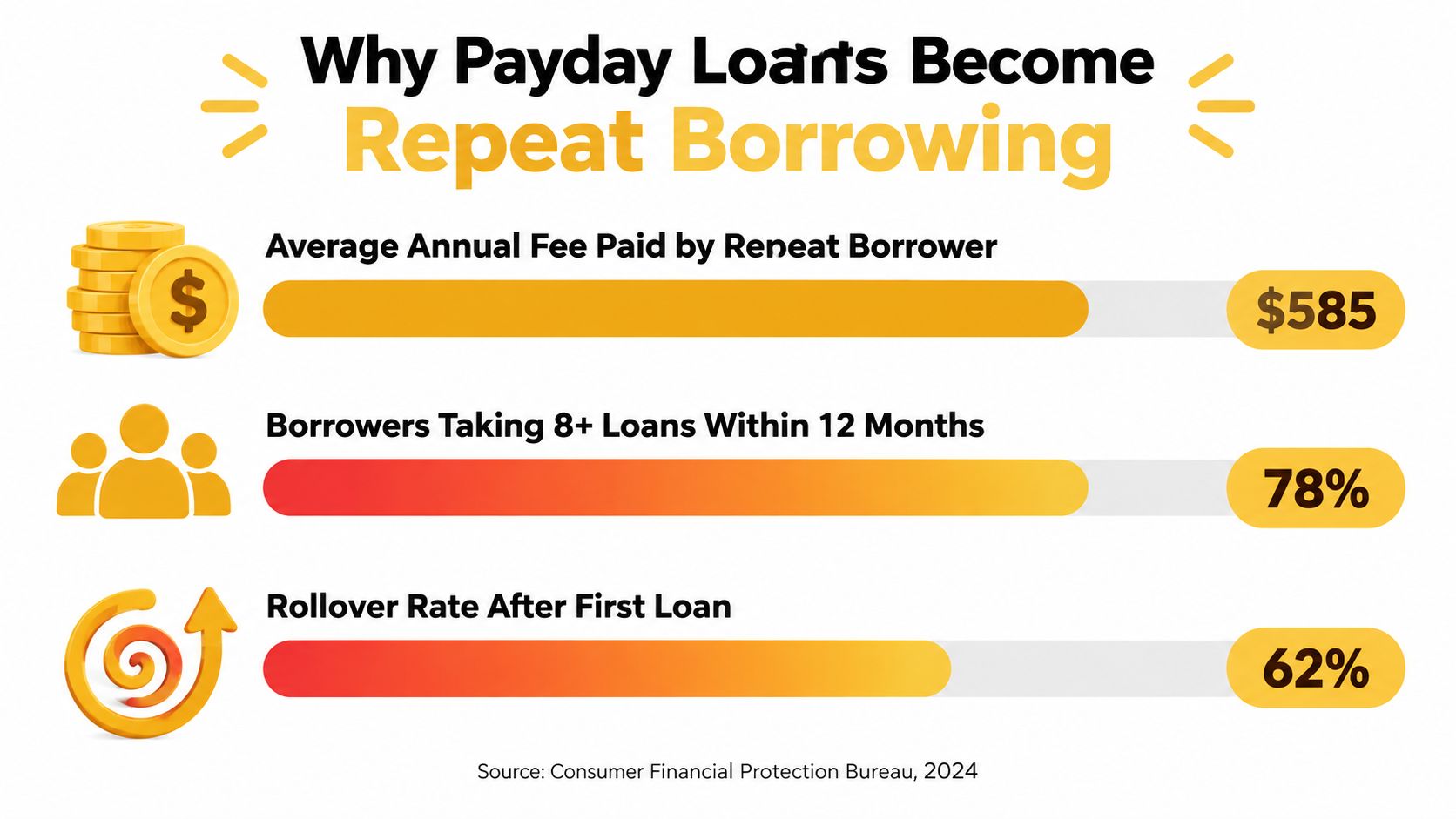
CFPB analysis covering more than 12 million loans in 30 states found that over 80% were rolled over or followed by another loan within 14 days CFPB payday lending report. The same report found that more than four out of five payday loans were re-borrowed within a month, and that the majority of short-term loans were taken by consumers who borrowed at least 10 times consecutively CFPB payday lending report.
Why rollovers are so expensive
If you can't repay the full amount on payday, a renewal fee can buy time, but it leaves the principal outstanding. That means the next paycheck may already be spoken for before it arrives. In one CFPB sample, the median consumer made 10 transactions over 12 months and paid $458 in fees, excluding principal, and three-quarters of total fees came from consumers with more than 10 transactions CFPB payday lending report.
Decision rule: If repaying the loan would force you into another loan, an overdraft, or a missed essential bill, the payday loan is too expensive for your budget.
If you want a plain explanation of default risk and what can happen when the loan breaks down, BadCreditMD's payday default guide is a helpful companion piece. The larger point is that a one-time bridge often turns into a repeat payment cycle because the due date arrives before the budget has recovered.
Lower-Cost Alternatives to Emergency Borrowing
For a small emergency, a payday loan is often not the first or cheapest option. The better question is not “Can I get approved?” but “What solves the cash problem with the least damage?”
Federal Reserve household survey data found that 63% of adults would cover a hypothetical $400 expense with cash, savings, or a credit card paid off immediately. Among people using another method, only 2% selected a payday loan, deposit advance, or overdraft, compared with 15% who would carry a credit-card balance, 10% who would borrow from family or friends, and 3% who would use a bank loan or line of credit Federal Reserve 2024 household survey. That's a strong signal that payday borrowing is usually not the most common response to a shortfall.
Better places to look first
- Payment plans: Utilities, medical offices, landlords, and creditors may let you spread the bill out.
- Credit union options: Some borrowers can use a payday alternative loan or another small-dollar product with more manageable terms.
- Credit-builder tools: Secured cards and credit-builder loans can help people who want to improve future access.
- Local help: 211, nonprofit credit counseling, legal aid, and hardship programs can sometimes solve the immediate problem without new debt.
If you want a broader view of how savings accounts can support emergency planning, FloosYo's guide to what savings accounts are used for is a practical read. The reason savings matters is simple, cash on hand gives you options before a fee-heavy loan enters the picture.
How to Make a Smarter Emergency Money Decision
Start with the urgency of the bill, not the lender's approval promise. If the expense can wait a day, that pause gives you time to compare options and avoid a rushed decision.
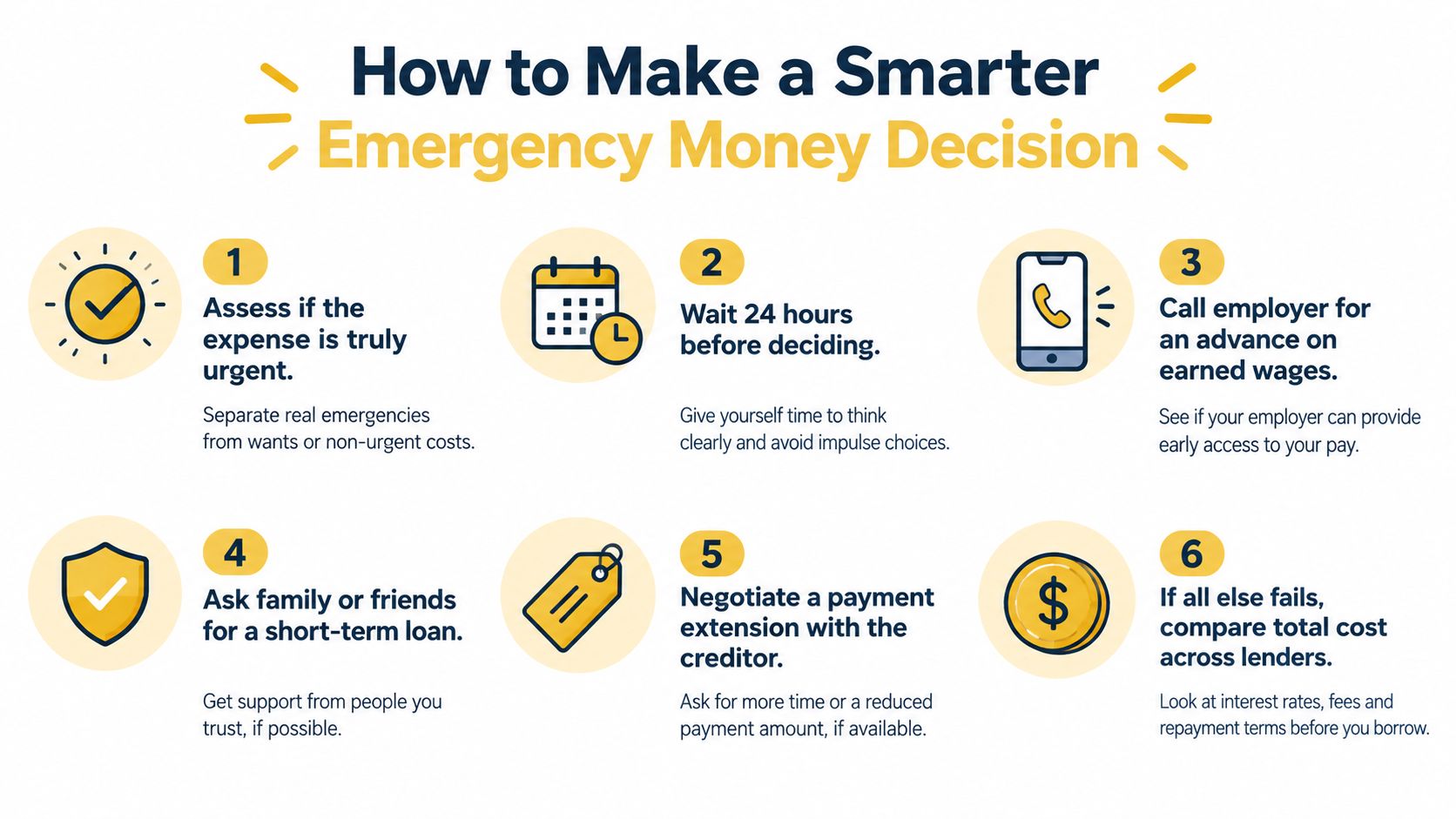
A practical sequence
- Check the legal setting. If state law restricts payday lending, the product may be capped or unavailable.
- Review what the lender checks. Income, bank access, and repayment authorization tell you more than the headline phrase.
- Compare total cost. A fast approval with a huge fee can be worse than a slower, cheaper option.
- Test the repayment plan. If the due date lands before your next stable cash inflow, the risk is high.
- Look for a no-borrow solution. Payment plans, hardship programs, and local assistance can solve the same problem.
- Borrow only if the math works. The loan should fit inside your budget without creating a second shortage.
The simplest test is this, can you repay the full amount on time without missing rent, utilities, groceries, or another essential bill? If the answer is no, the loan is likely moving the problem forward, not solving it.
The safest choice is usually the one that preserves tomorrow's budget, not the one that approves fastest today.
Real Borrower Scenario and Final Takeaways
A borrower has thin credit, a broken car, and a bill due before payday. The online ad says “no credit check,” and the approval looks quick, but the state where the borrower lives limits payday lending, so the first step is to confirm whether the product is even allowed.
After checking the rules, the borrower sees that the lender still wants income proof and automatic debit permission. That changes the picture, because the decision isn't just about approval anymore, it's about whether the payment could trigger an overdraft or leave the next paycheck too short for rent and groceries.
The borrower calls the utility company, asks about a payment extension, and checks a local assistance line before accepting the loan. That order matters. Once the borrower compares alternatives, the payday offer stops looking like the obvious answer and starts looking like the most expensive one.
If you're facing the same kind of decision, use state-specific guidance, compare repayment timing, and look for free assistance before you sign anything. BadCreditMD provides state-by-state borrowing information, plain-language explainers, and links to local help so you can check the rules and weigh safer options first.
If you want a clearer path through emergency borrowing, visit BadCreditMD for state-specific payday loan guidance, small-dollar loan explainers, and links to free local assistance. It's a practical place to compare legal limits, repayment risks, and lower-cost alternatives before you decide.